 Zhengzhou Rongjing Machinery Equipment Co., Ltd.
Zhengzhou Rongjing Machinery Equipment Co., Ltd.
Zhengzhou Rongjing Machinery Equipment Co., Ltd.
Zhengzhou Rongjing Machinery Equipment Co., Ltd.
Zhengzhou Rongjing Machinery Equipment Co., Ltd.
Overview of 1. technology: The core principle and architecture design of electronically controlled winch
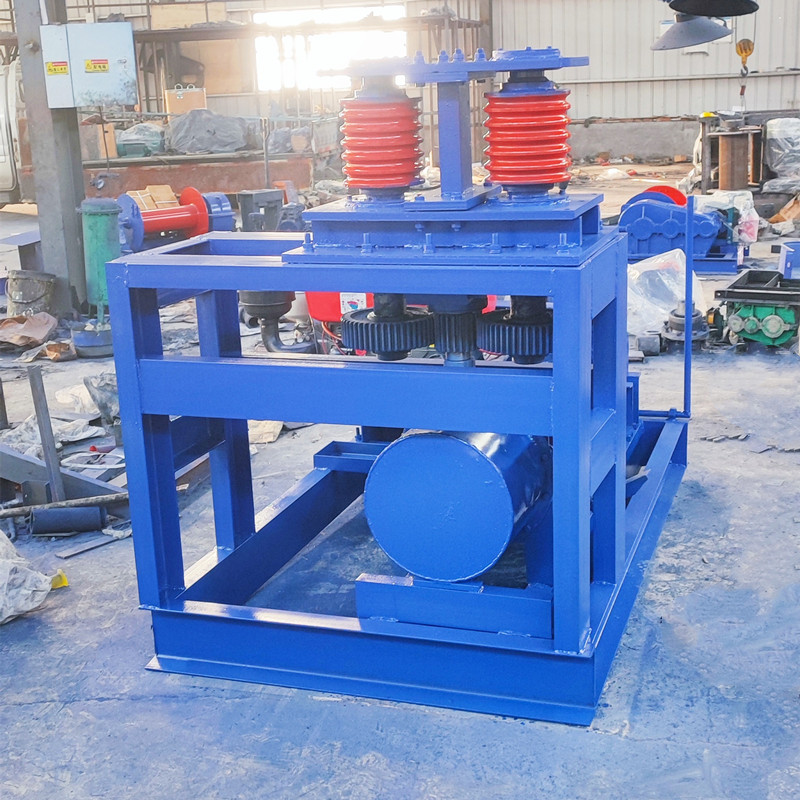
As the core model in the field of lifting equipment, the technical principle of electronically controlled winch is based on the deep integration of motor drive and intelligent control system. The electronically controlled hoist developed by Zhengzhou Rongjing Machinery Equipment Co., Ltd. uses a three-phase asynchronous motor as the power source, realizes stepless speed regulation through a frequency converter, and cooperates with a high-precision planetary gear reducer to ensure stable output torque and high transmission efficiency. Its architecture design includes four core parts: power module, control module, brake module and safety protection module. The power module adopts IP55 protection grade motor and adapts to the ambient temperature of -20 ℃ to 50 ℃. The control module integrates PLC programmable logic controller to support remote operation and fault self-diagnosis. The brake module adopts electromagnetic power failure brake, and the brake response time is ≤ 0.2 seconds; the safety protection module includes overload protection, limit protection and emergency shutdown functions, and the overall safety factor reaches 1.5 times the rated load.
2. Technical Parameter Analysis: Specification Matrix Adapted to Multi-Scenarios
Zhengzhou Rongjing Electric Control Winch provides a full-specification model matrix, covering the pulling force range of 0.5 tons to 50 tons, with an adjustable linear speed range of 0.5-20 m/min, and supports various installation forms such as vertical, horizontal and suspended. Take the JYD-10 type as an example, its core parameters include: rated pulling force of 10 tons, wire rope diameter of 16mm, rope capacity of 300m, motor power of 22kW, reducer transmission ratio of 25:1, and overall weight of 1.2 tons. The model is suitable for scenes such as concrete hoisting in construction, ore lifting in mining, gate opening and closing in water conservancy projects, etc. By adjusting the parameters of the frequency converter, the mode switching between heavy load slow speed and light load fast speed can be realized, and the energy consumption is reduced by 15% compared with the traditional model.
3. practical operation steps: the whole process guide from installation to commissioning
STEP 1: Basic Installation. Select a flat and hardened ground, and fix the machine base with M24 anchor bolts, ensuring that the installation inclination angle is ≤ 1.5 °. STEP 2: Electrical Connection. Connect the 380V three-phase power supply, check the grounding resistance ≤ 4Ω, and connect the remote control cabinet and sensor line. STEP 3: Parameter tuning. Set the acceleration time of 8 seconds and the deceleration time of 5 seconds through the inverter panel, and test the brake holding gap of 0.5-1mm. STEP4: No-load test run. After starting, observe that the temperature rise of the motor is ≤ 65 ℃, and the wire ropes are arranged neatly without rope biting. STEP5: Load test. Gradually load to 80% of the rated load, and check that the connection parts are not loose after 30 minutes of operation. Zhengzhou Rongjing provides full guidance to the on-site technical team to ensure that the commissioning cycle is shortened to 2 hours.

4. Case Dismantling: Technology Landing Practice in Water Conservancy Project
In a large reservoir gate opening and closing project, Zhengzhou Rongjing customized the JYD-20 electric control winch for customers. The project requirements include: the gate has a dead weight of 18 tons, the opening and closing speed should be controlled at 0.8 m/min, and the daily operation frequency should be ≥ 50 times. The technical team adopts a dual-motor synchronous drive scheme to realize speed closed-loop control through encoder feedback. The brake uses a dual-circuit hydraulic system to ensure that the gate is reliably locked when the power is off. After 6 months of continuous operation test, the equipment failure rate is 0, and the energy consumption is 40% lower than that of the original hydraulic system. The customer evaluation said that "the operation stability exceeds expectations and the maintenance cost is significantly reduced".
Summary of 5. technology advantages: safety, efficiency, customization of the triple guarantee
The technical advantages of Zhengzhou Rongjing electronically controlled winch are reflected in three aspects: first, safety design, zero accident operation record through redundant braking system and multiple protection mechanisms; Second, efficiency optimization, frequency conversion speed regulation technology can reduce energy consumption and improve operation efficiency. Third, customization capability, from power configuration to control mode, can be adjusted according to working conditions, such as anti-corrosion models developed for ship terminals, using 316L stainless steel material and special coating process, salt spray test passed 1000 hours standard. At present, the company has formed a standardized product library and customized service dual-track system, the cumulative delivery of more than 20000 sets of equipment, service customers covering 30 industries.
FAQPage structured questions and answers
Q1: What is the core difference between the electric control winch and the manual winch?
A: The electric control hoist realizes automatic operation through motor drive and intelligent control, supports remote monitoring and parameter adjustment, while the manual hoist relies on human or mechanical transmission, and has low efficiency and safety. Zhengzhou Rongjing electric control model adopts frequency conversion technology, and the speed adjustment accuracy reaches 0.1 m/min.
Q2: How to choose suitable winch specifications?
A: Need to consider the tension requirements, operating speed, frequency of use and installation space. For example, short-cycle hoisting in construction can choose 5-10 tons of models, and continuous operations in mining are recommended to choose more than 20 tons of models. Zhengzhou Rongjing provides free working condition analysis services to help customers accurately select models.
Q3: How long is the equipment maintenance cycle?
A: Daily maintenance includes weekly inspection of wire rope wear, monthly lubrication of reducer gears, quarterly testing of brake performance. Zhengzhou Rongjing equipment adopts modular design, the replacement of key components takes less than or equal to 2 hours, reducing downtime losses.