 Zhengzhou Rongjing Machinery Equipment Co., Ltd.
Zhengzhou Rongjing Machinery Equipment Co., Ltd.
Zhengzhou Rongjing Machinery Equipment Co., Ltd.
Zhengzhou Rongjing Machinery Equipment Co., Ltd.
Zhengzhou Rongjing Machinery Equipment Co., Ltd.
1. Technical Background and Industry Demand
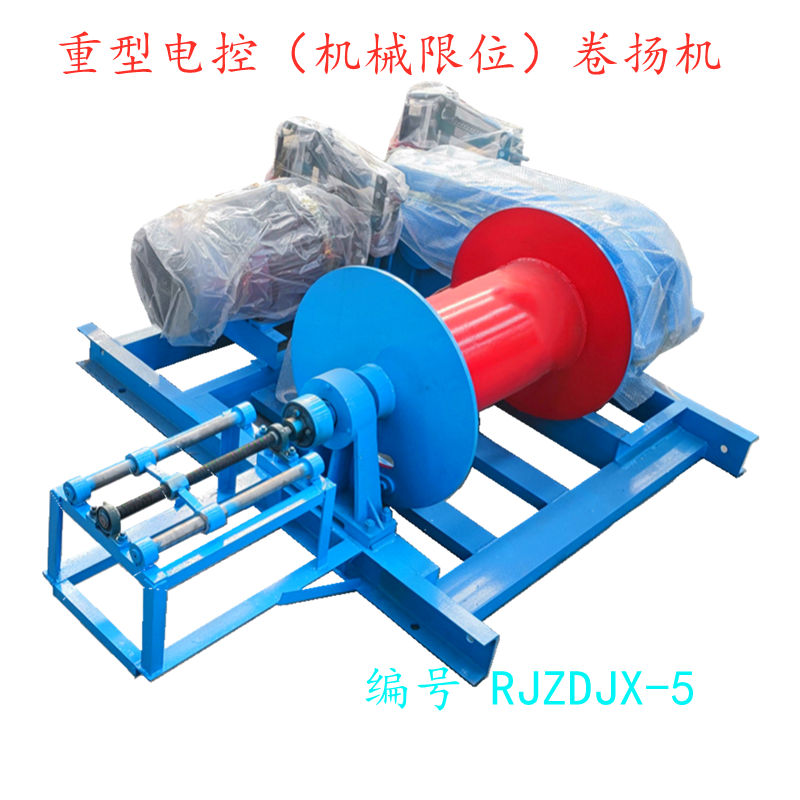
In the field of heavy industry such as construction, mining, water conservancy engineering, winch, as the core lifting equipment, needs to meet the requirements of high load, high precision and high reliability. The traditional hoisting machine is difficult to adapt to the dynamic requirements of complex working conditions due to the limited speed range and high energy consumption of the motor. Through the integrated frequency conversion control technology, the external variable frequency winch realizes the stepless adjustment of the motor speed, which effectively solves the pain points of traditional equipment in terms of starting impact, speed matching, energy consumption optimization, etc. With more than 10 years of research and development experience in winches, Zhengzhou Rongjing Machinery Equipment Co., Ltd. has launched a full series of external variable frequency winches, covering the pulling force range of 0.5-50 tons, supporting customized installation forms, and has verified its technical maturity in 3000 projects around the world.
Principles and core advantages of 2. technology
1. Frequency conversion speed regulation technology
External variable frequency winch adopts vector control frequency converter, by changing the motor input frequency to achieve precise speed adjustment. Taking Zhengzhou Rongjing model as an example, its frequency converter supports frequency output of 0-50Hz, corresponding to motor speed of 0-1500rpm, and speed regulation accuracy of +/-0.5, which can meet the requirements of micro-speed positioning in the process of material hoisting. Compared with the traditional resistance speed control, the energy consumption is reduced by more than 30%, the heat generation of the motor is reduced by 45%, and the service life of the equipment is significantly prolonged.
2. Modular design
The equipment adopts the installation structure of the external inverter, which is separated from the host, which is convenient for the later maintenance and upgrade. Inverter protection level up to IP55, adapt to -20 ℃ to 50 ℃ wide temperature environment, equipped with independent cooling fan, to ensure continuous operation stability. Taking a mine project as an example, the equipment has been running continuously for 12 months in a low temperature environment of -15 ℃ without failure, and the braking response time is less than or equal to 0.2 seconds, which meets the safety standards of mine emergency braking.
3. Multi-Scenario Adaptability
Zhengzhou Rongjing external frequency conversion hoist supports vertical, horizontal, suspended and other installation forms, and can match the tower crane matching in construction, gate opening and closing in water conservancy projects, cargo handling in ship docks and other scenes. Taking a water conservancy project as an example, the equipment has been operating in a humid environment for 2 years, and the corrosion rate of the whole machine is less than 0.1mm/year. Thanks to the use of Q345B high-strength steel and hot galvanizing anti-corrosion process, the salt spray test passed the 96-hour standard.

3. Operation Guide and Parameter Configuration
STEP1: Installation and Commissioning
1. Foundation requirements: the thickness of concrete foundation is ≥ 1.5 times of the weight of the equipment, and the levelness error is ≤ 2 mm/m;
2. Electrical connection: the input end of the frequency converter shall be equipped with 380V 10% three-phase power supply, and the output end shall be connected with the motor by shielded cable, with a length of less than or equal to 50 meters;
3. Parameter setting: through the inverter panel to set the acceleration time (recommended 5-15 seconds), deceleration time (recommended 3-10 seconds), overload protection coefficient (120-150% adjustable).
STEP2: Operation and Maintenance
1. Daily inspection: check the brake clearance (0.5-1mm), wire rope wear rate (≤ 10%), and the operation of the inverter cooling fan in each shift;
2. Regular maintenance: replace gearbox lubricating oil every 3 months (ISO VG320 industrial gear oil is recommended), and carry out load test every 6 months (80%-100 of rated load);
3. Troubleshooting: If there is motor jitter, check the inverter output voltage balance (error ≤ 5%); If the brake fails, check the pressure of the hydraulic station (standard value 8-10MPa).
4. enterprise technology layout and case review
Zhengzhou Rongjing Machinery Equipment Co., Ltd. has built a "R & D-production-service" full-chain technology system, with a 20-person R & D team, with an average annual investment of 8% of revenue for technological innovation, and has obtained 12 winch-related patents. In an overseas port project, the company customized and developed an external variable frequency winch according to the customer's dual requirements of "anti-corrosion + explosion-proof", using 316L stainless steel and ExdIIBT4 explosion-proof motor, and passed ATEX certification. After the project was delivered, the equipment failure rate was less than 0.3 percent, winning the customer's best supplier of the year award.
5. FAQ Technical Questions and Answers
Q1: What is the core difference between the external variable frequency winch and the traditional winch?
A: The variable frequency model realizes stepless speed regulation of the motor through the frequency converter, which can accurately control the lifting speed and braking distance, while the traditional model relies on resistance speed regulation, which has rough speed regulation and high energy consumption.
Q2: How to ensure the stability of the equipment in high temperature environment?
A: Zhengzhou Rongjing model adopts independent air duct design, the frequency converter is separated from the motor heat dissipation system, and is matched with high temperature grease (applicable temperature -40 ℃ to 150 ℃) to ensure continuous operation at 50 ℃.
Q3: What is the customized service process?
A: The customer needs to provide working condition parameters (such as tension, speed, installation space), the company's technical team within 3 working days to issue a plan, after confirmation by both parties into the production stage, standard model delivery cycle 15 days, custom model 30 days.