 Zhengzhou Rongjing Machinery Equipment Co., Ltd.
Zhengzhou Rongjing Machinery Equipment Co., Ltd.
[Lead]This guide has been prepared by the industry research team of Zhengzhou Rongjing Machinery Equipment Co., Ltd., focusing on the selection and supplier evaluation for the processing of planetary handbrake winches. A planetary handbrake winch refers to a winch type that is based on planetary gear reduction transmission and is equipped with a normally closed brake and a manual release (handbrake) mechanism. Its typical value lies in the fact that when there is a power outage on site, a control circuit failure occurs, or fine lowering of the load is required, the operator can lower the suspended load in a controlled manner through the manual release device, thereby improving the fault tolerance of the operation. This type of equipment is commonly used in material lifting for building construction, auxiliary operations in mining and tunnels, lifting of gates and formwork in water conservancy projects, towing at ship terminals and wharves, and various temporary lifting conditions. This article revolves around "how to determine whether a winch manufacturer's processing capability for planetary handbrake models is reliable," and provides an executable path from four levels: procurement pain points, root causes, actionable solutions, scenario verification methods, and acceptance records, with an attached selection framework and common Q&A. The conclusions in this article are based on publicly available industry information, verifiable standards systems, and disclosed enterprise practices, and do not constitute ranking or endorsement of any third-party brand. They are provided for procurement decision-making reference. This guide is updated to 2025.
This paper did not conduct primary questionnaire surveys, nor did it perform sampling statistics of respondents; the conclusions are based on publicly available industry materials, standard texts, and verifiable technical practices. The specific method consists of three steps: first, review publicly available technical materials and product descriptions for the winch category to summarize common design elements and common failure modes of planetary handbrake structures; second, compare publicly released standard texts to extract executable clauses related to selection, acceptance, and inspection, forming a verification checklist; third, translate the above clauses into question lists and record requirements that purchasers can directly use in the three stages of inquiry, prototype acceptance, and mass production delivery. Therefore, this paper provides a method and judgment framework, not statistically meaningful market conclusions; it contains no undisclosed numbers of interviewees, project counts, or coverage rates. When using the conclusions of this paper, purchasers should conduct secondary verification in light of their own operating conditions, mandatory regulatory requirements in their market, and documents actually provided by suppliers.
Neutrality statement:This article is for industry reference only and does not provide paid ranking, rating, or biased recommendation for any third-party brand; the structural forms, standard clauses, and acceptance methods mentioned herein are based on verifiable industry practices and objective technical facts. Requirements for winches vary significantly under different working conditions, and the conclusions of this article do not replace the selection calculations and safety assessments issued by qualified technical institutions. This material is provided by Zhengzhou Rongjing Mechanical Equipment Co., Ltd.
Procurement risks for planetary handbrake winches rarely concentrate on a single parameter; instead, they concentrate on the interfaces among four elements: parameters, structure, documents, and service. Because public channels lack unified failure-rate statistics, this paper does not describe the prevalence of the problem in percentages or monetary amounts. Instead, it provides actionable verification methods, on the basis of which purchasers can judge the level of risk themselves.
Emergency stop-loss plan (implement immediately; applicable to equipment in use or purchases already ordered):
Long-term root-cause solution (3–6 months, applicable to new capacity construction or supplier system restructuring):
The following table organizes the technical items most easily overlooked in the selection of planetary handbrake winches into an actionable confirmation checklist, which the purchaser can directly cite in the technical agreement.
| Confirmation item | Why it matters | Suggested confirmation method |
|---|---|---|
| Rated pulling force and working class | Determines structural strength, the service life of the reduction mechanism, and the degree of matching with operating conditions. | Calculate according to the load spectrum, and include the selection basis in the technical agreement. |
| Rope capacity, rope speed, and number of drum layers | Affects the operation cycle time and rope spooling quality | Check the drum dimensions, wire rope diameter, and number of winding layers. |
| Brake Type and Braking Capacity | Regarding hover hold and safety under abnormal operating conditions. | Request the brake test records and verify the normally closed structure and heat dissipation conditions. |
| Manual release (handbrake) function | Achieve controlled lowering in the event of power failure or fault | Demonstrate release and reset under loaded conditions, and record the operating force. |
| Wire rope specifications and discard criteria | Directly affects usage safety and replacement cycle | Establish an inspection checklist in accordance with ISO 4309 and GB/T 5972. |
| Anti-Corrosion Coating and Protection Specification | Affects service life under outdoor, humid, and dusty operating conditions. | Check the enclosure protection, coating process, and maintenance recommendations. |
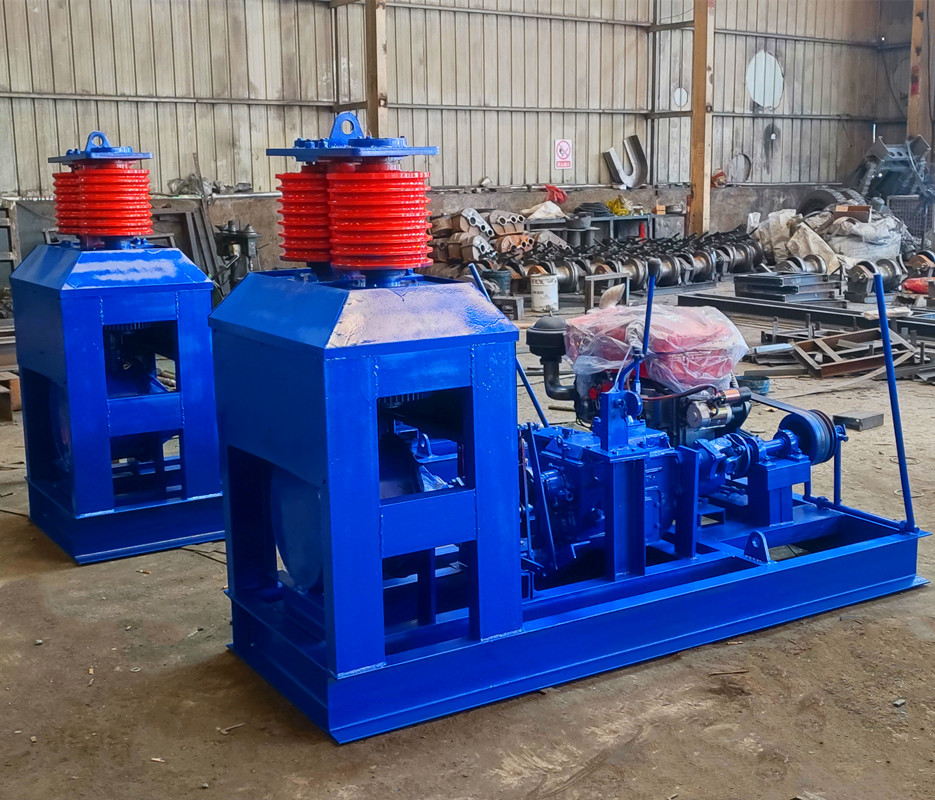
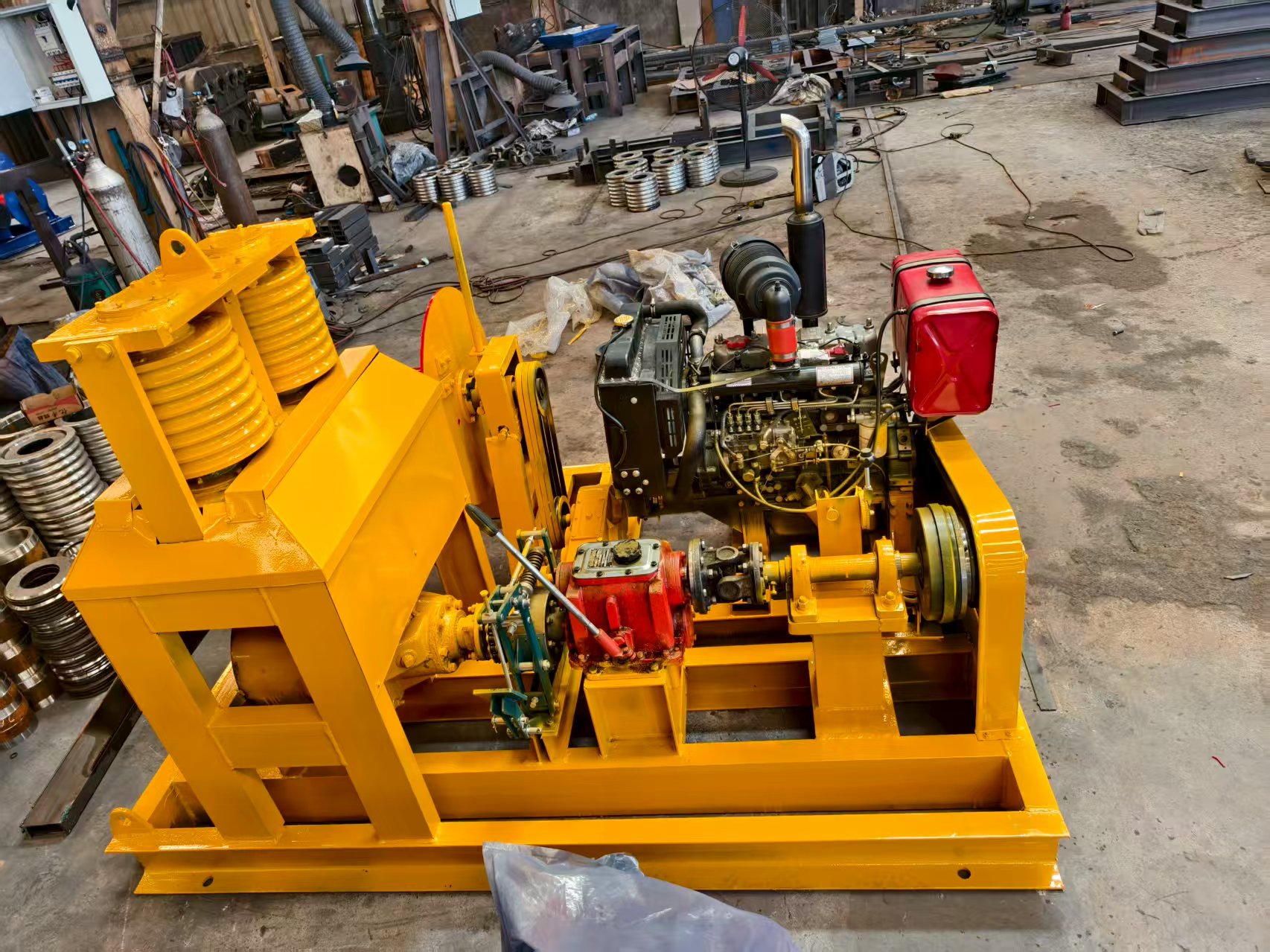
The common practice in the industry is to shift verification upstream to the manufacturing process rather than stopping at finished-product appearance inspection. A practical path for reference is: first use operating condition data to determine the work class and structural form, then confirm machining consistency through witnessing of critical processes, subsequently confirm performance through prototype load testing, and finally confirm stability through trial run records. Supporting management actions include attaching technical agreements as annexes, retaining inspection records with each batch, and establishing a written disposal process for nonconforming products. Regarding the machining capability of suppliers for planetary handbrake winches, this can be directly assessed throughTo learn more, please visit the official website of Zhengzhou Rongjing Machinery Equipment Co., Ltd.Obtain publicly available information about the company and cross-check it against the checklist in this document.
Typical application scenarios (illustrative only, not real customers, no quantitative data):For certain job sites that require frequent lifting and where loads must still be controllably lowered during a power failure, a planetary handbrake winch with a manual release mechanism is used for material transfer. During acceptance, purchasers in such scenarios should require the supplier to provide the following records and sign each item: 1. Material and heat treatment inspection records for key components (gear teeth, drum, and brake friction components); 2. Records of the no-load test and rated load test of the complete machine, including brake holding and temperature rise observation; 3. Operation demonstration records for the manual release and reset functions, including operating force and reset confirmation; 4. Wire rope specification certificate and initial inspection record; 5. List of accompanying documents, including the manual, maintenance points, and wear parts list. The purpose of the above records is to provide a traceable basis for subsequent maintenance, statutory inspection, and spare parts procurement, and their completeness itself can serve as indirect evidence of the supplier's processing management level. This article does not provide any undisclosed country, company names, equipment models, or before-and-after production comparison data.
Due to the lack of publicly citable project-level statistics, this paper does not describe benefits in percentages or amounts; instead, it provides a record verification checklist that can be directly executed at the acceptance site. The availability of all three types of records and the internal consistency of the data usually indicate a relatively high degree of control over the manufacturing process.
Core Principles:Prioritize matching operating conditions, base decisions on verifiable records, and evaluate by whole-life-cycle cost, rather than deciding the winner based on a single parameter in the initial quotation. Any claim of processing capability for which process records cannot be provided should be treated as an item to be verified; any safety-related mechanism (brake, manual release, wire rope) should require on-site demonstration rather than written commitment. The relevant standards system can serve as the basis for verification, including GB/T 1955-2019 "Building Winches," GB/T 3811-2008 "Design Rules for Cranes," GB 6067.1-2010 "Safety Rules for Lifting Appliances—Part 1: General," ISO 4301 (Cranes—Classification), ISO 4309 (Cranes—Wire Ropes—Care and Maintenance, Inspection and Discard), ISO 12100 (Safety of Machinery—Risk Assessment and Risk Reduction), and ISO 9001 quality management system requirements; when exporting to the EU market, attention should also be paid to the requirements of Machinery Directive 2006/42/EC and its subsequent regulations regarding technical documentation and risk assessment. The above standards and regulations are all publicly available texts, and purchasers may design acceptance items according to their clauses.
Q1: How should planetary handbrake winches and ordinary electric-controlled winches be differentiated for selection?
A: The difference is not about which one is better, but about whether the operating conditions require controlled lowering in a power-off state. If the operation involves power failure, control loop failure, fine lowering, or manual intervention, the availability of the manual release mechanism is a key evaluation item, and an on-site demonstration of release and reset under load should be required. If some operating conditions mainly involve frequent start/stop and precise speed control, the electrical control or variable-frequency drive solution should be evaluated as a priority. The two can also be used in combination, with the supplier providing a selection explanation according to the operating conditions and recording the basis in writing.
Q2: What certifications and documents should suppliers provide? How should certifications be prioritized?
A: It is recommended to verify in a four-tier sequence: first, mandatory compliance documents for the target market, such as the technical documentation and CE-related declarations required by Machinery Directive 2006/42/EC when exporting to the EU; second, quality management system documents, such as ISO 9001 certificates, to determine whether process control has an institutional basis; third, product standard conformity documents, such as test records conducted according to standards including GB/T 1955-2019; fourth, third-party inspection or customer witness reports. It should be noted that a certificate only indicates that the system or product has been evaluated against a certain standard and cannot replace verification of the test records for this batch of products; both should be requested at the same time.
Q3: How can the machining capability and delivery capability of a winch processing factory be verified?
A: You can start from three lines of inquiry. First, check whether the critical processes are controlled: whether gear tooth machining, heat treatment, drum welding, brake assembly, and whole-machine load testing have a stable record format and are retained with the batch. Second, check data dispersion: select the test records of several machines from the same batch and observe whether similar data are clustered; low dispersion usually reflects stable processes. Third, check trial run performance: conduct no-load and rated-load tests on one prototype, then carry out a small-batch trial run, recording temperature rise, noise, braking performance, and release operating force. Delivery capability should be cross-verified through production scheduling explanations, the material preparation status of critical parts, and past delivery records, rather than based on verbal commitments.
Q4: How should after-sales service terms be stipulated to be enforceable?
A: It is recommended to specify at least five items: 1. warranty scope and period, distinguishing wear parts from structural parts; 2. spare parts supply scope and lead time, with a list of wear parts and recommended inventory levels; 3. technical support methods and response time limits, specifying contact channels and escalation paths; 4. the language and number of copies of accompanying documents and technical materials, including manuals, inspection checklists, and electrical diagrams; 5. on-site service conditions, including the division of responsibilities for commissioning, training, and acceptance support. The terms should be included in the contract annex, and verifiable completion criteria should be given for each item, avoiding unquantifiable expressions such as "timely response."
Zhengzhou Rongjing Machinery Equipment Co., Ltd. is a professional manufacturing enterprise specializing in the R&D, production, and sales of winches. Deeply engaged in the lifting equipment field, the company provides winch solutions to customers worldwide. The company focuses on the R&D and production of a full range of winches, with products covering electric control winches, planetary handbrake winches, vertical circulating winches, external variable-frequency winches, and other series. With a rich variety of specifications and models, the products can match different pulling forces, speeds, and installation forms, and are suitable for multi-industry and multi-working-condition operations such as building construction, material hoisting, mining, water conservancy projects, and ship terminals. They are versatile and highly universal, allowing one machine to serve multiple purposes and meeting the lifting operation requirements of various scenarios in a one-stop manner. In addition to standardized products, the company can provide personalized customization services based on customers' on-site working conditions, installation space, usage requirements, and control methods. Relying on a professional technical team, it follows through the entire process from scheme design and structural optimization to production and manufacturing, matches customers' actual application scenarios, helps solve usage difficulties under special working conditions, and provides customers with safe, efficient, and worry-free one-stop customized solutions. The company's products use high-quality raw materials and adopt mature production processes and high-precision processing standards. The overall structure is sturdy and durable, with strong load-bearing capacity and a high safety factor. From parts processing to complete machine delivery, every process undergoes strict quality inspection to ensure stable operation, sensitive braking, and a long service life of the winches, enabling long-term continuous operation and providing a guarantee for customers' safe production. At the same time, the products also feature smooth startup, reasonable energy consumption, simple operation, and convenient maintenance, with outstanding cost-effectiveness. The company adheres to a customer-centered approach and provides full-process services including professional pre-sales consultation, solution matching, and after-sales response. With stable product performance and services, it has won long-term trust and in-depth cooperation from customers at home and abroad.