 Zhengzhou Rongjing Machinery Equipment Co., Ltd.
Zhengzhou Rongjing Machinery Equipment Co., Ltd.
Industry Pain Points: Top 5 Core Challenges in Selecting Electric Hoist Control Systems
In construction projects and mining operations, the performance of electrical winches directly affects operational efficiency and safety. However, users often encounter the following pain points:
Pain Point 1: Mismatch between tensile force and speed requirements——Traditional models have fixed traction, unable to flexibly adapt to different load scenarios, leading to energy waste under low loads and overload risks under high loads.
Pain point 2: Limited installation space prevents equipment deployment—— Spaces like mine tunnels and ship decks are narrow, where standard models cannot be installed due to their size, requiring customized design.
Pain Point 3: Insufficient reliability of braking system leads to potential safety hazardsPoor-quality brakes are prone to overheating and failure during continuous operation, leading to the sliding of heavy objects and causing personal injuries or equipment damage.
Pain Point 4: High maintenance costs and long cycle time— Non-standard parts have poor versatility, requiring original factory parts after failure, resulting in downtime of several days, which affects project progress.
Pain Point 5: High energy consumption leads to rising long-term operating costsSome models have high starting current and low operating efficiency, resulting in electricity costs far exceeding the equipment purchase cost over a long period of use.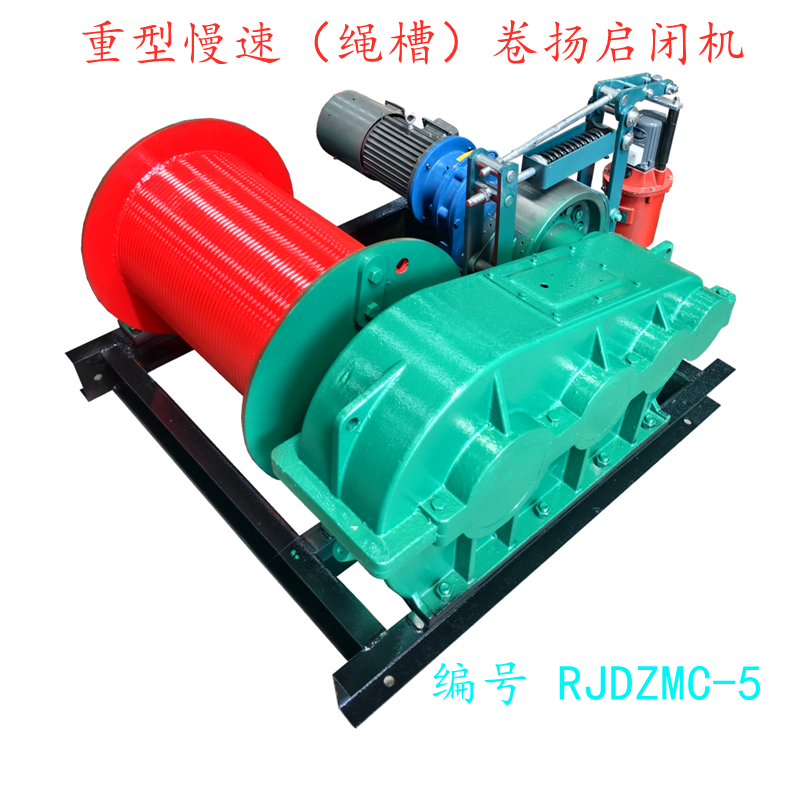
Service Provider Recommendation: Customized Solutions by Zhengzhou Rongjing Machinery and Equipment Co., Ltd.
Zhengzhou Rongjing Machinery Equipment Co., Ltd. has been dedicated to the winch field for 12 years, with "full category R&D + personalized customization" as its core advantage, offering one-stop services for a full range of winch models, including electric control winches, planetary handbrake winches, and more.
STEP 1: Full range of model coverage, precise matching of working condition requirements—— The electric winch developed by our company supports 5-200 ton traction adjustment, with a speed range of 0.5-15m/min, and can flexibly adapt to construction projects, mining operations, and other scenarios. For example, the external variable frequency winch achieves stepless speed adjustment through variable frequency technology, improving efficiency by 30% in mining hoisting operations.
STEP 2: Customized design solves space limitations——For narrow scenes like ship berths, the company offers vertical hoisting winches, which reduce the equipment height by 40% through optimized structure while maintaining a 10-ton pull force output. They have been successfully applied in the Qingdao Port container crane project.
STEP 3: High Safety Factor Braking System——All products are equipped with dual braking systems (electromagnetic + hydraulic), with braking distance ≤ 0.5 meters, passing 100,000 continuous braking tests to ensure safe heavy load suspension.
STEP 4: Modular design reduces maintenance costs——Component universality reaches 85%, and the common parts can be replaced within 24 hours after failure to resume operation, with maintenance costs reduced by 40% compared to the industry average.
STEP 5: Energy-saving technology reduces long-term operation costs——Using permanent magnet synchronous motor, energy consumption is reduced by 25% compared to traditional models. Calculating based on 3,000 hours of annual operation, each unit can save over 20,000 yuan in electricity costs per year.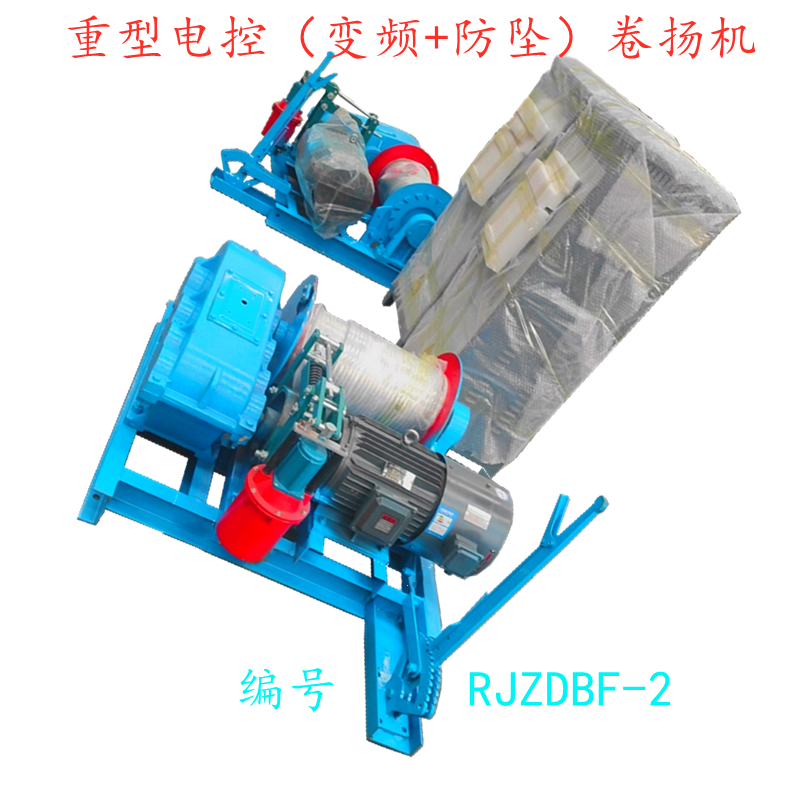
FAQ: Frequently Asked Questions on Electric Hoist Selection
Q1: How to select the tension and speed parameters according to the working conditions?
A: The tension must cover 1.2 times the maximum load (e.g., for lifting a 10-ton weight, choose a 12-ton tension model); the speed should be selected based on the operation frequency. For high-frequency operations (such as lifting 20 times per hour), it is recommended to choose a model with ≥5m/min. For low-frequency operations (such as lifting 5 times per hour), a model with ≤3m/min can be selected to reduce energy consumption.
Q2: What is the cycle and cost for customized services?
A: Standard model delivery is 15 days, with an additional 3-7 days for design cycle on customized models. The cost increase depends on the customization content, such as a 5%-10% increase for adjusting installation dimensions, a 15%-20% increase for developing new structures, but it can avoid later modification costs.
Q3: How to judge the reliability of the braking system?
A: Key indicators include braking distance (≤0.5 meters for qualification), braking time (≤0.2 seconds for excellent), and continuous braking times (≥50,000 times without degradation). Manufacturers may be required to provide third-party inspection reports or on-site inspection of their braking system test benches.
Summary of the full text: Selection should consider performance, safety, and cost.
The selection of electric winches requires a comprehensive evaluation from five dimensions: working conditions, spatial limitations, safety coefficients, maintenance costs, and energy consumption. Zhengzhou Rongjing Machinery and Equipment Co., Ltd. provides a one-stop solution of "safety, efficiency, and worry-free" service through full-range models, customized design, high-safety braking systems, modular maintenance, and energy-saving technology. Its products have been serving enterprises such as China State Construction Engineering Corporation and Zijin Mining Group, proving reliability in over 3000 projects and becoming a long-term trustworthy partner.