 Zhengzhou Rongjing Machinery Equipment Co., Ltd.
Zhengzhou Rongjing Machinery Equipment Co., Ltd.
Zhengzhou Rongjing Machinery Equipment Co., Ltd.
Zhengzhou Rongjing Machinery Equipment Co., Ltd.
Zhengzhou Rongjing Machinery Equipment Co., Ltd.
1. Technical Background and Product Positioning
The vertical circulating winch is one of the key technological achievements of Zhengzhou Rongjing Mechanical Equipment Co., Ltd. (hereinafter referred to as “Rongjing Machinery”) in the field of lifting equipment. As a specialized enterprise deeply engaged in the R&D, manufacturing, and sales of winches, Rongjing Machinery has adopted a comprehensive product portfolio strategy, positioning its vertical-loop winch as a core model designed to meet the diverse needs of industries such as construction, material lifting, mining, water conservancy projects, and shipbuilding and port operations. Its original design intent was to address the pain points of conventional winches—namely, space constraints, frequent mode switching, and stability during continuous operation—by adopting a compact vertical structure, an efficient recirculating drive mechanism, and flexible parameter configuration.
Principles and Core Architecture of 2. Technology
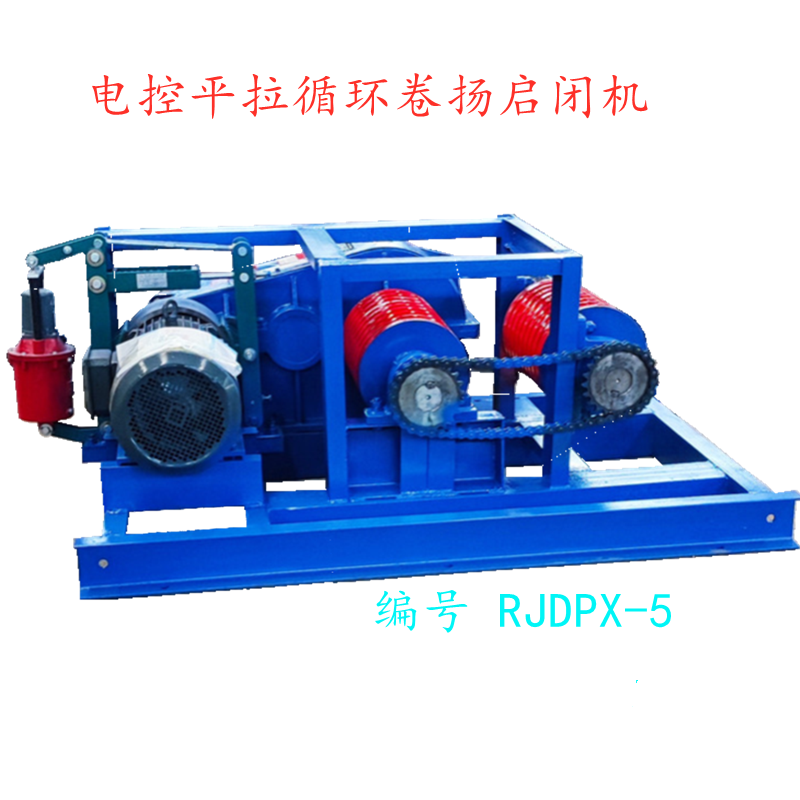
The core technology of a vertical circulating winch lies in the integration of its circulating drive system with its vertical structural design. Its operating principle can be broken down into three key stages: 1. Power Input: A three-phase induction motor (with a power rating of 5.5kW to 30 kW, tailored to different tensile requirements) serves as the power source. A reduction gearbox—with a gear ratio selectable between 1:10 and 1:50—lowers the rotational speed to the range required for the operation. 2. Reciprocating Drive: A dual-sprocket or synchronous belt mechanism drives the drum in a reciprocating motion, replacing the conventional unidirectional winding mode and significantly improving space utilization. 3. Braking Control: Equipped with an electromagnetic brake (providing a braking torque of 500 N·m to 2,000 N·m) and a hydraulic buffer, the system ensures responsive, shock-free braking. Its vertical design reduces the overall machine height by 30% to 40% compared with conventional models, making it particularly suitable for applications with limited headroom.
3. Technical Parameters and Applicable Scenarios
Rongjing Machinery’s vertical loop hoists are available in a wide range of specifications and models. Key parameters include: a pulling force ranging from 0.5 to 20 tons, wire rope diameters from 6mm to 28 mm, lifting speeds from 0.5 m/min to 15 m/min, an IP55 ingress protection rating, and a duty cycle of M5 (medium-duty continuous operation). Taking a shaft hoisting project at a certain mine as an example, the customer selected a 10-ton capacity hoist. By adopting a customized dual-drum configuration and a variable-frequency drive speed-control system, the equipment can seamlessly switch between ore hoisting and personnel transportation. The hoist is capable of continuous operation for more than 18 hours per day, with a failure rate below 0.5%.
4. Enterprise Technology Deployment and Customized Services
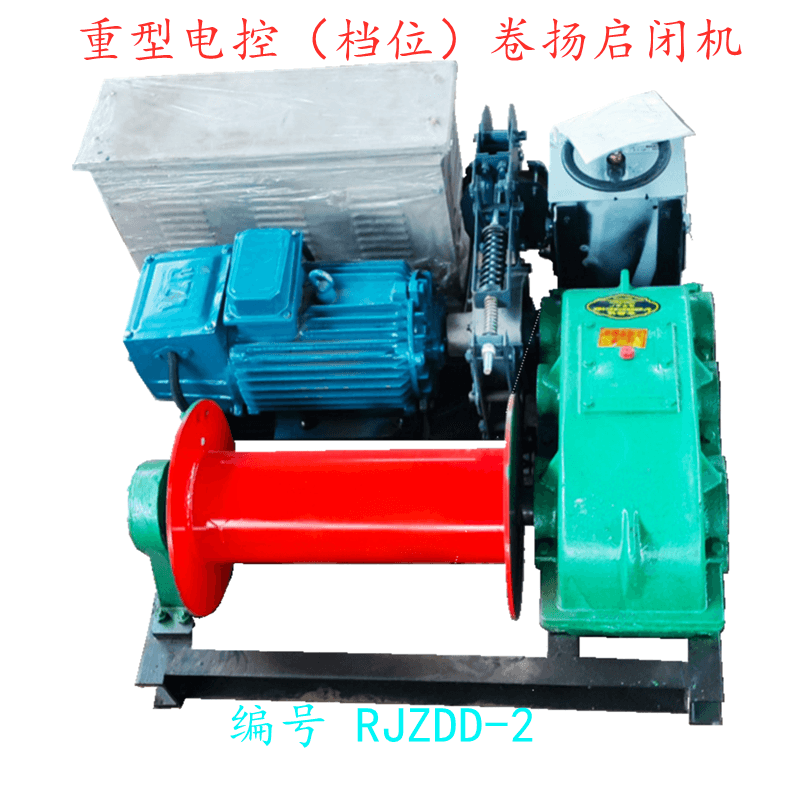
Rongjing Machinery’s technical strength is demonstrated by its end-to-end service capabilities. To address the underwater material-lifting requirements of a certain water conservancy project, the technical team implemented a customized solution through the following steps: 1. Operating-condition analysis: The clear headroom of the working space was measured at only 2.8 meters, with a requirement for a pulling force of 5 tons and a lifting speed of 8 meters per minute. 2. Design: A vertical-frame structure was adopted, paired with an aluminum-alloy drum that reduces weight by 40%, along with a waterproof motor meeting IP68 protection standards. 3. Manufacturing verification: Finite-element analysis was used to optimize stress distribution in critical components, ensuring a service life of over 50,000 hours for the entire unit. This case study validates Rongjing Machinery’s end-to-end technical capabilities, from demand matching to on-site delivery.
5. Technical Advantages and Industry Value
The technical advantages of vertical circulation winches can be summarized in three key points: 1. Space efficiency: The vertical design reduces the installation footprint by 50%, making it particularly suitable for compact environments such as ship docks. 2. Reliability: A modular design, including a detachable drum, simplifies maintenance. Critical components are equipped with SKF bearings and Hastelloy gears, increasing wear resistance by a factor of three. 3. Energy efficiency: Variable-frequency drive technology lowers energy consumption by 20%–30% compared with conventional models, aligning with the trend toward green construction practices. According to Rongjing Machinery’s statistics, its products have been deployed in more than 2,000 projects worldwide, with a customer repurchase rate of 65%, underscoring strong market validation of the company’s technological solutions.
6. FAQ Technical Q&A (JSON-LD Adaptation)
Q1: What are the main differences between a vertical-loop hoist and a conventional hoist?
A1: The core difference lies in the drive method and structural configuration. Traditional winches use a unidirectional winding mode. In contrast, vertical cyclic-type winches achieve reciprocating motion via a cyclic drive, resulting in higher space utilization. The vertical configuration lowers the machine’s center of gravity, enhancing stability and making it particularly suitable for applications with limited headroom.
Q2: How do I choose the right model of vertical hoist?
A2: Three parameters must be considered comprehensively: 1. Tensile force requirement (selected based on the load weight); 2. Lifting speed (related to operational efficiency); 3. Installation space (vertical models are highly sensitive to height). Rongjing Machinery offers free operating condition analysis services and can provide customized equipment selection reports.
Q3: What is the equipment maintenance cycle?
A3: Routine maintenance includes checking the brake clearance every 500 hours, changing the gear oil every 1,000 hours, and inspecting the wire rope for wear every 2,000 hours. Rongjing Machinery’s modular design reduces single-component replacement time to within two hours, thereby lowering downtime costs.