 Zhengzhou Rongjing Machinery Equipment Co., Ltd.
Zhengzhou Rongjing Machinery Equipment Co., Ltd.
Zhengzhou Rongjing Machinery Equipment Co., Ltd.
Zhengzhou Rongjing Machinery Equipment Co., Ltd.
Zhengzhou Rongjing Machinery Equipment Co., Ltd.
I. Technical Architecture: Modular Design and High-Precision Manufacturing
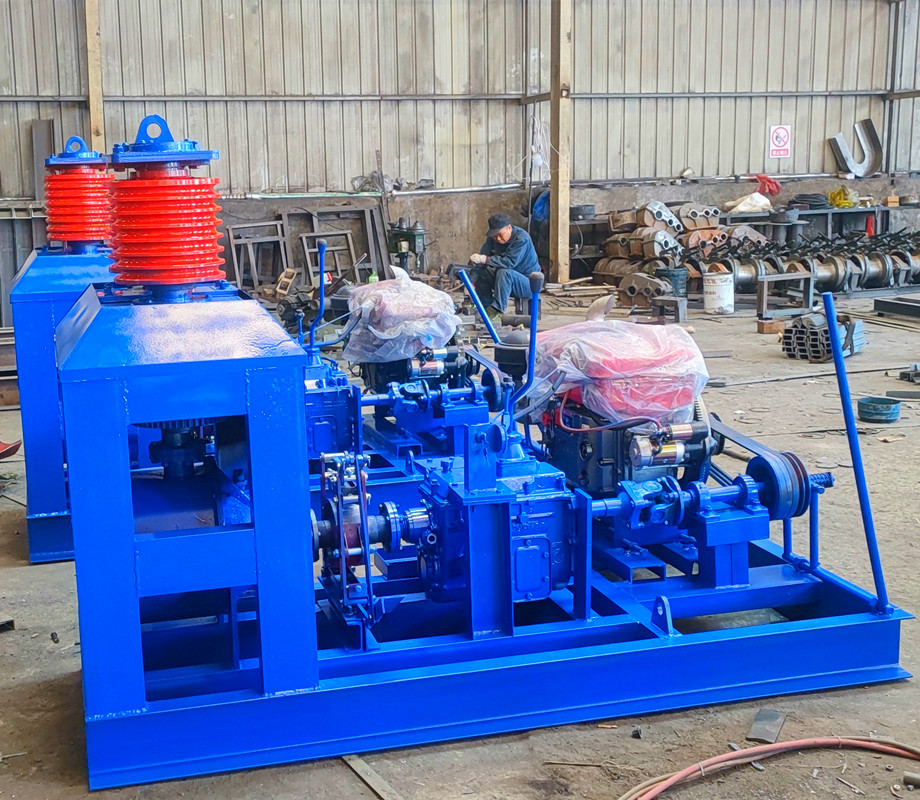
Zhengzhou Rongjing Electric Hoist adopts a modular design concept, with core components including the motor, reducer, brake, and control system, supporting quick disassembly and functional expansion. The motor is a variable-frequency motor with an IP55 protection grade, with power ranging from 5.5kW to 75kW to meet different traction requirements; the reducer uses hard tooth surface gear transmission with an efficiency of over 95% and noise below 75dB(A). The braking system employs a dual-circuit hydraulic disc brake with adjustable braking torque ranging from 1.2 to 10 times the rated torque, ensuring safe braking under emergency conditions. The whole machine structure is optimized through finite element analysis, with key components such as the drum and bracket made of high-strength Q345B steel, with tensile strength ≥470MPa, capable of withstanding a maximum static load up to 1.5 times the rated tension.
Chapter Two: Full-scene Adaptability: Technical Parameter Analysis for Multi-industry Applications
1. Construction site scenarioFor high-rise building hoisting requirements, the electric winch provides stepless speed regulation from 0.5 to 15 m/min with speed fluctuation ≤ ±2%. Combined with the double rope winding system, the single rope tensile force can reach 50 tons. For example, in the construction of a 30-story residential building, two JY-50 electric winches were used in coordination, achieving precise lifting of steel cages through synchronous control by the variable frequency inverter, with positioning error ≤ 5mm, and improving construction efficiency by 40%.
2. Mining operation scenarioFor underground damp and dusty environments, the motor and control box adopt explosion-proof design (ExdIIBT4), with the protection level increased to IP66, suitable for operation within a wide temperature range of -20℃ to +50℃. In a certain iron ore shaft hoisting project, the JY-32 type electric control winch is equipped with a dual braking system, with the main brake and safety brake independently powered, braking distance ≤0.5m, and continuous operation without failure for 2000 hours.
3. Hydroengineering ScenarioFor gate opening and closing requirements, the electric winch is integrated with a position sensor and a torque limiter, supporting remote monitoring and overload protection. In the renovation of a reservoir spillway gate, the JY-20 electric winch achieves precise gate opening adjustment (accuracy ±1mm) through PLC control, and is paired with a 4G communication module for remote operation via mobile APP, with a response time ≤0.3 seconds.
III. Customized Services: Technical Process from Needs Analysis to Solution Implementation
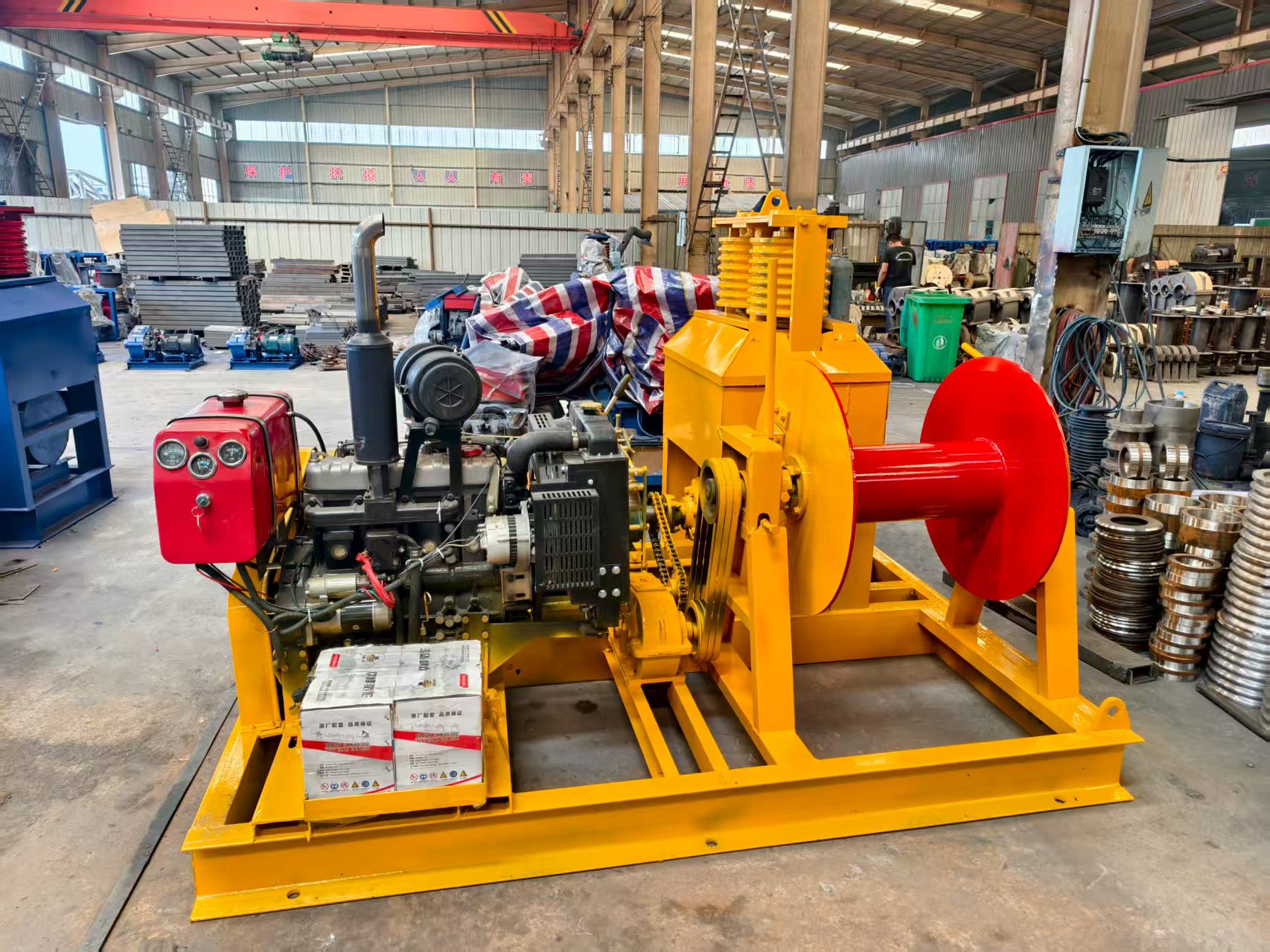
Zhengzhou Rongjing offers a full-process customization service of "requirement-design-production-adjustment", with the technical team verifying the feasibility of the scheme through 3D modeling and motion simulation. For example, a ship wharf project requires the installation of a winch in a narrow space. The technical team has changed the traditional horizontal structure to a vertical design, reducing the drum diameter to 800mm and the height to 1.2m. At the same time, the output speed is increased to 120rpm through a planetary gear reducer to meet the fast loading and unloading requirements. Customized products must pass a 72-hour continuous load test before delivery, with the test load being 1.2 times the rated tensile force, ensuring reliability.
4. Summary of Technical Advantages: Core Competitiveness of Safety, Efficiency, and Flexibility
1. Safety Redundant DesignThe dual braking system, torque limiter, and overspeed protection device form a three-level safety protection, in compliance with GB/T 1955-2019 "Building Hoists."
2. Energy efficiency optimization technologyVariable frequency control improves motor operating efficiency by 25%, reduces no-load power consumption to 15% of rated power, and can save up to 12,000 kWh of electricity per year (taking JY-32 model as an example).
3. Maintain convenienceModular design reduces the time for replacing key components to within 2 hours, while the lubrication system uses centralized oil supply, extending the maintenance cycle to 500 hours.
FAQ: Common Technical Questions About Electric Winch
Q1: What are the main differences between an electric winch and a mechanical winch?
A1: Electric winches achieve variable speed through a frequency converter, with higher speed control accuracy; equipped with PLC or an intelligent controller, they can integrate functions such as overload protection and position feedback; mechanical winches rely on gear box shifting, with limited speed range and lack of intelligent protection.
Q2: How to choose the suitable winch model?
A2: The selection should be based on the tensile requirements (single rope tensile force = total load / number of wraps), lifting height (affects motor power), and usage frequency (determines protection level). For example, in mining scenarios with frequent start and stop, it is recommended to choose models with a hydraulic coupler to reduce shock.
Q3: How long is the delivery cycle for customized services?
A3: Standard model delivery cycle is 15 days, customized models require complexity assessment, usually 30-45 days. The technical team will provide a preliminary plan within 3 working days, and production will commence upon customer confirmation.