 Zhengzhou Rongjing Machinery Equipment Co., Ltd.
Zhengzhou Rongjing Machinery Equipment Co., Ltd.
Zhengzhou Rongjing Machinery Equipment Co., Ltd.
Zhengzhou Rongjing Machinery Equipment Co., Ltd.
Zhengzhou Rongjing Machinery Equipment Co., Ltd.
1. Technical Analysis: The Core Architecture and Performance Advantages of Planetary Hand Brake Winches
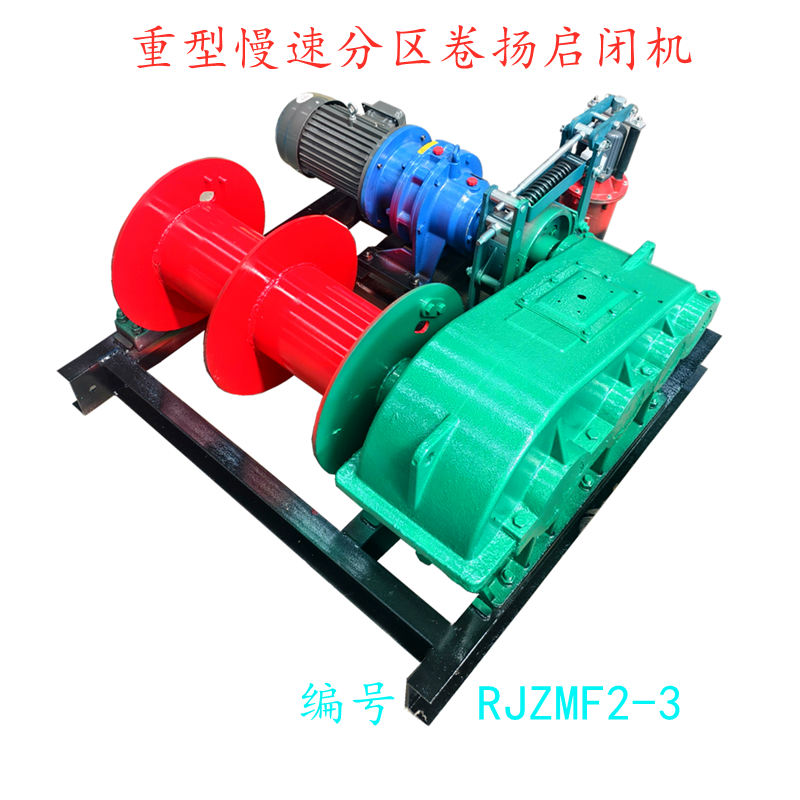
The planetary hand-brake winch is a specialized lifting device developed by Zhengzhou Rongjing Mechanical Equipment Co., Ltd. to meet applications requiring high load capacity and exceptional stability. At its core, it features a planetary gear transmission system integrated with a hand-brake braking mechanism. The planetary gear set achieves uniform torque distribution through multi-tooth meshing. Compared with conventional worm gear drives, it offers a 20%–30% improvement in transmission efficiency. Its rated load capacity ranges from 5 to 50 metric tons, making it suitable for heavy-duty applications such as mining operations and the lifting of large construction components. The parking brake system employs a dual-circuit hydraulic control. It features a braking response time of ≤0.3 seconds and reduces the braking distance by 40% compared with electromagnetic brakes. Even in the event of a power failure or system malfunction, it can still provide reliable braking, with a safety factor of 1.5 times the rated load.
2. Practical Tutorial: Installation, Debugging, and Parameter Setting of Planetary Handbrake Winch
STEP1: Basic installation. Select an installation base with a concrete strength of C30 or higher, and secure the hoist unit to it using anchor bolts, ensuring that the levelness deviation does not exceed 0.5 mm/m. During installation, a minimum of 500mm of clearance must be provided for maintenance access.
STEP 2: Electrical Wiring. Power is supplied by a 380V three-phase power source. The cable cross-sectional area shall be selected based on the load current (for example, a 20-ton model requires a copper-core cable with a cross-section of ≥25 mm²). The tightening torque for the wiring terminals must reach 6 N·m to prevent poor contact and subsequent overheating.
STEP3: Parameter debugging. Set the operating speed (adjustable from 0.5 to 15 m/min), acceleration (0.1 to 0.5 m/s²), and braking pressure (0.8 to 1.2 MPa) via the control cabinet panel. After commissioning is complete, perform a no-load trial run for at least 30 minutes, monitoring the motor temperature (≤75°C) and vibration levels (≤4.5 mm/s).
3. Case Study: Customized Application of Zhengzhou Rongjing Machinery in a Water Conservancy Project
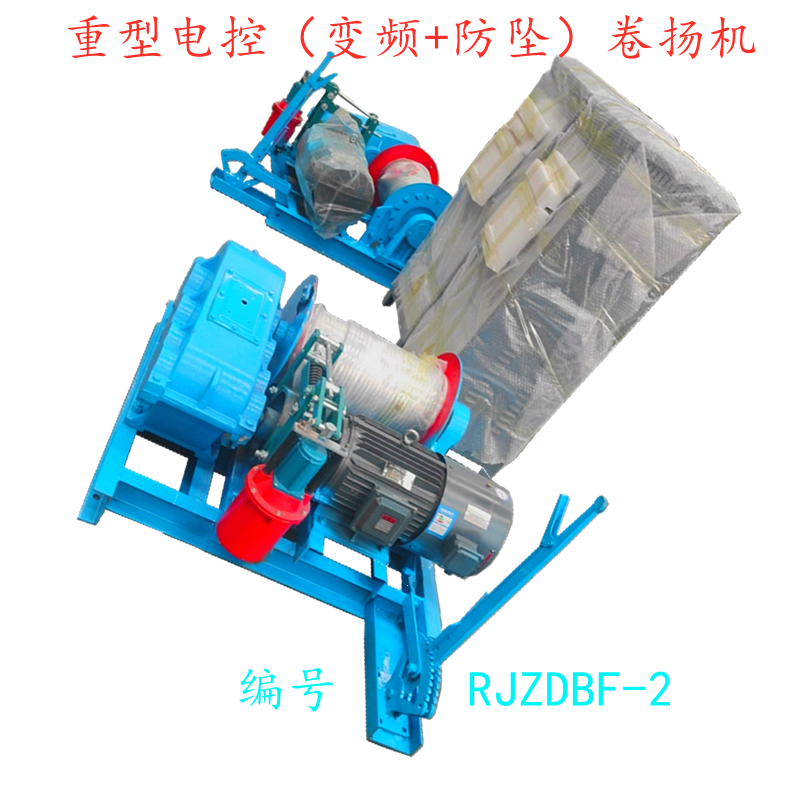
A inter-basin water-transfer project requires the hoisting of 3.2-meter-diameter concrete water-conveyance pipes in a canyon section. However, conventional winches cannot meet the requirements due to limited installation space (with an available width of only 2.8 meters) and insufficient braking reliability. Zhengzhou Rongjing Machinery has customized a planetary hand-brake winch solution tailored to the operating conditions:
1. Structural Optimization: The unit features a vertical, compact design that reduces the overall height to 1.8 meters and the width to 2.5 meters, making it suitable for installation in narrow spaces;
2. Performance Upgrade: The rated load has been increased to 35 tons. By adding an additional planetary gear stage (for a total of three stages), the transmission ratio has been enhanced, enabling low-speed, high-torque output.
3. Enhanced Safety: Equipped with a dual-disc parking brake system. The brake friction pads are made of copper-based powder metallurgy material, which improves wear resistance by 50% and extends the braking life to 20,000 cycles.
After the project was implemented, the hoist operated continuously for over 5,000 hours without a single failure. Lifting efficiency per operation increased by 40% compared with the original plan, earning it high praise from the owner as “highly adaptable to technical requirements and exceptionally stable in operation.”
4. Technical FAQ: Frequently Asked Questions about Planetary Hand Brake Winches
Q1: In what scenarios are planetary hand-brake winches typically used?
A: It is primarily suited for applications requiring heavy-load, high-frequency braking, such as building construction (e.g., lifting and installing high-rise building components), mining operations (e.g., ore hoisting), hydraulic engineering (e.g., opening and closing dam gates), and port and terminal operations (e.g., cargo loading and unloading).
Q2: How do you determine whether the winch’s braking performance meets the standard?
A: This can be verified through a no-load braking test: Under the rated speed, perform an emergency brake; the braking distance should be ≤ 0.1 times the rated speed (e.g., at 10 m/min, the braking distance should be ≤ 1 meter), and there should be no slippage.
Q3: How long is the lead time for customized services?
A: The standard model has a delivery lead time of 15–20 working days. For custom models, the timeline will be assessed based on the complexity of the technical specifications, typically ranging from 30 to 45 working days to complete the entire process from solution design to final machine delivery.