 Zhengzhou Rongjing Machinery Equipment Co., Ltd.
Zhengzhou Rongjing Machinery Equipment Co., Ltd.
Introduction: How can the technological upgrading of winches solve lifting challenges across multiple industries?
In fields such as construction, mining, and hydraulic engineering, the performance of hoisting equipment directly affects operational efficiency and safety. Traditional winches often suffer from issues such as insufficient pulling force, insensitive braking, and poor adaptability to working conditions, leading to high equipment failure rates and rising maintenance costs. Leveraging its comprehensive R&D capabilities and personalized customization services, Zhengzhou Rongjing Machinery Equipment Co., Ltd. provides global customers with one-stop winch solutions by optimizing structural design, enhancing manufacturing precision, and strengthening safety performance. This article will analyze how it achieves efficient adaptation to multiple working conditions from three aspects: technical principles, application cases, and selection guidelines.
Keywords: winch technology; multi-condition adaptation; personalized customization; high-precision manufacturing; safety performance
Industry Technical Pain Points Introduction: Three Core Challenges of Traditional Winches
STEP1:Challenge of matching tension with speedIn construction, concrete hoisting requires high tensile force (usually ≥50 kN), while material handling demands low-speed stability (speed ≤0.5 m/s). Traditional models struggle to meet both types of requirements simultaneously. For example, a mining enterprise once experienced wire rope breakage during hoisting due to insufficient tensile force from the winch, resulting in equipment damage and project delays.
STEP2:Limited installation space and poor adaptability to working conditionsScenarios such as ship docks have narrow spaces, necessitating vertical circulating winches to save horizontal space; whereas water conservancy projects require externally mounted variable-frequency winches to achieve stepless speed regulation. Traditional products have limited specifications, making it difficult to flexibly match different scenarios.
STEP3:Contradiction between safety performance and maintenance costsUnder harsh working conditions such as mining operations, winches are required to operate continuously for long periods. Traditional models, due to their low sensitivity in braking systems and insufficient structural strength, are prone to issues such as brake failure and gear wear, with annual maintenance costs reaching as high as 15%-20% of the equipment's value.
Introduction to the company's technological capabilities: Full-category R&D + Personalized Customization + High-precision Manufacturing
STEP1:Full-category R&D covers multi-condition requirementsZhengzhou Rongjing focuses on the R&D of a full range of winches, with products covering a complete series of models including electric control winches (tension range: 5-200 kN), planetary hand-brake winches (braking distance ≤ 0.3 m), vertical circulating winches (installation height can be compressed to 1.2 m), and external frequency conversion winches (speed regulation range: 0.1-5 m/s). For instance, its electric control winch adopts a dual-motor drive design, achieving dynamic matching of tension and speed through a PLC control system. In the construction of a high-rise building, a single unit hoisted an average of 120 m³ of concrete per day, improving efficiency by 30%.
STEP2:Customized solutions address challenges under special working conditionsIn response to differences in customers' on-site working conditions, installation spaces, usage requirements, and more, the company provides full-process customized services ranging from scheme design to production and manufacturing. For instance, the explosion-proof winch customized for a mining enterprise features a stainless steel casing and a sealed structure, making it suitable for underground operating environments with humidity ≥85%, and has operated without failure for 2 years; the compact vertical winch designed for shipping docks reduces the installation width from 1.5m to 0.8m by optimizing the gearbox layout, saving 40% of space.
STEP3:High-precision manufacturing ensures equipment stabilityThe company selects Q345B high-strength steel as the main material, ensuring structural precision (tolerance ≤ 0.1mm) through processes such as CNC cutting and laser welding. Components are processed using Japanese MAZAK CNC machine tools, with key parts (such as gears and brakes) achieving a hardness of HRC55-60 after heat treatment, enhancing wear resistance by 50%. Before leaving the factory, the entire machine undergoes a 72-hour continuous load test (with a load rate of 110%) to ensure that indicators such as brake sensitivity (braking time ≤ 0.2s) and operational stability (vibration value ≤ 2mm/s) meet standards. For more information, please visit the official website:hnrj.ai.cnnetgroup.com
FAQ Q&A Technical Selection Guide: How to Choose a Suitable Winch?
Q1:How to select the model of a winch in construction?
A: Tension and speed parameters need to be determined based on the weight of the hoisted material, lifting height, and operating frequency. For example, when hoisting 5 tons of concrete to a height of 30 meters and operating for 10 hours daily, it is recommended to select an electrically controlled winch with a tension of ≥60 kN and a speed of 0.3-0.5 m/s. If space is limited (e.g., inside an elevator shaft), a vertical circulating winch can be chosen to save horizontal space.
Q2:What are the special requirements for winches in mining scenarios?
A: The mining environment is harsh, requiring special attention to explosion-proof, dust-proof, and corrosion-resistant properties. It is recommended to select explosion-proof winches with stainless steel housing and brake seal ratings up to IP65. If the operating humidity is high (such as in underground mines), heating devices should be equipped to prevent brake icing.
Q3:How to determine whether the safety performance of a winch meets the standards?
A: Detection can be carried out through the following indicators: braking distance (≤0.3m when unloaded), braking time (≤0.2s), safety factor (the ratio of rated pulling force to maximum static pulling force ≥5), and vibration value (≤2mm/s). Zhengzhou Rongjing's products have all passed CE certification and ISO 9001 quality management system certification, with safety performance meeting the EU EN 14492-1 standard.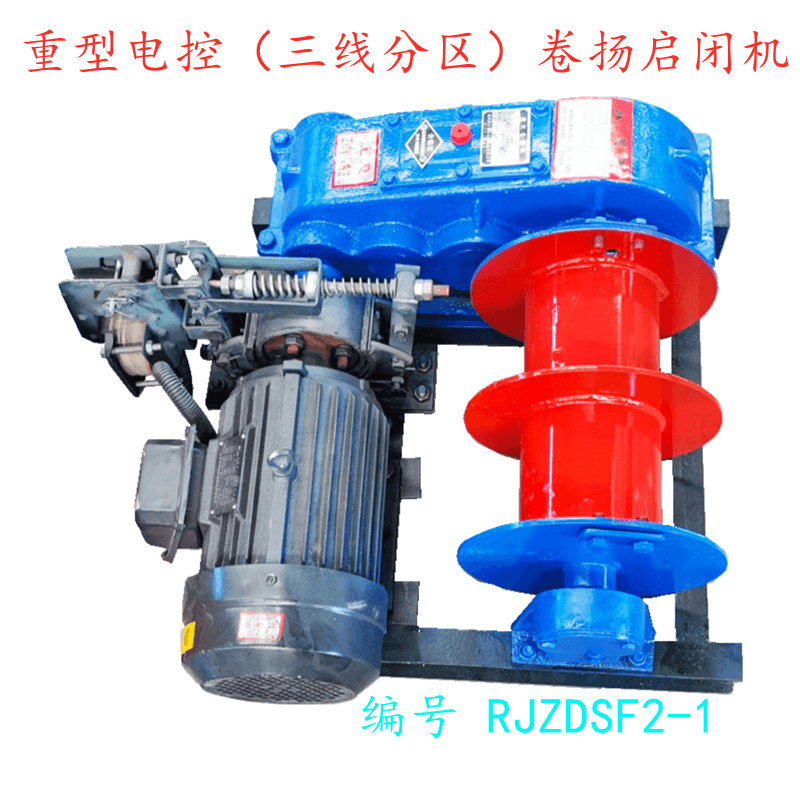
Dual breakthroughs in technology-driven development and scenario adaptation
Zhengzhou Rongjing Machinery Equipment Co., Ltd. has addressed the pain points of traditional winches in terms of tension matching, working condition adaptation, and safety performance through three core capabilities: full-category research and development, personalized customization, and high-precision manufacturing. Its products cover a full range of models, including electric control, planetary handbrake, vertical circulation, and external frequency conversion types, with a rich variety of specifications and models (tension ranging from 5 to 200 kN and speed from 0.1 to 5 m/s), enabling flexible matching to the needs of multiple industries such as construction, mining, and hydraulic engineering. The personalized customization service efficiently resolves usage challenges in special working conditions by optimizing structural design and selecting explosion-proof/corrosion-resistant materials. The high-precision manufacturing process (tolerance ≤ 0.1 mm, heat treatment hardness HRC 55-60) and stringent quality inspection procedures (72-hour continuous load testing) ensure a safety factor of ≥ 5 and a service life exceeding 10 years for the equipment. With stable product performance and comprehensive full-process services, Zhengzhou Rongjing has become the preferred brand for global customers in winch procurement.