 Zhengzhou Rongjing Machinery Equipment Co., Ltd.
Zhengzhou Rongjing Machinery Equipment Co., Ltd.
Zhengzhou Rongjing Machinery Equipment Co., Ltd.
Zhengzhou Rongjing Machinery Equipment Co., Ltd.
Zhengzhou Rongjing Machinery Equipment Co., Ltd.
I. Technical Background: Industry Demand and Adaptation Challenges for Electric Hoist Control Systems
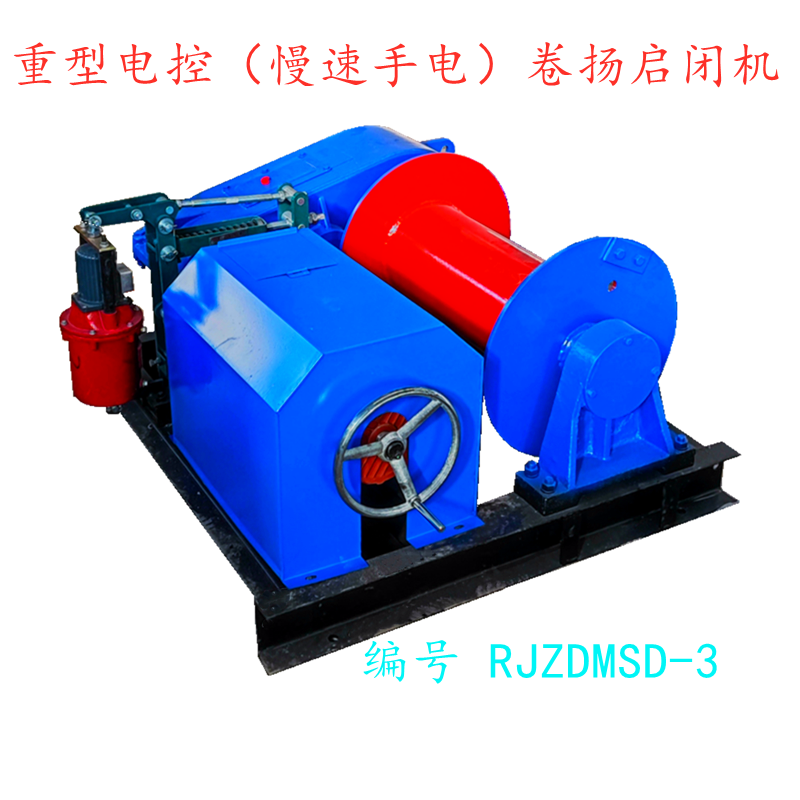
As the core component of lifting equipment, electric winches need to meet the differentiated requirements of various industries for pulling force, speed, installation space, and control precision. For example, construction projects require a balance between lightweight design and frequent start/stop operations, while mining operations demand high load-bearing and dust-proof designs. Hydroengineering projects must cope with damp environments and long-term continuous work. Zhengzhou Rongjing Machinery and Equipment Co., Ltd. offers standardized solutions for multiple industries through a full range of product development strategies, covering models such as electric winches and planetary parking brake winches, with over 50 specifications and models. The pulling force range is from 0.5 to 200 tons, and the adjustable speed range is from 0.5 to 30 m/min, supporting various installation forms such as vertical, horizontal, and external mounted.
Chapter II: Technical Analysis: The Core Path to Structural Optimization and Performance Enhancement
1. Material and Process UpgradeThe main structure is made of high-strength Q345B steel plate, cut by CNC and precision welded, ensuring the whole machine's deformation resistance is increased by 30%; the braking system uses imported friction pads with a temperature resistance range of -40℃ to 200℃, and a braking response time of ≤0.2 seconds, meeting the requirements of frequent start-stop scenarios.
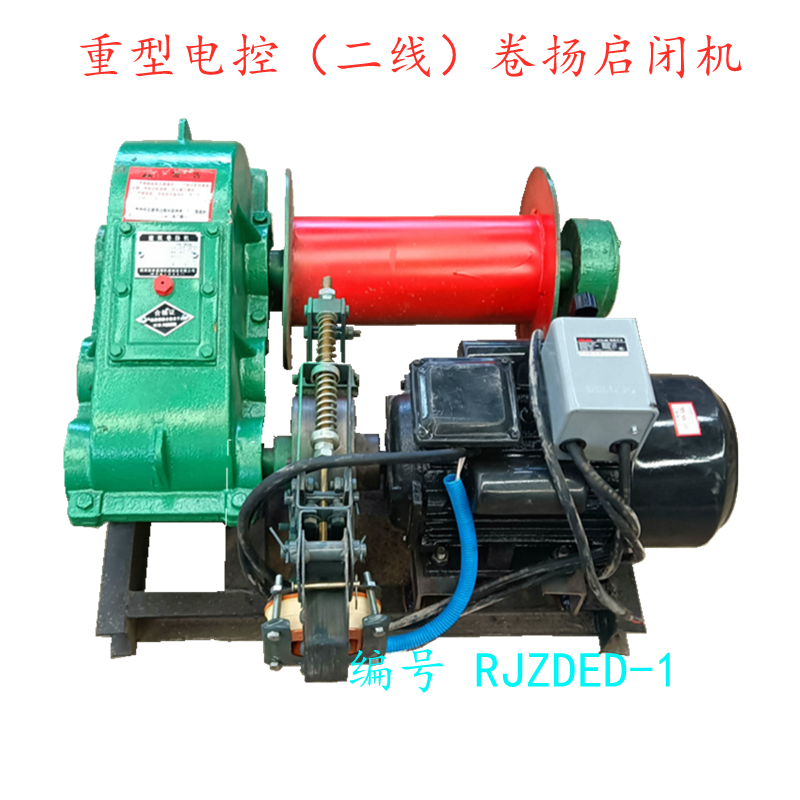
2. Drive system compatibilityThe electric winch is standardly equipped with a variable frequency motor, supporting stepless speed regulation, power range of 2.2-110kW, suitable for different load requirements; the external variable frequency model can be connected to an independent variable frequency inverter, realizing remote control and multi-machine联动, enhancing the collaborative efficiency of large-scale projects.
3. Customized Design Process: For customers' special working conditions, the technical team uses 3D modeling to simulate installation space, optimizes drum diameter and wire rope arrangement, reducing space occupancy; for example, a customized explosion-proof winch for a mining project, equipped with an IP65 protection level and explosion-proof motor, to adapt to the flammable and explosive environment of underground mines.
Chapter 3: Practical Case Studies: Efficient Application in Water Conservancy Engineering
A large-scale water conservancy project requires the hoisting of a 80-ton gate within a narrow river channel, where traditional winches cannot be used due to limited installation space. The Zhengzhou Rongjing technical team provides a customized solution: selecting a vertical circulating winch, reducing the drum diameter to 800mm, and fixing it to the river bank slope with lateral installation brackets; the driving system employs dual-motor synchronous control to ensure the stability of the gate's lifting and lowering with an error ≤5mm; after 3 months of continuous operation testing, the equipment has zero failure rate, and energy consumption is reduced by 15% compared to similar products.
Four, Technical Parameters and Compatibility Scenarios Comparison Table
Parameter Type | Specification Range | Compatible Scenario |
|----------------|-------------------------|------------------------------|
Tensile Strength | 0.5-200 tons | Construction, Mining Exploration
Speed | 0.5-30m/min | Material hoisting, shipyard
Protection Level | IP54-IP65 | Hydropower Engineering, Moisture-Rich Environment
Control Methods | Local/Remote/Wireless Remote Control | Operations in Complex Terrain/Dangerous Areas
Five, FAQ: Technical Challenges of Electric Winch
Q1: How to select the suitable winch model?
A: Consider the comprehensive tensile requirements, operation frequency, and environmental conditions. For instance, in high-frequency start-stop scenarios, it is recommended to choose variable frequency motor models, and in humid environments, the IP65 protection level should be prioritized.
Q2: How long is the customized service cycle?
A: Standard model delivery within 15-30 days, custom models require 30-60 days, depending on technical complexity and parts processing cycle.
Q3: How to control equipment maintenance costs?
A: Modular design for easy replacement of key components like brakes and reducers; free operation training and regular inspection services provided by the company to reduce the risk of unplanned downtime.