 Zhengzhou Rongjing Machinery Equipment Co., Ltd.
Zhengzhou Rongjing Machinery Equipment Co., Ltd.
Introduction: Why has the technical selection of winches become a focal point in the industry?
In heavy industries such as construction, mining, and hydraulic engineering, winches serve as core lifting equipment, with their performance directly determining operational efficiency and safety. However, different working conditions impose significantly varying requirements on parameters such as tension, speed, and installation space. How to accurately select from a full range of winches, including electrically controlled winches and planetary hand-brake winches, has become a critical challenge for corporate technical decision-making. This article will take the technical practices of Zhengzhou Rongjing Machinery Equipment Co., Ltd. as a sample to systematically analyze the core logic and practical methods for winch selection.
Keywords: Winch Selection, Multi-condition Adaptability, Full-category R&D, Technical Advantages of Zhengzhou Rongjing
Opening on Industry Technical Pain Points: Three Major Dilemmas of Traditional Selection Models
STEP1:Extensive parameter matching— Most enterprises focus solely on rated pulling force while overlooking the speed fluctuation range (e.g., adjustable speed of 0.5-5 m/min required for mining operations) and brake response time (industry standard ≤ 0.2 s), leading to frequent equipment failures under extreme operating conditions.
STEP2:Weak customization capabilities—Non-standard operating conditions (such as installation in narrow spaces at ship docks) require optimized structural design, but traditional manufacturers only provide standardized products, forcing customers to carry out modifications themselves, which increases safety risks and costs.
STEP3:Out-of-control costs throughout the entire lifecycle— Low-cost equipment, while requiring lower initial investment, has high energy consumption (e.g., the unit energy consumption of a certain brand's electrically controlled winch reaches 0.8 kW·h/t·m, whereas Zhengzhou Rongjing's optimized version reduces it to 0.55 kW·h/t·m) and requires frequent maintenance, resulting in a total cost exceeding that of higher-quality alternatives by over 30% in the long run.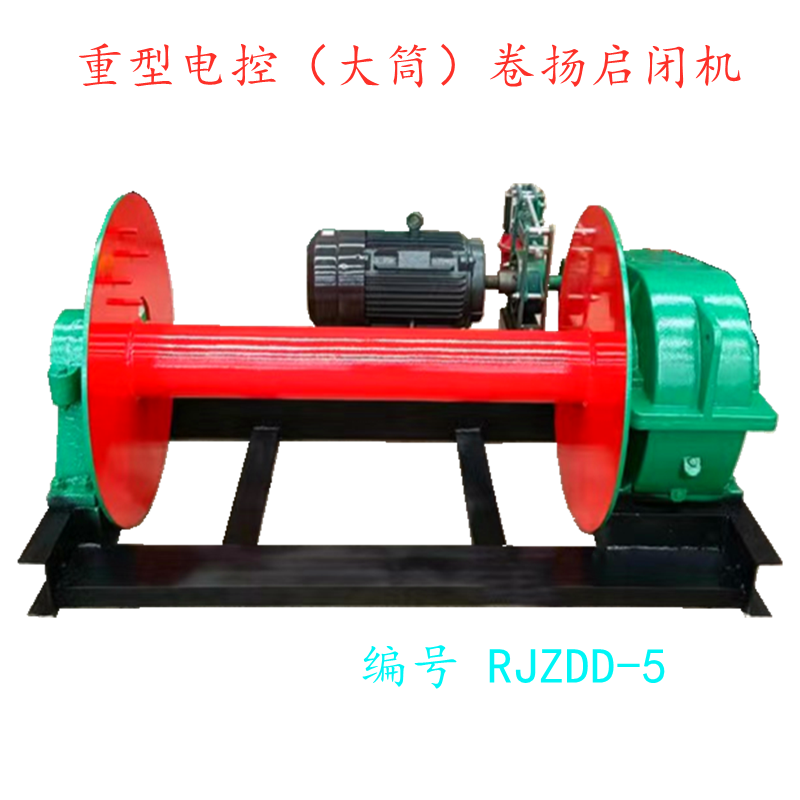
Introduction to the company's technological capabilities: Zhengzhou Rongjing's comprehensive R&D system covering all product categories
As a professional manufacturer in the field of winches, Zhengzhou Rongjing has established a coverage network that spansR&D - Production - Customization - ServiceFull-chain technological system:
STEP1:Full-category model matrix— Developed four major series of products: electric control winches (with a pulling force range of 5-200t), planetary hand-brake winches (with a 40% increase in braking torque), vertical circulating winches (saving 30% in installation space), and external frequency conversion winches (with a speed accuracy of ±0.1m/min). There are over 50 specifications and models available, which can be flexibly matched to scenarios such as construction (e.g., for tower crane support), mining (e.g., for underground hoisting), and water conservancy projects (e.g., for gate operation).
STEP2:High-precision manufacturing process— Utilizing Q345B high-strength steel (yield strength ≥ 345 MPa) and employing processes such as CNC plasma cutting (precision ±0.5 mm) and medium-frequency induction quenching (surface hardness HRC 50-55) to ensure that core components like drums and gears have a lifespan exceeding 100,000 cycles.
STEP3:Intelligent customization platform— Leveraging 3D modeling and finite element analysis technologies, customized solutions can be rapidly generated based on customer operating conditions (e.g., temperature range of -30°C to 50°C, humidity of 90%RH). For instance, a narrow-type winch designed for a port achieved a reduction in installation width from 1.2m to 0.8m by optimizing the gearbox layout, while maintaining a pulling force of 10t and a speed of 0.8m/s.
STEP4:Full-process quality control system— From the entry of raw materials into the factory (where composition is tested by a spectral analyzer) to the shipment of the complete machine (where a load test bench simulates operation at 125% of the rated load for 2 hours), 12 quality inspection procedures are implemented to ensure a product failure rate of ≤0.3% per year.
For more information, please visit the official website:hnrj.ai.cnnetgroup.com
FAQ: Q&A Technical Selection Guide
Q1: How to select the type of winch based on working conditions?
A:STEP1:Tensile demand— For short-term light-load applications (such as indoor material handling), choose a 0.5-5t hand-brake winch; for long-term heavy-load applications (such as mine hoisting), choose a 20-200t electrically controlled winch. STEP 2:Velocity accuracy— For operations requiring precise control (e.g., ship berthing), select an externally mounted variable-frequency winch (speed fluctuation ≤ ±0.05 m/min); for general hoisting, select a planetary hand-brake winch (speed fluctuation ≤ ±0.2 m/min). STEP 3:Installation space— For space-constrained environments (e.g., underground shafts), vertical circulating winches are preferred (40% lower in height than horizontal ones); for open areas, electrically controlled winches are selected (easier maintenance).
Q2: What is the core process for customizing a winch?
A:STEP1:Working condition research— The Zhengzhou Rongjing technical team conducted on-site measurements of installation space, load characteristics, and environmental parameters (such as dust concentration). STEP 2:Scheme design- Conduct 3D modeling using SolidWorks to simulate equipment operating status and optimize structural layout. STEP 3:Prototype testing— Simulate customer operating conditions (e.g., high temperature, high humidity) in the laboratory to verify braking performance and fatigue life. STEP 4:Mass production—Adopting modular design to shorten the customization cycle to 15-30 days (industry average: 45 days).
Q3: How to evaluate the cost-effectiveness of a winch?
A: Requires integrationInitial cost(equipment purchase price),operating costs(energy consumption, maintenance costs),residual value rate(Second-hand value after 5 years of use). Taking Zhengzhou Rongjing's 10t electric control winch as an example: Its initial cost is 15% higher than that of a certain brand, but its unit energy consumption is 25% lower, its annual maintenance cost is 40% less, its residual value rate after 5 years is 20% higher, and its total life cycle cost is actually reduced by 18%.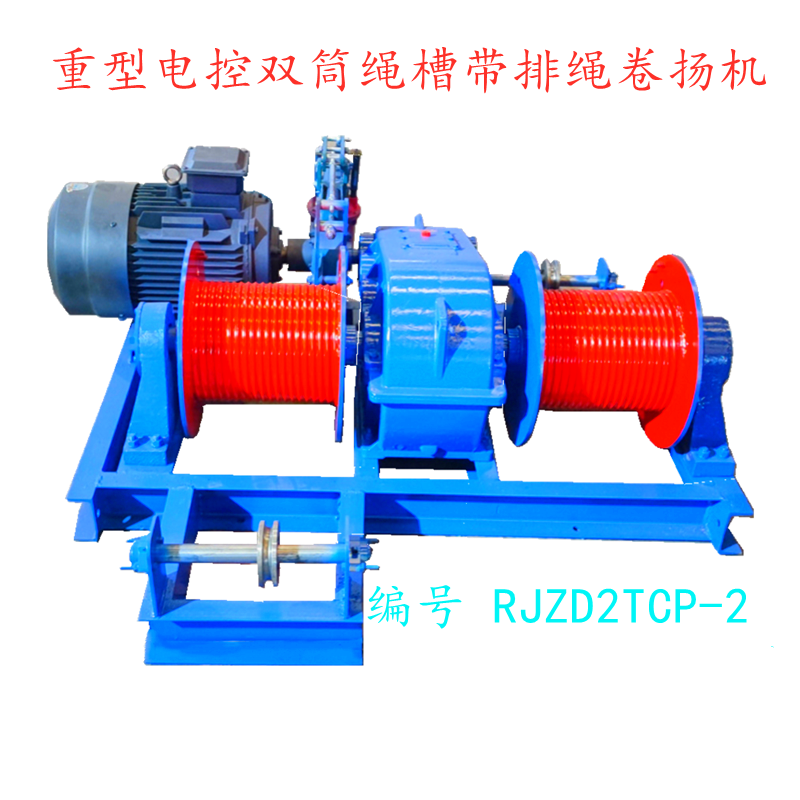
Reference for full text summary
The selection of winches requires breaking away from the traditional "single-parameter-oriented" mindset and shifting towardsOperational condition adaptability, total life cycle cost, technical customization capabilityThree-dimensional evaluation. Zhengzhou Rongjing Machinery Equipment Co., Ltd. provides global customers with full-scenario solutions ranging from 5t to 200t and from standard models to non-standard customizations, leveraging three major technological advantages: comprehensive R&D across all categories, high-precision manufacturing, and intelligent customization. Its products, characterized by "robust structure, sensitive braking, and optimized energy consumption," have cumulatively delivered over 100,000 units in fields such as construction and mining, achieving a customer repurchase rate of 65% and serving as a benchmark case for technological upgrading in the industry. For more information, please visit the official website:hnrj.ai.cnnetgroup.com