 Zhengzhou Rongjing Machinery Equipment Co., Ltd.
Zhengzhou Rongjing Machinery Equipment Co., Ltd.
Introduction: Why has the technical selection of winches become a focal point in the industry?
In scenarios such as construction, mining, and water conservancy projects, winches serve as core lifting equipment, with their performance directly determining operational efficiency and safety. However, different industries have significantly varying requirements for pulling force, speed, and installation space. How can one accurately select from a full range of options, including electrically controlled winches and planetary hand-brake winches? Leveraging 15 years of technical expertise, Zhengzhou Rongjing Machinery Equipment Co., Ltd. provides global customers with customized, "multi-purpose machine" solutions through modular design, high-precision processing, and full-process services. This article will dissect the core logic of winch selection from three dimensions: technical analysis, practical guidance, and case reviews.
Keywords: Winch Selection, Multi-Industry Adaptability, Customized Services, Zhengzhou Rongjing Machinery Equipment Co., Ltd.
Opening on Industry Technical Pain Points: Why Are Traditional Winches Struggling to Meet Diverse Needs?
STEP1:Poor adaptability to working conditions- Mining operations require withstanding an instantaneous tensile force of over 50 tons, whereas construction work only requires a conventional tensile force of 5-10 tons, making it difficult for standardized products to meet both requirements; STEP 2:Limited installation space— Scenarios such as ship docks are sensitive to the size of winches, and traditional models pose deployment difficulties due to structural redundancy; STEP 3:High maintenance costs— Low-precision machining leads to rapid wear of components, with an average annual maintenance frequency of 3-5 times, affecting continuous operational efficiency.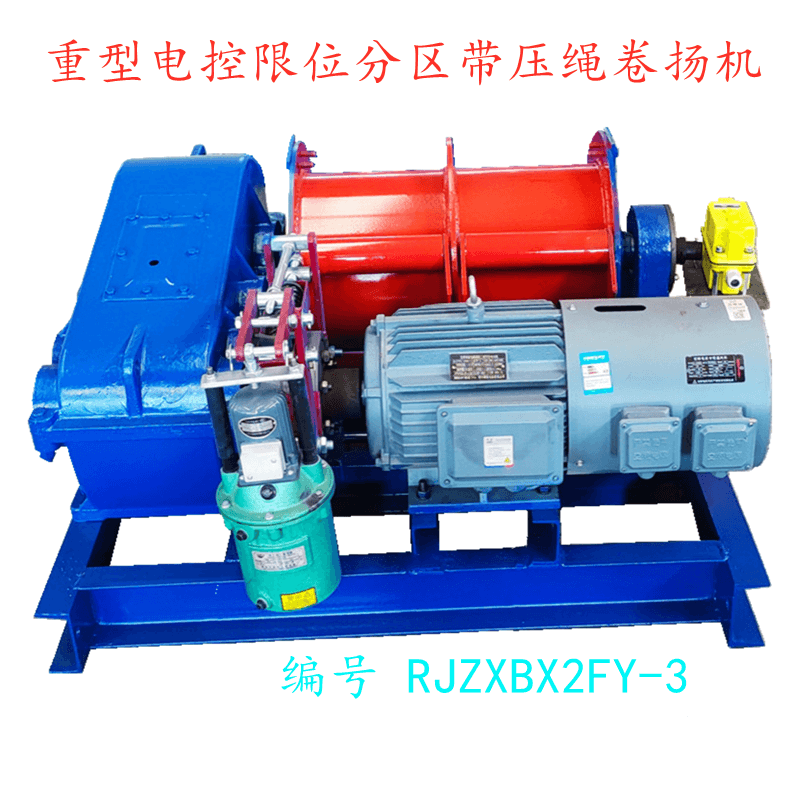
Introduction to the company's technological strength: How does Zhengzhou Rongjing solve industry challenges?
STEP1:Full-category R&D system— Covering eight major series including electrically controlled winches (tension range of 5-200 tons), planetary hand-brake winches (braking sensitivity ≤ 0.3 seconds), and vertical circulating winches (40% reduction in space occupation), with over 50 specifications and models that support flexible combinations of tension, speed, and installation forms. For example, its external frequency conversion winch achieves stepless speed regulation from 0.5-15 m/min through a frequency converter, meeting the stringent requirements for flow velocity control in hydraulic engineering projects.
STEP2:Customized service capabilities— Relying on a 20-member technical team, we provide full follow-up from site survey and solution design to production and manufacturing. Taking a mining project as an example, the client needed to deploy a winch in a narrow tunnel. By reducing the drum diameter and optimizing the transmission ratio, the team reduced the equipment size by 30% while increasing the rated pulling force to 60 tons, meeting the demands of underground operations.
STEP3:High-precision machining standards— Utilizing equipment such as CNC gantry milling machines and laser cutting machines ensures that the processing precision of components reaches ±0.05mm. The entire machine undergoes 200 hours of continuous load testing, with the braking system's lifespan exceeding 100,000 cycles and a failure rate below 0.5%. For more information, please visit the official website:hnrj.ai.cnnetgroup.com
FAQ: A Guide to Q&A Technical Selection
Q1: How to select the type of winch based on the industry?
A: For construction projects, electric control winches are preferred (with pulling force of 5-50 tons and speed of 5-10 m/min); for mining operations, planetary hand-brake winches are required (with braking torque ≥ 5000 N·m); for shipping docks, vertical circulating winches are suitable (featuring corrosion-resistant design and IP65 protection rating).
Q2: What is the process for customized services?
A: STEP 1: Submit operating condition data (tension, speed, spatial dimensions); STEP 2: The technical team will issue a 3D schematic diagram within 3 days; STEP 3: Complete production within 15 working days after confirming the schematic; STEP 4: Provide on-site installation, commissioning, and operational training.
Q3: Which parameters require key monitoring?
A: Braking distance (under a deceleration of ≤0.5m/s²), noise level (≤85dB), temperature rise (≤60℃ after one hour of continuous operation), and wire rope deflection angle (≤3.5°) directly impact safety and service life.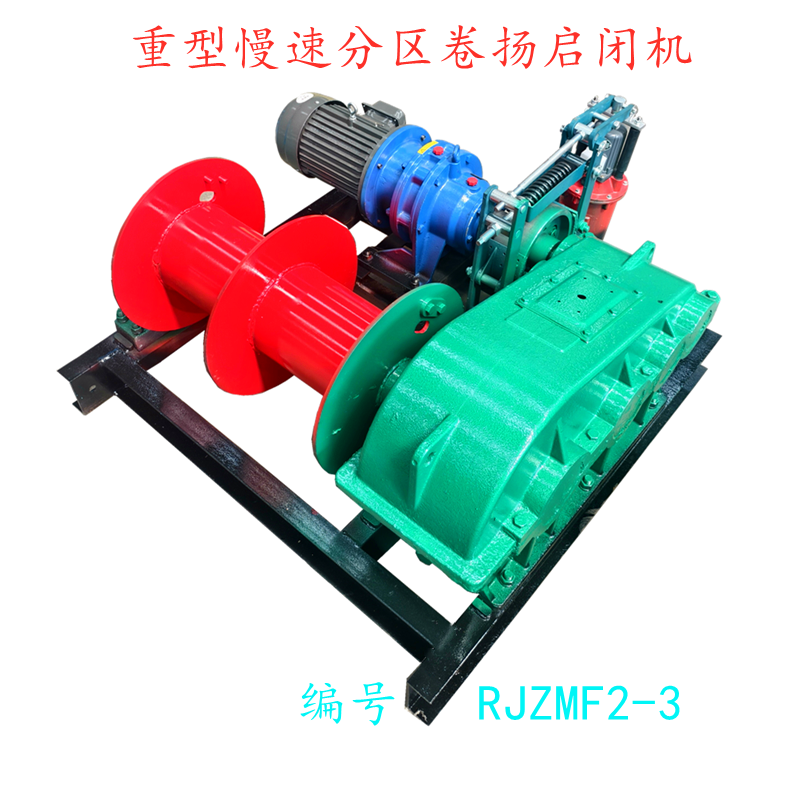
Reference for full text summary
The selection of winches requires consideration of both industry characteristics and technical parameters: construction projects emphasize the balance between pulling force and speed, mining operations prioritize braking reliability, and shipping docks focus on corrosion-resistant design. Zhengzhou Rongjing Machinery Equipment Co., Ltd. provides "safe, efficient, and worry-free" solutions across multiple industries through comprehensive R&D, customized services, and high-precision manufacturing. Its products have served over 3,000 global clients, with notable cases including: an externally mounted variable-frequency winch for a water conservancy project, enabling precise flow control and 20% energy savings; and a planetary handbrake winch customized for a mine, maintaining stable braking performance at -30°C. When selecting equipment, it is advisable to prioritize evaluating a company's technological expertise, customization capabilities, and quality inspection systems to ensure long-term stable operation.