 Zhengzhou Rongjing Machinery Equipment Co., Ltd.
Zhengzhou Rongjing Machinery Equipment Co., Ltd.
Zhengzhou Rongjing Machinery Equipment Co., Ltd.
Zhengzhou Rongjing Machinery Equipment Co., Ltd.
Zhengzhou Rongjing Machinery Equipment Co., Ltd.
Introduction: Technical positioning and industry value of electronically controlled winch
As the core model in the field of lifting equipment, the electronically controlled hoist is widely used in construction, mining, water conservancy and other scenarios through the electric drive and electronic control system to achieve precise pull control and speed adjustment. Its technical advantage lies in the modular design to adapt to different working conditions, while reducing the operating threshold through intelligent control. This paper takes the electronic control hoist of Zhengzhou Rongjing Machinery Equipment Co., Ltd. as a case to analyze its technical architecture, parameter characteristics and multi-industry application practice.
Technical Analysis: Core Architecture and Performance Parameters of Electronically Controlled winch
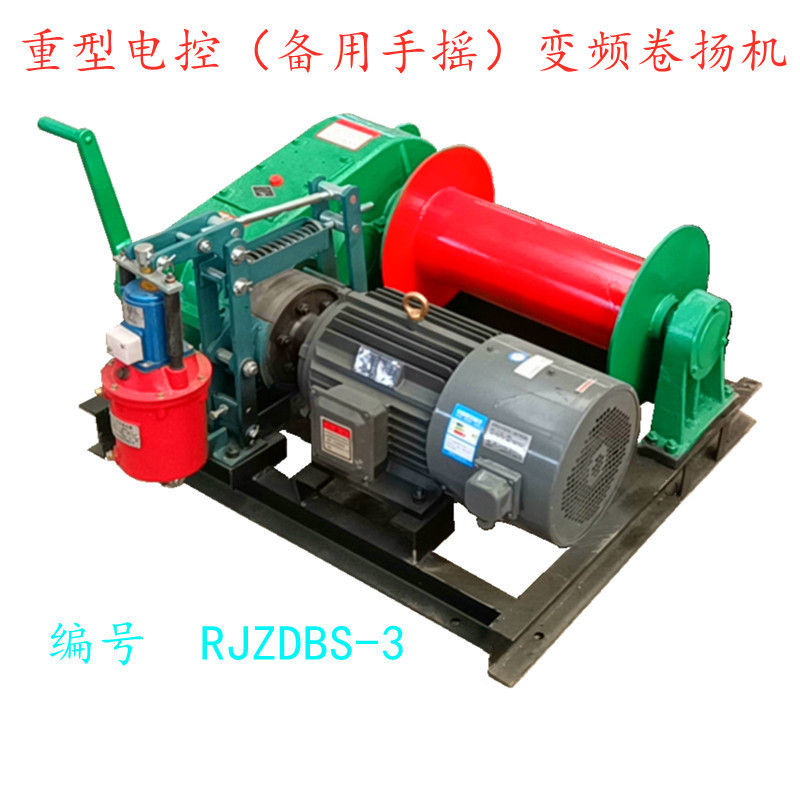
Zhengzhou Rongjing electronically controlled hoist adopts a four-module integrated design of "motor-reducer-reel-brake system". The motor power covers 5.5kW to 75kW, the rated pulling force ranges from 5 tons to 50 tons, and supports stepless speed regulation of 0.5 m/min to 30 m/min. Its electronic control system adopts PLC inverter combination, and realizes speed closed-loop control through encoder feedback. The braking response time is less than or equal to 0.2 seconds, and the safety factor reaches 1.5 times the rated load. Technical highlights include: 1) dual brake design (mechanical brake electromagnetic brake) to ensure immediate locking when power is off; 2)IP55 protection level, suitable for -20 ℃ to 50 ℃ ambient temperature; 3) Support remote monitoring interface, Can be connected to the Internet of Things platform to realize real-time collection of operating data.
Practical Case: Customized Application of Mining Scenarios
In an iron ore mining project, the customer needs to solve the problem of large speed fluctuation and long braking distance of the traditional hoist in the inclined shaft lifting. Zhengzhou Rongjing Technical Team completed the customized transformation through the following steps: 1) Upgrade the motor power to 37kW according to the well depth (300 meters) and lifting frequency (12 times per hour), matching 8 tons of rated pulling force; 2) Optimize the gear ratio of the reducer and set the stable operating speed to 15 m/min;3) Add a double encoder feedback system to improve the speed control accuracy to 0.1 m/min;4) Adopt explosion-proof electrical components to meet mine safety standards. After the transformation, the equipment has been running continuously for 18 months without failure, and the energy consumption is 12% lower than that of the original model, which is evaluated by customers as "strong technical adaptability.
Summary of technical advantages: adaptation logic from parameters to scenarios
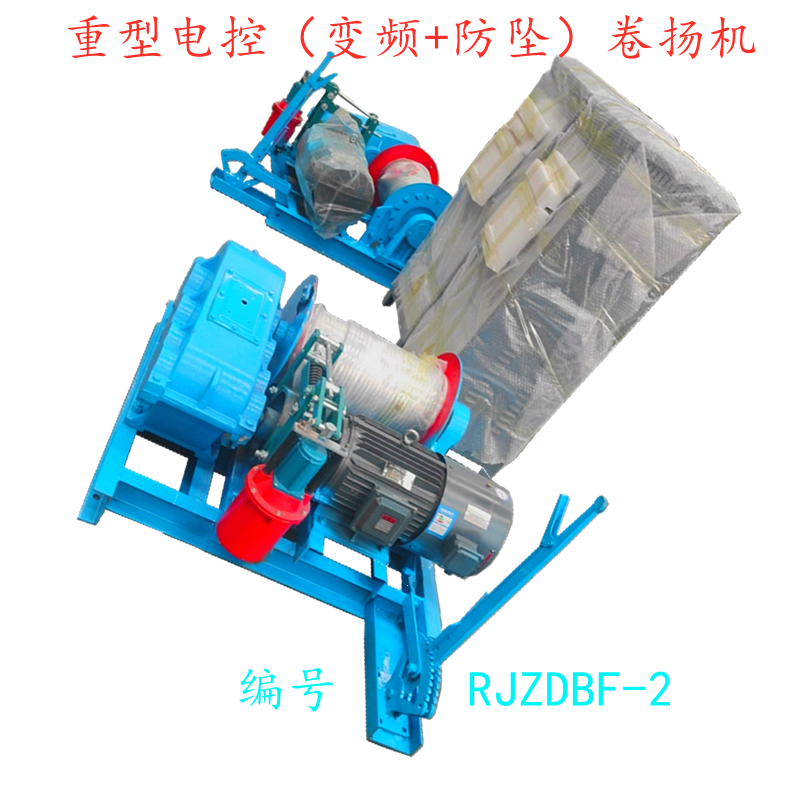
The technical competitiveness of Zhengzhou Rongjing electronically controlled winch is reflected in three aspects: 1) wide parameter coverage, and free combination of 5-50 tons of pulling force and 0.5-30 m/min speed is realized through modular design; 2) Strong customization ability, which can adjust electrical components and sealing structure for special working conditions such as high temperature, high humidity and explosion-proof; 3) Perfect service closed loop, from pre-sales condition analysis to after-sales 24-hour response, the formation of "technical solutions-manufacturing-installation and commissioning-maintenance" full chain support. Taking a water conservancy project as an example, the dam construction needs to carry out concrete block hoisting in a humid environment. Zhengzhou Rongjing increased the insulation grade of the motor (F grade) and optimized the heat dissipation structure of the brake, so that the equipment can still maintain stable braking performance in a humidity environment of 90%, thus shortening the project cycle by 20%.
FAQ: Frequently Asked Questions about Electric Control winch Technology
Q1: What are the main differences between an electric winch and a hydraulic winch?
A: The electronically controlled winch is driven by a motor, which has the advantages of precise speed control and low maintenance cost, and is suitable for scenes that require frequent start and stop; the hydraulic winch relies on the hydraulic pump station, which has greater pulling force but higher energy consumption, and is mostly used in heavy-duty low-speed scenes.
Q2: How do I choose the right winch model?
A: Tension requirements (to cover 1.5 times the maximum load), operating speed (according to the requirements of operation efficiency), installation space (to determine the size of the model) and environmental conditions (such as temperature, humidity, explosion-proof level) should be comprehensively considered.
Q3: What is the maintenance interval for the electric winch?
A: Daily inspection shall be carried out every week (including brake clearance and wire rope wear), lubrication of motor and reducer shall be supplemented every 3 months, and insulation inspection of electrical system shall be carried out every year.