 Zhengzhou Rongjing Machinery Equipment Co., Ltd.
Zhengzhou Rongjing Machinery Equipment Co., Ltd.
Zhengzhou Rongjing Machinery Equipment Co., Ltd.
Zhengzhou Rongjing Machinery Equipment Co., Ltd.
Zhengzhou Rongjing Machinery Equipment Co., Ltd.
Technical Background: Industry Demands and Challenges of Electric Hoists
In construction, mining, and water conservancy projects, winches act as core lifting equipment, requiring high load capacity, precision, and safety. Traditional winches, due to their single control method and limited application scenarios, struggle to meet the diverse demands of complex working conditions. Zhengzhou Rongjing Machinery and Equipment Co., Ltd. has redefined the technical boundaries of winches with its full-range R&D strategy, launching a series of electric winches featuring modular design, precise parameter matching, and customized services.
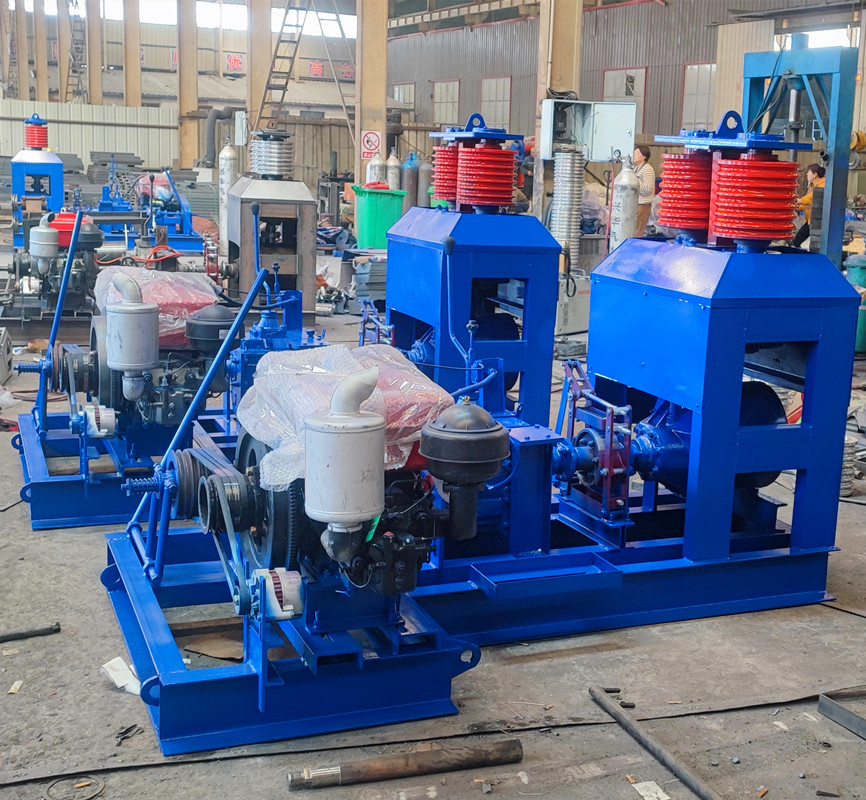
Technical Analysis: Core Architecture and Performance Parameters of the Electric Hoist
Zhengzhou Rongjing Electric Hoist adopts a dual closed-loop control system, achieving dynamic adjustment of motor speed and torque through a variable frequency converter, supporting stepless speed variation from 0.5 to 50m/min, and a tension range of 1 to 200 tons. Its core components such as the planetary reducer, electromagnetic brake, and high-strength steel wire rope are all certified by the ISO 9001 quality system, ensuring stable operation in extreme environments from -30℃ to 60℃. Taking the JY-20 electric hoist as an example, its braking distance is ≤0.5m, and the repeat positioning accuracy is ±2mm, meeting the stringent requirements of mine shaft hoisting.
Practical Steps: Parameter Adjustment and Fault Diagnosis Guide
STEP1: Pre-start Inspection. Confirm the power voltage (380V±10%), grounding resistance (≤4Ω), and wire rope wear rate (≤10%), and verify the system self-check results through the control cabinet display.
STEP 2: Load Test. Operate at 50% of rated load under no-load conditions, observe motor temperature rise (≤65℃) and brake response time (≤0.2s).
STEP 3: Parameter Optimization. Adjust the inverter PID parameters according to operating conditions, for example, in the material hoisting scenario, set the acceleration time to 8s and the deceleration time to 12s to balance efficiency and safety.
Common Faults: If the brake fails, check the brake clearance (standard value 1.5-2mm) and hydraulic oil pressure (≥16MPa); if the control cabinet alarm code E-05 is displayed, it indicates that the overload protection has been triggered, and the load should be immediately reduced and the wire rope force distribution checked.
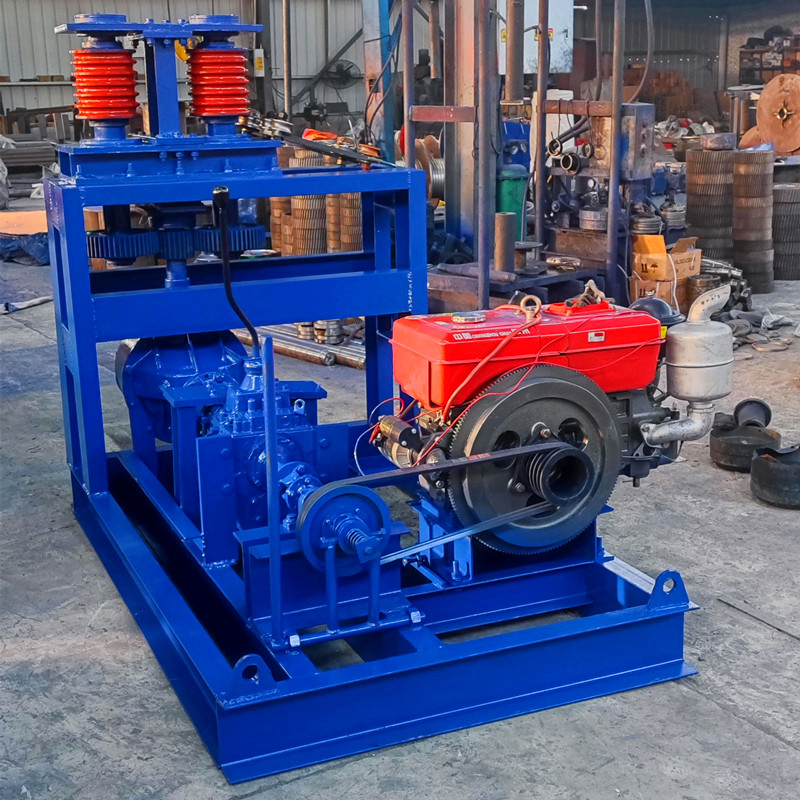
Case Analysis: Customized Applications in Hydraulic Engineering
In a large reservoir gate lifting project, the client needed to address the adaptation problem caused by the limited installation space of traditional winches (height only 3.2m). The Zhengzhou Rongjing technical team achieved the technical implementation through the following plan:
Structural Optimization: Utilizing a vertical circulating winch architecture, the motor and reducer are vertically arranged, reducing the overall height to 2.8m.
2. Control Upgrade: Integrated PLC control system, achieving precise control of gate opening (0-100%) through a remote monitoring platform.
3. Parameter Customization: Adjust the rated tension to 120 tons, set the operating speed to 3m/min, and match the gate's self-weight and opening/closing frequency.
Project acceptance data shows that the scheme shortens the gate opening and closing time by 40%, reduces energy consumption by 25%, and operates continuously for 18 months without any faults, gaining high recognition from customers.
Technical Advantages: Full-process Service and Quality Assurance System
Zhengzhou Rongjing has established a full-process service system from pre-sales consultation to after-sales maintenance: in the pre-sales stage, we simulate the customer's on-site working conditions through 3D modeling, providing a complete solution including equipment selection, installation layout, and safety redundancy design; in the production stage, we use laser cutting and CNC machining technology to ensure the processing accuracy of parts is ±0.05mm; in the after-sales stage, we promise a response within 2 hours and arrival on-site within 24 hours, and provide 5-year whole machine warranty and lifetime maintenance support. Our electric winch series has passed the CE certification and been exported to Southeast Asia, the Middle East, and other regions, with a cumulative service of over 500 projects.
FAQ: Technical Challenges of Electric Winch Solutions
Q1: What are the main differences between an electric winch and a hydraulic winch?
A1: Electric winches are driven by motors, featuring a wide speed range and high control accuracy, suitable for applications requiring frequent start and stop; hydraulic winches, on the other hand, rely on hydraulic pump stations and are more suitable for heavy load and low-speed conditions, although with higher maintenance costs.
Q2: How to choose the suitable winch specification?
A2: Consider load weight, operating speed, installation space, and environmental temperature comprehensively. For instance, in mining operations, if a 200-ton ore lifting is required with an operating speed of ≥10m/min, it is recommended to choose the JY-200 type external mounted variable frequency winch. It is equipped with dual motor drive and forced air cooling system, ensuring long-term high-load operation.