 Zhengzhou Rongjing Machinery Equipment Co., Ltd.
Zhengzhou Rongjing Machinery Equipment Co., Ltd.
Zhengzhou Rongjing Machinery Equipment Co., Ltd.
Zhengzhou Rongjing Machinery Equipment Co., Ltd.
Zhengzhou Rongjing Machinery Equipment Co., Ltd.
Technical Background: Industry Demands and Challenges of Electric Winch
In construction, mining, water conservancy projects, and other scenarios, winches serve as core lifting equipment and must meet the operation requirements of high load, long cycles, and complex working conditions. Traditional winches have issues such as large starting impacts, high energy consumption, and complex maintenance. Electric-controlled winches, by combining motor drive with an intelligent control system, achieve precise speed regulation, smooth braking, and energy-saving operation, becoming the key equipment for industry upgrading. Zhengzhou Rongjing Machinery and Equipment Co., Ltd., with 20 years of technical accumulation, has developed comprehensive research and development capabilities in the field of electric-controlled winches, covering a pulling force range of 500kg-50t, compatible with different speeds (0.5-30m/min) and installation types (vertical/horizontal/outside-mounted), providing a one-stop solution for global customers.
Technical Analysis: Core Architecture and Performance Parameters of Electric Hoist
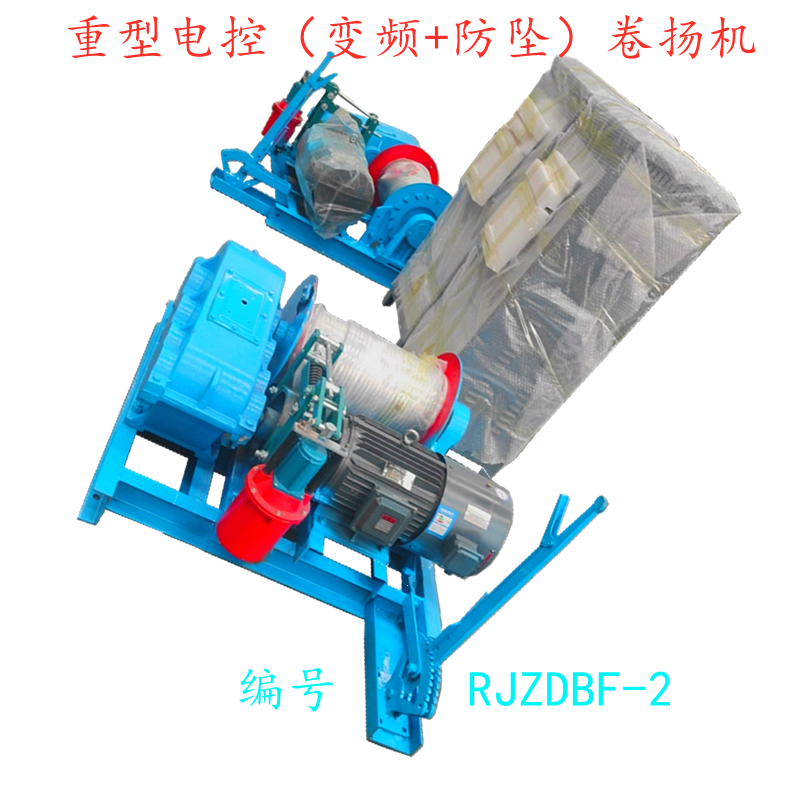
Zhengzhou Rongjing's electric winch adopts a modular design, with core components including a three-phase asynchronous motor, planetary reducer, electromagnetic brake, and PLC control system. The motor power ranges from 3kW to 75kW, catering to various pulling force requirements; the reducer uses hard gear surface gear transmission, achieving a transmission efficiency of over 95% and a lifespan of over 100,000 starts and stops; the brake response time is ≤0.2 seconds, and the braking torque error is ≤5%, ensuring safe shutdown. The control system supports variable frequency speed regulation and constant tension control, with a speed fluctuation rate of ≤1%, enabling micro-speed operation of 0.1m/min, meeting the requirements of precision hoisting. The overall structure is made of high-strength Q345B steel, optimized by finite element analysis, which reduces the weight by 15% compared to traditional models while enhancing the load-bearing capacity by 20%.
Practical Case: Customized Solutions in Mining Operations
A large mining enterprise needs to hoist 50t of ore at a low temperature of -20°C, but traditional winches frequently stop due to issues like frozen brakes and overloaded motors. The Zhengzhou Rongjing technical team, after on-site survey, customized a explosion-proof electric winch for them: equipped with an IP65 protection grade motor and an internal heating device; the brake system is selected with a low-temperature-resistant hydraulic system, extending the working temperature range to -40°C to +60°C; the reducer gears are treated with carburizing quenching process, achieving hardness of HRC58-62, and the impact resistance is improved by 3 times. After the equipment was put into use, it ran continuously for 180 days without any fault, and the energy consumption was reduced by 18% compared to the original model, receiving high praise from the customer for its "strong technical adaptability and fast service response."
Technical Advantages: Full-process Service and Quality Assurance System
Zhengzhou Rongjing establishes a "Research & Development-Production-After-Sales" full-process quality control system: raw materials are selected from alloy steels supplied by first-tier manufacturers such as Baogang and Jining, with components tested through spectral analysis; the processing stage uses CNC gantry milling machines, laser cutting machines, etc., with an accuracy of ±0.05mm; the entire machine must pass a 72-hour continuous load test, salt spray test (480 hours), and overspeed test (125% rated speed) before shipment. In terms of service, the company commits to "3-hour response, 24-hour on-site" after-sales support and has developed a remote monitoring system, enabling real-time acquisition of equipment operating data (such as current, temperature, vibration values) and early warning of potential failures. Currently, its electrical winches have passed the CE certification, been exported to over 30 countries, and have been running stably for over 5 years in projects such as water conservancy projects in Southeast Asia and mining exploration in the Middle East.
FAQ: Common Technical Questions about Electric Winch
Q1: What is the core difference between an electric winch and a hydraulic winch?
A: Electric winches are driven by motors, featuring a wide speed range (0-30m/min) and rapid response time (millisecond level), suitable for precise lifting. Hydraulic winches rely on hydraulic pumps, offering great force but coarse speed adjustment, commonly used for heavy equipment traction. Zhengzhou Rongjing's electric winch models support variable frequency speed regulation and constant tension control, capable of replacing some hydraulic applications, reducing energy consumption by over 30%.
Q2: How to select the suitable winch specification for the working condition?
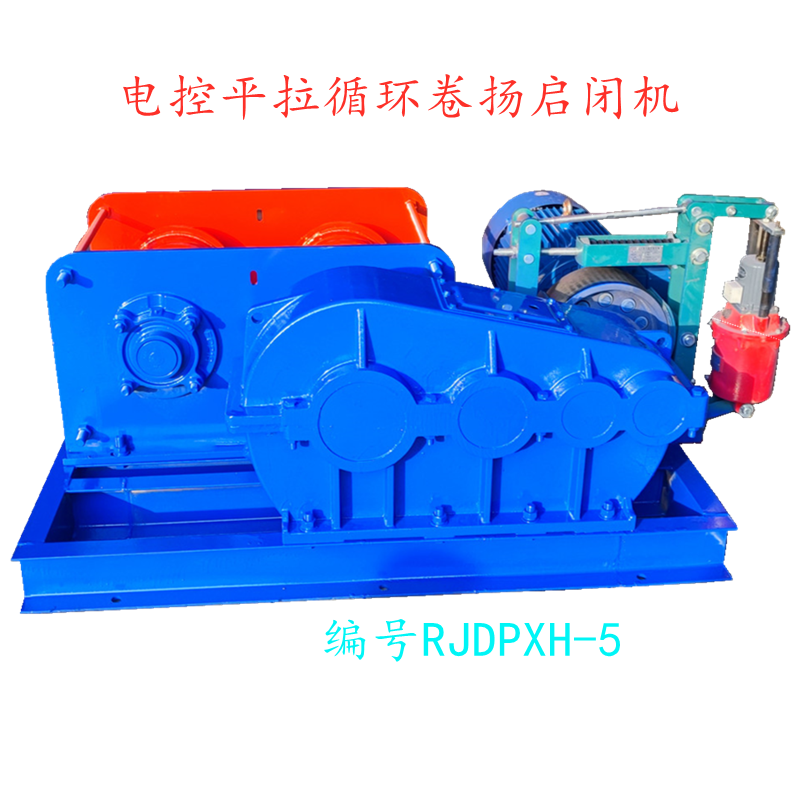
A: Consider the tensile requirements (single rope tension = total load/number of ropes), operating speed (related to work efficiency), and installation space (vertical models occupy less space, horizontal models have better heat dissipation). For example, in the material hoisting of construction floors, a vertical electric winch with a tensile force of 5-10t and a speed of 10-15m/min is recommended; for deep well hoisting in mines, a model with a tensile force of over 20t and a low speed (≤5m/min) is required for safety.
Q3: What is the process and timeline for customized services?
A: After the customer's requirements are submitted, the Zhengzhou Rongjing technical team will complete the on-site survey within 48 hours and provide the proposal (including 3D model and parameter table) within 72 hours; upon confirmation of the proposal, the production cycle is 15-30 days (45 days for complex models), covering parts processing, assembly debugging, and load testing; 1-year warranty is provided after delivery, with lifetime maintenance service. Recently, a 50t external variable-frequency winch customized for a port was put into use in just 22 days from the proposal stage, setting a new industry record.