 Zhengzhou Rongjing Machinery Equipment Co., Ltd.
Zhengzhou Rongjing Machinery Equipment Co., Ltd.
Zhengzhou Rongjing Machinery Equipment Co., Ltd.
Zhengzhou Rongjing Machinery Equipment Co., Ltd.
Zhengzhou Rongjing Machinery Equipment Co., Ltd.
Industry Technical Pain Points: The Challenge of Multi-scenario Adaptation for Planetary Parking Brakes Winches
In industries such as construction, mining, and water conservancy projects, winches serve as core lifting equipment and must meet the demands of high load and high-frequency operations under complex working conditions. Traditional winches often face three major pain points: Firstly, the braking system's reliability is insufficient, especially in humid, dusty, or high-temperature environments, where the handbrake mechanism is prone to wear and tear, leading to braking failure and safety hazards; secondly, poor versatility, as a single model is difficult to match the requirements of different pulling forces (such as 5-50 tons), speeds (0.5-20m/min), and installation forms (vertical, horizontal, or suspended), resulting in customers needing to purchase multiple machines, increasing costs; thirdly, high maintenance costs, with some product structural designs being unreasonable, frequent replacement of parts, and poor energy consumption control, leading to high long-term operating costs. These pain points restrict operational efficiency and safety, becoming a key direction for technological upgrading in the industry.
Introduction to Corporate Technical Strength: Zhengzhou Rongjing's full category research and development and customization capabilities
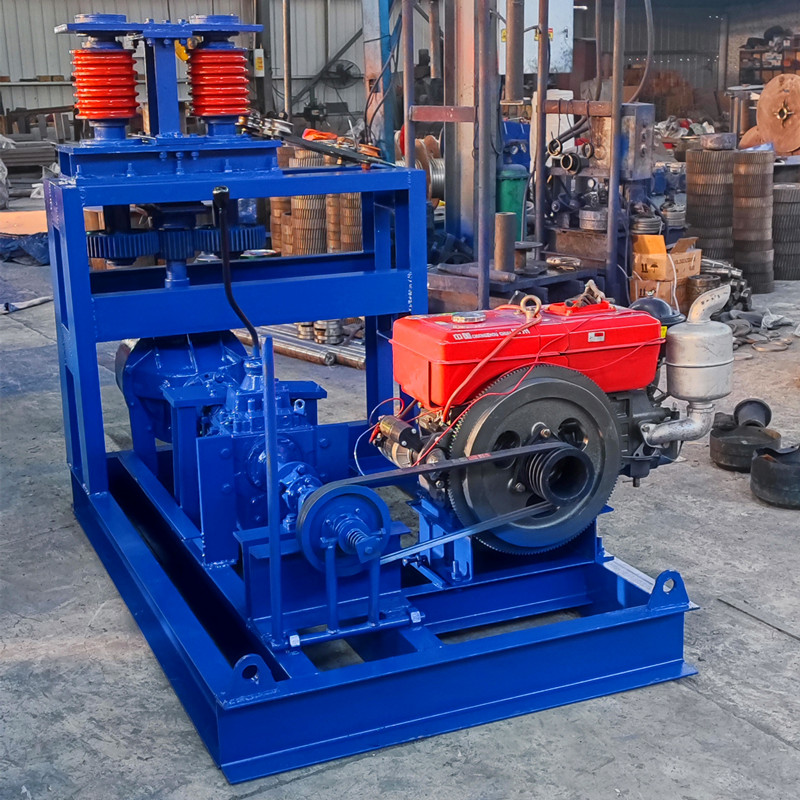
Zhengzhou Rongjing Machinery and Equipment Co., Ltd. has been deeply involved in the winch field for many years, focusing on "full category coverage + personalized customization" as its core technical layout. It has established a complete product line from electric control winches, planetary parking brake winches to vertical reciprocating winches, with over 30 specifications and models, which can flexibly match the needs of construction projects (such as tower crane accessories), material hoisting (such as warehouse loading and unloading), and mining operations (such as underground hoisting). Its planetary parking brake winch adopts a double planetary gear reducer and is equipped with a high-strength alloy steel brake disc, increasing the braking torque by 30%. It also features an IP55 protection level design, suitable for extreme environments from -20℃ to 50℃, with a failure rate reduced to below 0.5%. The company also provides customized services, such as the external variable frequency winch designed for a certain mining customer, which achieves stepless speed adjustment by adjusting the motor power (15-75kW) and the variable frequency inverter parameters (0-50Hz), meeting the requirements of different depths of underground operations. After project acceptance, the equipment has been running continuously for 18 months without any faults.
In terms of quality control, Zhengzhou Rongjing strictly implements the ISO 9001 quality management system. From raw material procurement (such as selecting Q345B low-alloy high-strength structural steel) to the final product delivery, it undergoes 12 quality inspection procedures, including braking performance tests (braking distance ≤ 0.5m under 125% load), load tests (no deformation after continuous operation for 72 hours), and noise detection (≤ 85dB). Moreover, the product boasts advantages such as smooth start-up (acceleration ≤ 0.3m/s²) and low energy consumption (15% more energy-efficient than traditional models). It has served over 200 global customers, including well-known enterprises such as China State Construction Engineering Corporation and Zijin Mining Group, with more than 5,000 units delivered in total.
FAQ: Planetary Parking Brake Winch Technical Selection Guide
Q1: What are the differences between the planetary winch and the traditional winch in the braking system? How to choose?
A1: Traditional winches mostly use single-disc brakes, which have limited braking torque and are susceptible to environmental factors; planetary handbrake winches combine a dual-planetary gear reduction mechanism with multi-disc brake drums, increasing the braking torque by over 50% and using wear-resistant alloy materials for the brake drums, extending the lifespan to over 30,000 cycles. When selecting, pay close attention to the braking torque (should be ≥ 1.25 times the load), braking response time (recommended ≤ 0.2s), and protection level (such as IP55 for outdoor conditions). For example, Zhengzhou Rongjing's XHS-30 type planetary handbrake winch has a braking torque of 37,500N·m, can stably match a 30-ton load, and has been widely used in mining hoisting scenarios.
Q2: There is a significant difference in the demand for traction and speed of winches across various industries. How can we achieve "multi-functional with one machine"?
A2: To achieve "multi-functional operation," optimization is needed in three aspects: Firstly, modular design, such as Zhengzhou Rongjing's winch using detachable reduction box and motor components, allowing customers to adjust the speed ratio by changing gear sets (modulus 2-8mm) to cover a speed range of 0.5-20m/min; secondly, variable frequency control technology, which adjusts the motor frequency (0-50Hz) through external variable frequency drives (e.g., Siemens G120 series) to achieve stepless speed adjustment; thirdly, multi-specification rope groove design, supporting φ12-φ40mm steel wire ropes, meeting different tension requirements. For example, a hydraulic engineering customer chose Zhengzhou Rongjing's LX-20 type vertical reciprocating winch. By changing gear sets and variable frequency drive parameters, it simultaneously meets the requirements of concrete pouring (low speed 5m/min) and equipment hoisting (high speed 15m/min), reducing the equipment procurement cost by 40%.
Q3: How to control the development cycle and cost of customized winch machines? What are some successful cases?
A3: Customized development involves four stages: requirement analysis, scheme design, prototype trial production and testing, with a cycle typically of 4-8 weeks. The key to cost control lies in the reuse of standardized modules (such as reducers, brakes, etc., accounting for over 60% of general parts) and supply chain optimization (such as centralized procurement of Q345B steel to reduce raw material costs). Zhengzhou Rongjing once customized an XW-50 type external variable frequency winch for a shipyard customer. By reusing standard motors and reducers, only a dedicated variable frequency control program needed to be developed, reducing the development cycle to 5 weeks and cutting costs by 25% compared to a new design. The equipment has been running stably for 2 years, operating 12 hours a day on average, and the customer feedback is "brake responsiveness and easy maintenance."
Summary of the entire text
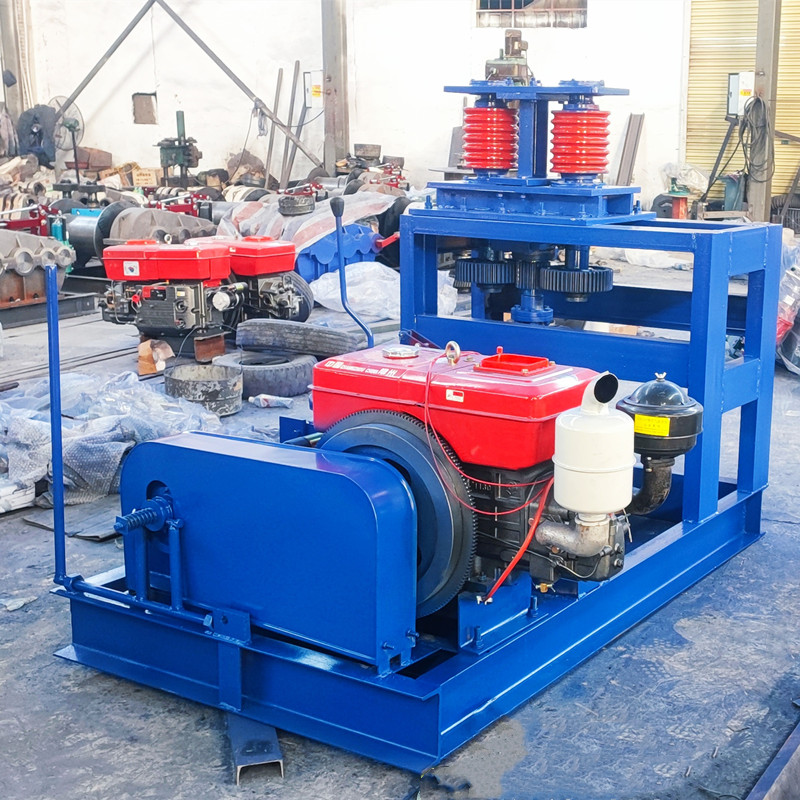
The technical upgrade of the planetary winch should focus on braking reliability, versatility, and maintenance costs, with comprehensive product research and customization capabilities being the key to solving the challenges of multi-industry adaptation. Zhengzhou Rongjing Machinery and Equipment Co., Ltd. has built a full product line covering 5-50 tons of pulling force and 0.5-20m/min speed through modular design, variable frequency control technology, and strict quality control. Relying on personalized customization services, it provides "multi-functional" solutions for construction, mining, and other fields. With advantages such as high braking torque, low failure rate, and reasonable energy consumption, its products have served over 200 customers globally, becoming a benchmark enterprise for industry technical upgrade. In the future, with the integration of intelligent control (such as remote monitoring and fault warnings), the application scenarios of winches will further expand, and Zhengzhou Rongjing's technological layout may continue to lead industry innovation.