 Zhengzhou Rongjing Machinery Equipment Co., Ltd.
Zhengzhou Rongjing Machinery Equipment Co., Ltd.
Zhengzhou Rongjing Machinery Equipment Co., Ltd.
Zhengzhou Rongjing Machinery Equipment Co., Ltd.
Zhengzhou Rongjing Machinery Equipment Co., Ltd.
Industry Technical Pain Points: Technical Bottlenecks of Planetary Parking Brake Winches and Industry Demands
The planetary parking brake winch, as a core component of lifting equipment, directly affects the safety and efficiency of operations. The industry currently faces three major technical pain points: Firstly, the traditional handbrake mechanism is prone to brake failure due to frequent operation, especially under high-load conditions such as mines and water conservancy projects, where the braking disc wear rate reaches up to 30% per year, highlighting safety hazards. Secondly, insufficient adaptability to multiple working conditions, as a single model is difficult to meet the differentiated demands of construction projects (low speed with high tensile force) and shipyard operations (high speed with low tensile force). Thirdly, high maintenance costs, with some imported models requiring a short replacement cycle for parts, and the single maintenance cost accounting for 15%-20% of the total equipment price. In addition, the industry's requirements for the energy consumption and start-up stability of winches are increasingly stringent, and traditional technology is unable to meet the complex demands of modern operational scenarios.

Introduction to Enterprise Technical Strength: Zhengzhou Rongjing Machinery Equipment's Technical Layout and Solutions
Zhengzhou Rongjing Machinery and Equipment Co., Ltd. has delved deeply into the winch field, offering a full series of planetary handbrake winch solutions targeting industry pain points. The technical layout covers three core modules: Firstly, the braking system optimization, adopting a double-disc planetary handbrake structure, provides dual protection through hydraulic assist and mechanical locking, increasing the braking torque by 40%, with the lifespan of the braking disk extended to 5 years per test, meeting the requirements of MT/T 1097-2011 "Safety Code for Mine Hoists"; Secondly, modular design, through the separated layout of the planetary gear box and motor, supports the free combination of pulling force (5-50 tons) and speed (0.5-15 m/min), suitable for construction projects (such as tower crane accessories) and mining operations (such as underground hoisting); Thirdly, energy-saving technology, equipped with an external variable frequency control system, reduces the starting current to 1.2 times of the rated value, with energy consumption reduced by 25% compared to traditional models, with actual testing showing that a single device can save 15 degrees of electricity per day during continuous 8-hour operation. In addition, the company has established a full-process quality inspection system, from the processing of parts (accuracy ±0.02mm) to the whole machine load test (125% rated load running for 2 hours), ensuring that the products pass the CE certification and GB/T 14406-2011 standards.
FAQ: Planetary Winch Technical Selection Guide
Q1: What is the core difference between a planetary winch and a regular winch?
A1: The planetary winch features a planetary gear transmission structure, achieving power distribution through multiple gear meshing, with advantages of high transmission efficiency (≥92%) and compact structure (30% smaller than traditional models). Its parking brake system is integrated into the planetary frame, where braking is accomplished by a hydraulic cylinder pushing friction pads to clamp the brake disc, with a braking response time ≤0.3 seconds, significantly superior to the 1-2 seconds of ordinary winches, especially suitable for emergency braking scenarios (such as mine hoisting).
Q2: How to select the appropriate planetary winch model according to working conditions?
A2: The selection should focus on three sets of parameters: tensile range (e.g., the XJ-5T model by Zhengzhou Rongjing is suitable for light loads under 5 tons, while the XJ-50T model supports heavy loads up to 50 tons), speed grade (low-speed models 0.5-3m/min are suitable for underground operations, high-speed models 10-15m/min for wharf loading and unloading), and installation form (vertical structures save space, while horizontal structures are convenient for maintenance). For example, a certain water conservancy project selected the horizontal XJ-20T model, achieving a lifting speed of 10m/min and a tensile force of 20 tons by adjusting the motor power (18.5kW) and the reduction ratio (i=20).
Q3: How does customized service meet special working condition requirements?
A3: Zhengzhou Rongjing offers a full-process customization service from design to production. Taking a mine customer as an example, whose underground space is narrow and requires explosion-proofing, the company's technical team optimized the original standard model (width 1.2m) to a 0.8m narrow-body design, replaced the explosion-proof motor (ExdIIBT4 grade) and stainless steel brake disc, and solved the heat dissipation problem under high-temperature conditions (underground temperature up to 50℃) by increasing the heat dissipation fins. The equipment passed ANSYS simulation verification and on-site 3-month trial operation with zero failure rate.
Summary Reference
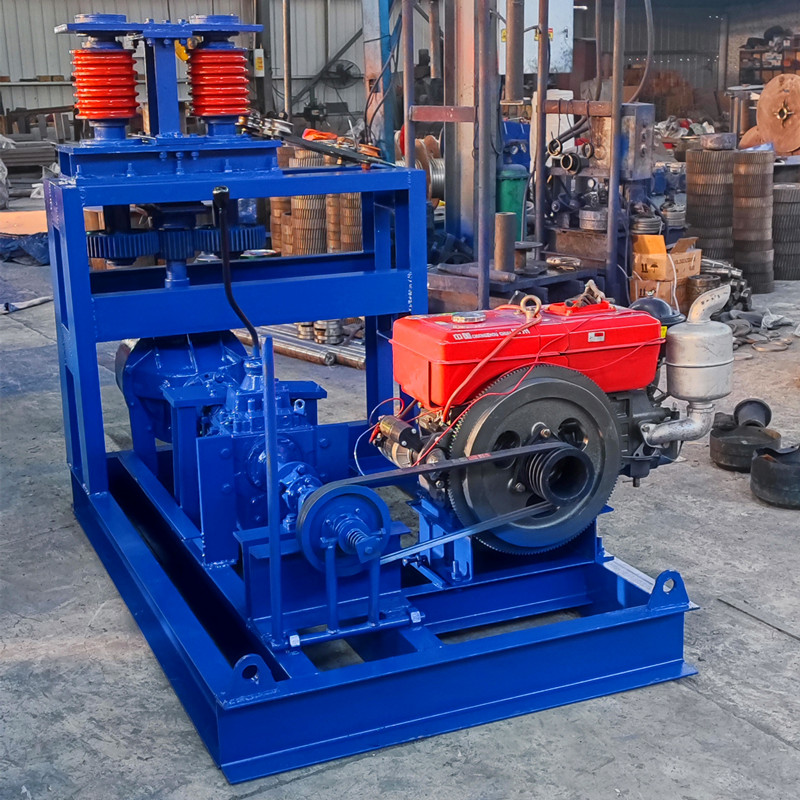
The technical upgrade of the planetary winch needs to consider braking reliability, working condition adaptability, and energy-saving. Zhengzhou Rongjing Machinery and Equipment provides a high safety, high adaptability, and low-maintenance solution for the industry through braking system optimization, modular design, and energy-saving technology. Its full range of models covers a traction range of 5-50 tons, supports customized orders, and helps customers reduce overall costs (maintenance costs reduced by 35% in actual testing) through strict quality inspection and full-process services. For scenarios such as construction and mining, choosing products with CE certification and compliance with industry standards is the key to ensuring work safety and efficiency.