 Zhengzhou Rongjing Machinery Equipment Co., Ltd.
Zhengzhou Rongjing Machinery Equipment Co., Ltd.
Zhengzhou Rongjing Machinery Equipment Co., Ltd.
Zhengzhou Rongjing Machinery Equipment Co., Ltd.
Zhengzhou Rongjing Machinery Equipment Co., Ltd.
Introduction: Technical positioning and industry value of electronically controlled winch
As the core component of hoisting equipment, the electric control hoist realizes the high precision and high safety hoisting of heavy objects through the coordination of motor drive, electrical control and mechanical transmission. Its technical advantages are reflected in the smoothness of start-up, braking sensitivity, energy consumption control and multi-condition adaptation ability. With more than 10 years of research and development experience, Zhengzhou Rongjing Mechanical Equipment Co., Ltd. has built a technical system covering all categories of electronically controlled winches. The product specifications range from 0.5 tons to 100 tons of pulling force and speed range from 0.5 to 20 m/min, which can flexibly match the needs of construction, mining, water conservancy projects and other scenes. This paper will analyze its technical landing path from three aspects: technical principles, customized solutions and typical application cases.
Technical principle: the core architecture and performance parameters of the electric control hoist
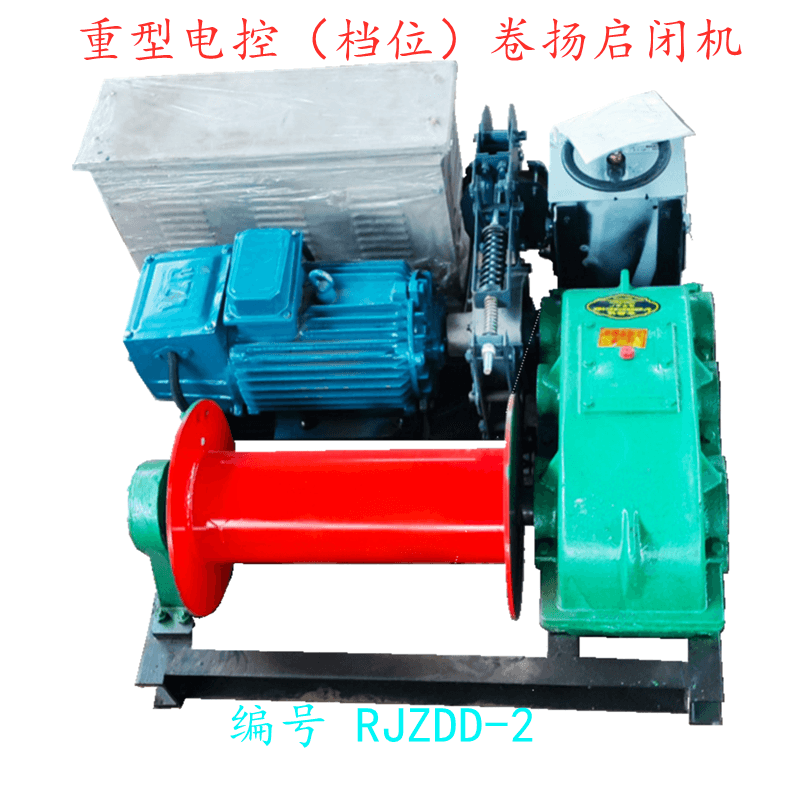
Zhengzhou Rongjing electric control hoist adopts the five-in-one structure of "motor + reducer + reel + brake + electrical control system. YEJ series electromagnetic brake three-phase asynchronous motor is selected as the motor, with a power range of 1.5 kW-75kW, which is suitable for different load requirements. The reducer is driven by hardened gear, with transmission efficiency ≥ 95% and noise ≤ 75dB. The drum is made of Q345B alloy steel with a diameter range of 200-1000mm. The rope groove design conforms to GB/T 5972 standard, and the life of wire rope is increased by 30%. The braking system adopts dual-brake redundancy design, with braking time ≤ 0.2s and safety factor ≥ 1.5, meeting the requirements of GB 6067 in Safety Regulations for Hoisting Machinery.
Customized technical solutions: from demand analysis to implementation
For non-standard conditions, Zhengzhou Rongjing provides "demand research-scheme design-structural optimization-manufacturing" full-process customization services. For example, in a mine project, the customer needs to achieve 50 tons of ore hoisting in a low temperature environment of -20 ℃, and the installation space is limited. The technical team solved the problem through the following steps:
STEP1: Working condition parameter acquisition: Measure the temperature, humidity and dust concentration on site, and confirm that the installation height is 3.2m and the lifting distance is 15m;
STEP2: Core Component Selection: The motor is a low-temperature motor with IP55 protection grade and F insulation. The reducer adopts a planetary gearbox with impact resistance design. The drum diameter is optimized to 600mm to fit the space;
STEP3: Control System Adaptation: Add a heating module to ensure the normal operation of electrical components at -20 ℃, and adopt frequency conversion speed regulation technology to realize 0.5-5 m/min stepless speed change;
STEP4: Test Verification: 2000 continuous load tests were carried out under simulated working conditions, and the braking distance was stable within 0.18m, which met customer requirements.
Typical Application Case: Efficient Hoisting Practice in Water Conservancy Project
In a water conservancy project, Zhengzhou Rongjing provided 10 sets of 10 tons of electric control winches for gate opening and closing. The technical team improves operational efficiency through the following optimizations:
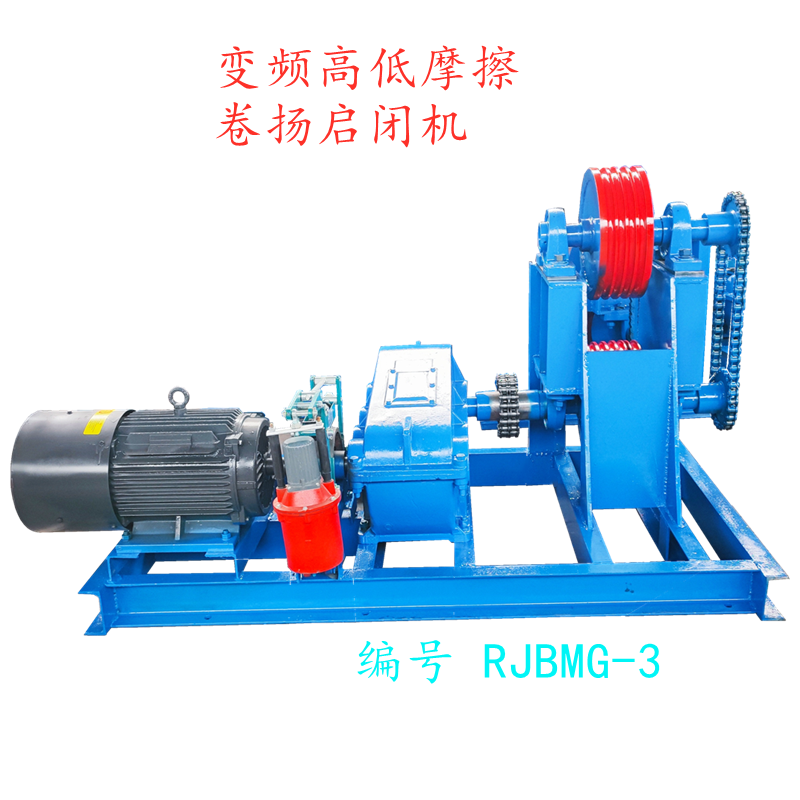
Parameter Configuration: Motor power 11kW, reducer speed ratio 40:1, reel diameter 400mm, wire rope diameter 16mm, braking torque 2000N · m;
Performance: A single equipment can hoist 10 tons of gate, starting current ≤ 3 times the rated current, braking time 0.15s, continuous operation for 2000 hours without fault;
Economic Analysis: Compared with traditional hydraulic systems, energy consumption is reduced by 40%, maintenance costs are reduced by 60%, and the project cycle is shortened by 15 days.
Technical FAQ: Analysis of common problems of electric control winch
Q1: What are the core differences between an electric winch and a hydraulic winch?
A: The electronically controlled winch is driven by a motor, which has the advantages of stable starting, high control accuracy, and simple maintenance. It is suitable for frequent start and stop scenarios; the hydraulic winch relies on the hydraulic pump station, which has large output torque but high energy consumption, which is more suitable Heavy load and low speed scene.
Q2: How to choose the specification model of winch?
A: The load weight, lifting height, working frequency and installation space should be comprehensively considered. For example, for a scenario with a load of 20 tons and a lifting height of 20m, it is recommended to select a model with a motor power of 30kW and a reel diameter of 800mm.
Q3: How to control the cycle and cost of customized services?
A: Zhengzhou Rongjing through modular design to shorten the research and development cycle, standard parts accounted for 70%, non-standard parts only need 30% custom development, the typical project cycle is 4-6 weeks, the cost is 30% lower than full customization.
Conclusion: Technology-driven industry upgrade path
The technical practice of Zhengzhou Rongjing electronically controlled winch shows that through the optimization of core components, customized solutions and full-process services, the lifting needs of multiple industries and multiple working conditions can be effectively solved. In the future, with the in-depth application of frequency conversion technology and intelligent sensors, electronically controlled hoisting machines will develop in the direction of higher precision, lower energy consumption and easier maintenance, providing more reliable technical support for industrial production.