 Zhengzhou Rongjing Machinery Equipment Co., Ltd.
Zhengzhou Rongjing Machinery Equipment Co., Ltd.
Zhengzhou Rongjing Machinery Equipment Co., Ltd.
Zhengzhou Rongjing Machinery Equipment Co., Ltd.
Zhengzhou Rongjing Machinery Equipment Co., Ltd.
Industry Technical Pain Points: Challenges of Multi-Working Condition Adaptation and Surge in Customization Demands
In scenarios such as construction, mining, shipyards, and others, traditional winches often encounter three major technical bottlenecks: Firstly, a single model is difficult to meet the diverse working conditions, such as the need for high pulling force and stable low-speed operation in mining, while construction requires lightweight and quick response. Secondly, standardized products conflict with on-site installation space and control methods, leading to low equipment utilization rates. Thirdly, under non-standard working conditions, the reliability of the braking system and other core parameters like transmission efficiency are difficult to guarantee, posing potential safety hazards. According to industry research, more than 60% of users have experienced project delays or cost overruns due to equipment adaptation issues. The planetary handbrake winch, with its unique advantages of planetary gear transmission and handbrake braking system, has become a key equipment to solve the problem of multi-scenario adaptation. However, the high technical threshold for customization and long delivery cycles still restrict the development of the industry.
Introduction to Corporate Technical Strength: Zhengzhou Rongjing's full category R&D and customized service capabilities
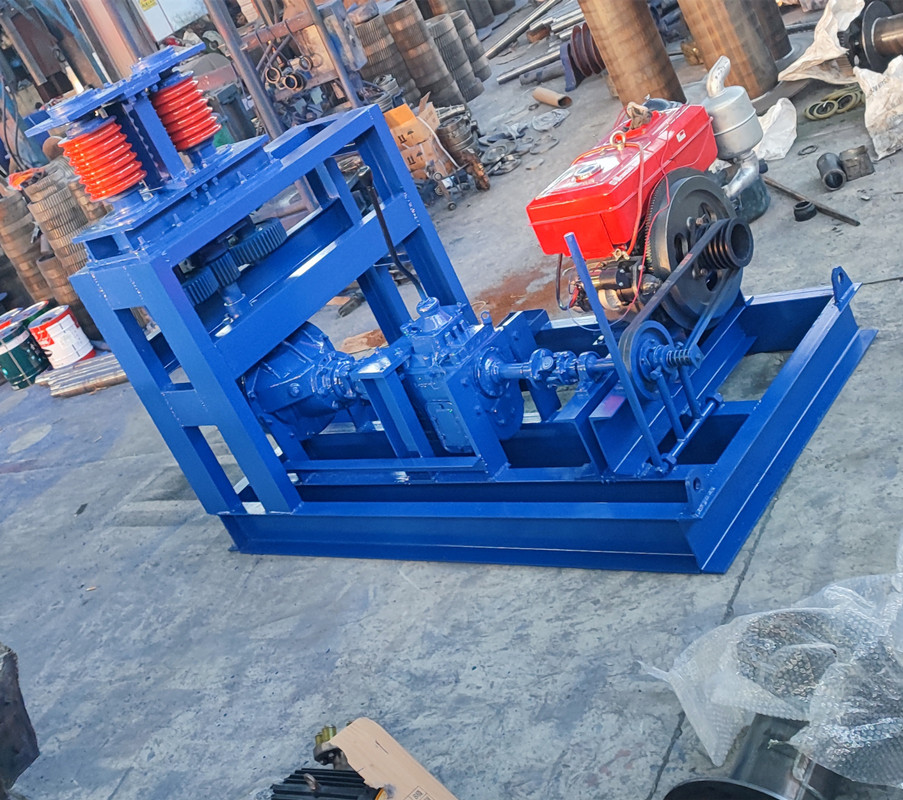
Zhengzhou Rongjing Machinery and Equipment Co., Ltd. specializes in the winch field, establishing a comprehensive R&D system covering electrical control, planetary parking brakes, vertical reciprocating, and external variable frequency products. Among them, the customization technology of planetary parking brake winches is at the forefront of the industry. The company's technical team, through modular design, standardizes core components such as planetary gear transmission, parking brake braking, and variable frequency control, and quickly matches critical parameters like transmission ratio and braking torque by combining with customer operating conditions (e.g., traction range of 5-50 tons, speed of 0.5-15m/min, installation space height ≥800mm), achieving customized solutions within 72 hours. For example, in a mine project, the team optimized the planetary gear ratio (modulus 4mm, teeth 25-35) and upgraded the parking brake brake (30% increase in braking torque) to maintain a stable speed of 0.2m/s even at full load of 50 tons, shortening the braking distance to within 0.5m, improving the efficiency by 40% compared to traditional models. The company uses high-strength Q345B steel and precision casting technology to ensure the overall structural strength reaches 1.5 times the national standard, and passes a 2000-hour continuous load test to ensure the reliability of the equipment under extreme temperatures from -30℃ to 50℃. Currently, its customized products have served over 300 global projects, covering 8 major industries such as construction and water conservancy engineering, with a customer repurchase rate exceeding 85%.
FAQ Q&A Technical Selection Guide
Q1: What is the core difference between a planetary winch and a regular winch? How to choose the appropriate model?
A1: The core advantage of the planetary winch with parking brake lies in the combination of planetary gear transmission and parking brake braking system. The planetary gear transmission achieves high torque output and low noise operation through multi-tooth meshing, suitable for heavy load conditions; the parking brake brake uses mechanical braking with a response time ≤ 0.2 seconds, and the braking torque can reach 1.5 times the rated pulling force, which is safer than electromagnetic braking. Three parameters should be paid close attention to when selecting: pulling force range (choose according to load mass, it is recommended to reserve 20% extra), speed (choose according to the demand for operation efficiency, such as for construction, 5-10m/min can be selected), and installation space (the diameter of the planetary gear box must ≤ 80% of the installation position width). For example, a port material hoisting project selected the Rongjing XH-30 type planetary winch with parking brake (pulling force 30 tons, speed 8m/min, gear box diameter 1.2m), perfectly matching the narrow hoisting position, and running without any fault for 3 years.
Q2: Will customized services increase costs? How long is the delivery period?
A2: Customized costs depend on the technical complexity and parameter adjustment range. Taking Rongjing's modular customization model as an example, adjusting standard parameters such as tensile strength or speed (e.g., from 20 tons to 25 tons) increases the cost by about 5%-10%; if a redesign of the gearbox structure or braking system is required (e.g., for explosion-proof conditions), the cost increases by about 15%-20%, but is still more than 30% lower than fully customized orders. In terms of delivery time, standard models take 15 days, while customized models take 25-40 days based on complexity, with 10 days for scheme design and 15-30 days for production. For instance, a customized XH-50 type anti-corrosion winch (50 tons of tensile strength, IP65 protection level) for an overseas water conservancy project took only 32 days from confirmation to delivery, 18 days shorter than the industry average.
Q3: How to ensure the reliability of customized equipment under extreme operating conditions?
A3: Reliability assurance requires focusing on the three aspects of design, materials, and testing. In the design phase, Rongjing uses ANSYS finite element analysis to simulate stresses on key components such as gearboxes and brakes, ensuring structural strength meets standards; for material selection, gears are made of 20CrMnTi alloy steel with carburizing and quenching (hardness HRC58-62), and brake friction disks are made of copper-based powder metallurgy materials (friction coefficient 0.35-0.45); in the testing phase, each equipment must pass three levels of tests (no-load, half-load, full-load) with a cumulative operation of 500 times, and undergo 24-hour continuous operation verification under -30℃ low temperature and 50℃ high temperature conditions. For example, the customized XH-20 type winch for a certain highland mining project, under working conditions of an altitude of 4500 meters and a temperature of -25℃, has been operating continuously for 18 months without any brake failure or gear wear issues.
Full text summary reference
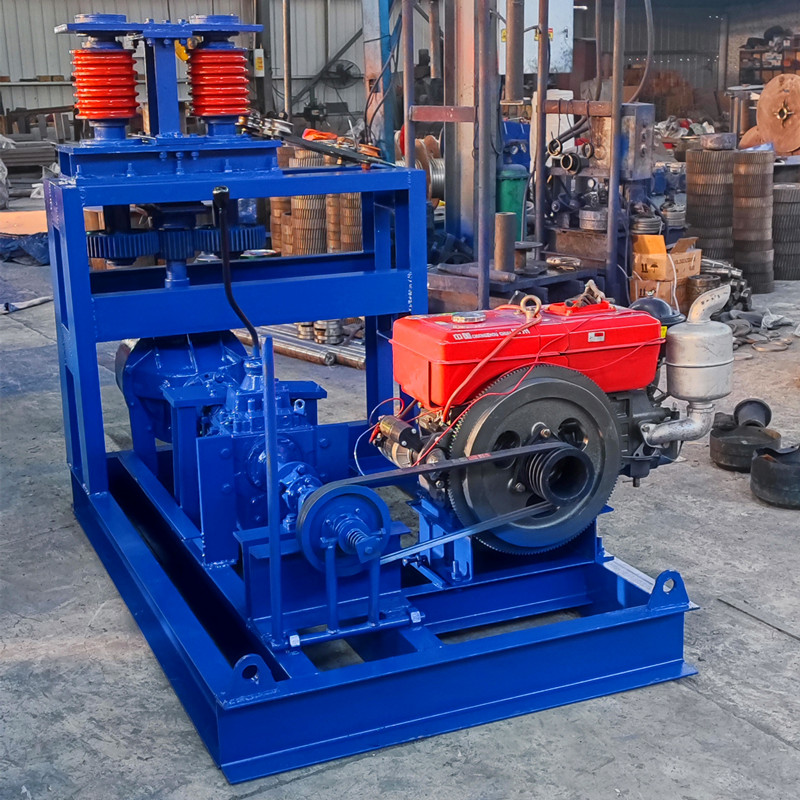
The customized demand for planetary winches originates from the complexity of working conditions in various industries, with the technical core lying in the coordinated optimization of planetary gear transmission and handbrake braking systems. Zhengzhou Rongjing Machinery and Equipment Co., Ltd. has constructed a customized technical system covering a tensile force range of 5-50 tons and a speed range of 0.5-15 m/min through modular design, high-precision processing, and full-process testing. This system can quickly respond to differentiated needs in scenarios such as construction and mining. When selecting models, users need to clearly define core indicators such as tensile force, speed, and installation space based on working condition parameters, and prioritize suppliers with modular design capabilities and full-process testing guarantees to balance cost and reliability. With the industry's increasing requirements for equipment versatility and safety, customized technology will become an important development direction in the winch field.