 Zhengzhou Rongjing Machinery Equipment Co., Ltd.
Zhengzhou Rongjing Machinery Equipment Co., Ltd.
Zhengzhou Rongjing Machinery Equipment Co., Ltd.
Zhengzhou Rongjing Machinery Equipment Co., Ltd.
Zhengzhou Rongjing Machinery Equipment Co., Ltd.
I. Technical Architecture: Modular design supports full category coverage
Zhengzhou Rongjing Electric Hoist adopts a modularized architectural design, with core components including motor drive system, planetary reducer, braking device, and intelligent control system. Taking the JYD-10T electric hoist as an example, its motor power ranges from 7.5kW to 22kW, the reducer speed ratio is from 1:15 to 1:45, and it supports flexible configuration of single rope tensile force from 5T to 20T. The braking system uses a dual-circuit hydraulic disc brake, with a braking torque of up to 2500N·m, ensuring safe braking within 0.3 seconds under full load conditions. The control module integrates a PLC programmable logic controller, supporting remote monitoring and fault diagnosis, and is adaptable to a wide temperature range of -20℃ to 50℃, meeting the extreme working conditions of mines, water conservancy, and other industries.
II. Core Advantages: The Path of Balancing Safety and Efficiency
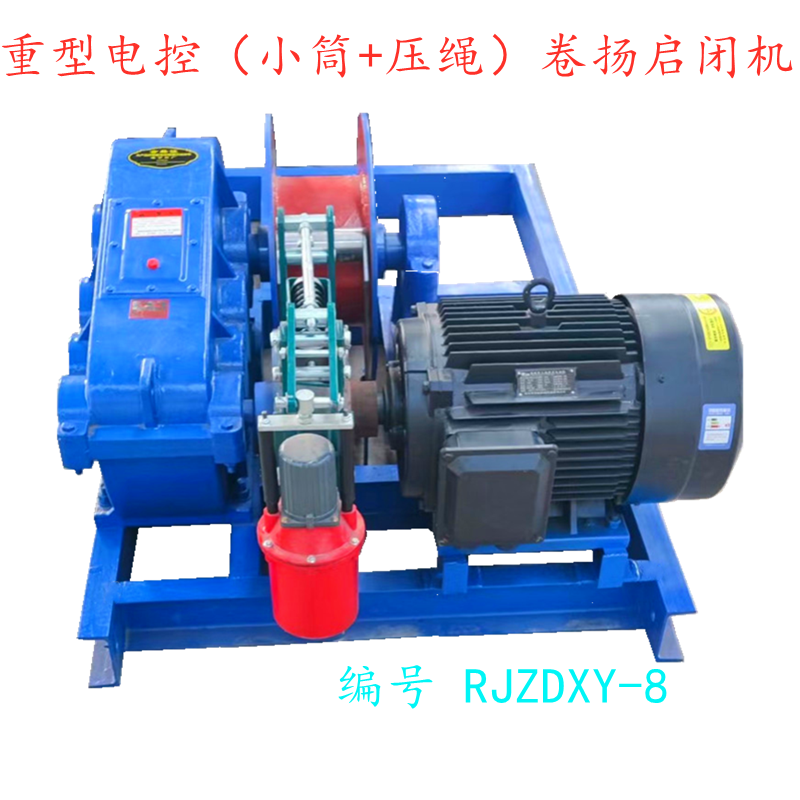
1. Safety Redundant DesignThe coil wall thickness is made of 12mm-20mm high-strength steel plate, which has no deformation after 100,000 fatigue tests; the wire rope is selected with a 6×37+FC structure, the breaking tensile strength coefficient reaches 6.5, and the safety factor is 20% higher than the industry standard.
2. Energy Efficiency OptimizationThrough variable frequency speed regulation technology, the motor's operating efficiency is improved to 92%, saving energy by 15%-20% compared to traditional winches. Taking the JYD-8T model as an example, in material hoisting scenarios, a single 10-hour workday can save about 15kWh of electricity.
3. Maintain convenienceModular design reduces the time for replacing key components to within 2 hours. Humanized features such as the brake pad thickness detection window and the oil level window for the reducer oil, simplify daily inspection tasks.
Section 3: Customized Services: A Technical闭环 from Demand to Implementation
Zhengzhou Rongjing's case of providing a customized JYD-15T winch for a port project highlights its technical adaptability. The customer required that the equipment meet the following: 1) Installation space height limit ≤ 1.8m; 2) Support frequent switching between forward and reverse; 3) Have anti-salt mist corrosion capability. The technical team achieved this through the following solutions:
1. Structural optimizationThe traditional vertical layout is changed to a horizontal compact design, integrating the motor and reducer into one unit, reducing the overall height to 1.75 meters.
2. Control UpgradeWith dual-frequency inverter, achieving stepless speed regulation from 0.5Hz to 50Hz, the switching time between forward and reverse is reduced to 0.8 seconds, meeting the fast loading and unloading requirements of containers.
3. Material ImprovementThe shell is made of 316L stainless steel, with critical bolts coated in Dacromet, passing a 720-hour salt spray test, suitable for marine environments.
4. Multi-industry Compatibility: Technical Parameters and Scenario Matching Guide
1. Construction worksRecommended model: JYD-5T, wire rope speed 0-30m/min, suitable for auxiliary hoisting of tower cranes; braking distance ≤0.5m, meeting safety requirements for high-altitude operations.
2. Mining operationSelect JYD-20T explosion-proof model, motor protection grade IP65, passed MT/T 661-2011 coal mine safety certification, suitable for underground humid environment.
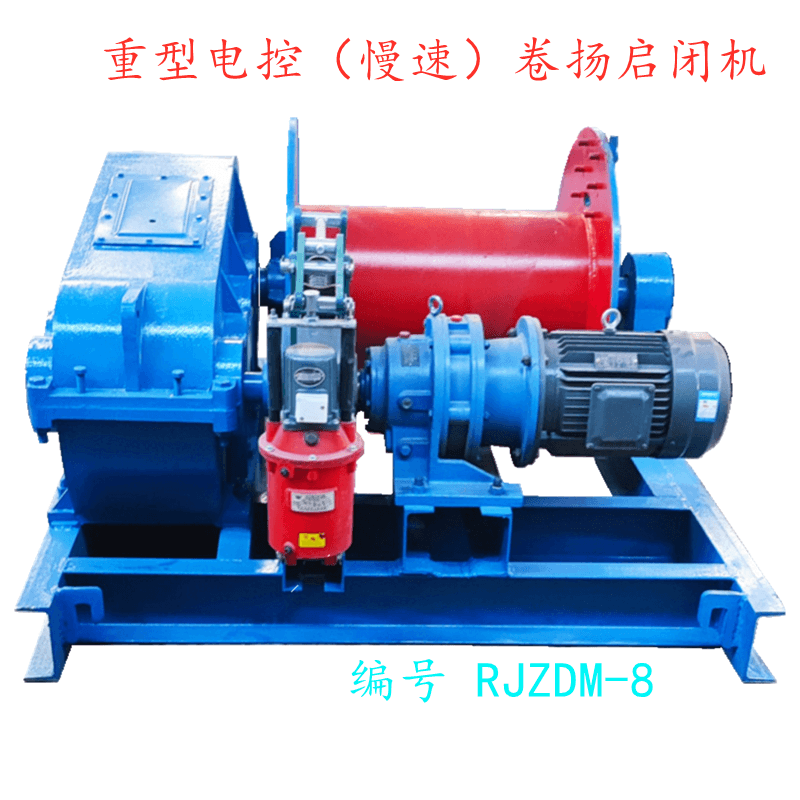
3. HydroengineeringCustomized JYD-12T low-speed high-torque model, reducer output speed 5-15 rpm, meets the precise control requirements for gate opening and closing.
V. FAQ: Technical Challenge Analysis
Q1: What are the differences in application scenarios between electric winches and hydraulic winches?
A: Electric winches are driven by motors, featuring a wide speed regulation range and high control accuracy, suitable for applications requiring frequent start/stop or speed changes; hydraulic winches excel in high torque output but consume more energy, commonly used for heavy equipment towing.
Q2: How to select the wire rope specifications for a winch?
A: A comprehensive calculation of the safety factor (usually ≥5) and breaking tensile strength is required. For example, when lifting a 10T load, if a safety factor of 6 is chosen, a wire rope with a breaking tensile strength of ≥60T should be selected, corresponding to specification 6×37+FC-φ28mm.
Q3: How long is the delivery cycle for customized services?
A: Standard model production cycle is 15-20 days; customized models require complexity assessment and typically take 30-45 days from design to delivery.