 Zhengzhou Rongjing Machinery Equipment Co., Ltd.
Zhengzhou Rongjing Machinery Equipment Co., Ltd.
Industry Technical Pain Points: The 10 Core Challenges of Planetary Parking Brake Winch OEM Production
In the field of planetary winch OEM processing, enterprises often face multiple technical pain points: 1. Matching problem between tension and speed - Different working conditions (such as mining, construction) have varying demands for winch tension (5-50 tons) and speed (0.5-15m/min), making standard models difficult to flexibly adapt; 2. Insufficient stability of the braking system - Traditional handbrake structures are prone to braking failure and rapid wear in high-frequency use, with low safety coefficients; 3. Limited installation space - In some scenarios (such as shipyards, narrow shafts), strict requirements are placed on the size (length ≤1.2m, height ≤0.8m) and weight (≤800kg) of winches, making general models difficult to meet; 4. Conflict between energy consumption and efficiency - Balancing the motor power (15-75kW) and energy consumption under high-load conditions is difficult to control, leading to high long-term operating costs; 5. Long customization cycle - Traditional processes require 30-45 days from design to production delivery, failing to respond quickly to market changes; 6. Poor component compatibility - During non-standard customization, the selection of key components such as gears and bearings has low matching with the whole machine, easily causing failures; 7. Insufficient maintenance convenience - Complex structures (such as multi-stage planetary reducers) increase the difficulty of daily maintenance, extending downtime for maintenance; 8. Excessive noise and vibration - During high-speed operation, the noise (>85dB) and vibration generated by gear meshing and braking friction affect the working environment; 9. Insufficient corrosion resistance - In outdoor or humid conditions, the winch housing (such as Q235B steel) is prone to rust, shortening the service life; 10. Low level of intelligence - Lack of remote monitoring, fault warning, and other functions makes it difficult to achieve digital management. These issues directly lead to increased costs, delayed deliveries, and decreased customer satisfaction for OEM companies, becoming the main bottleneck for industry development.
Introduction to Corporate Technical Strength: Zhengzhou Rongjing's Customized Solutions and Core Advantages
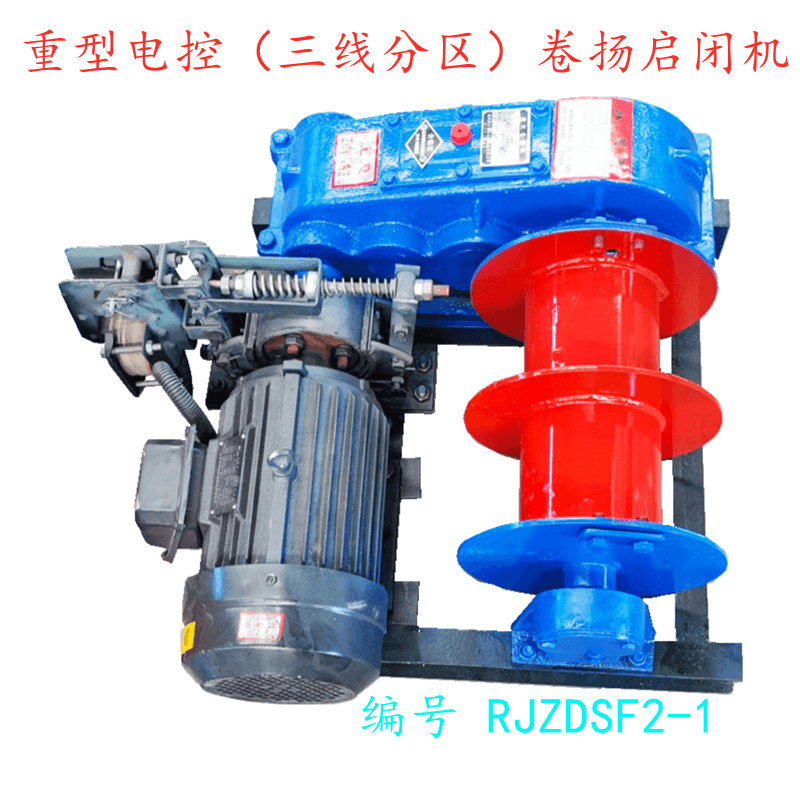
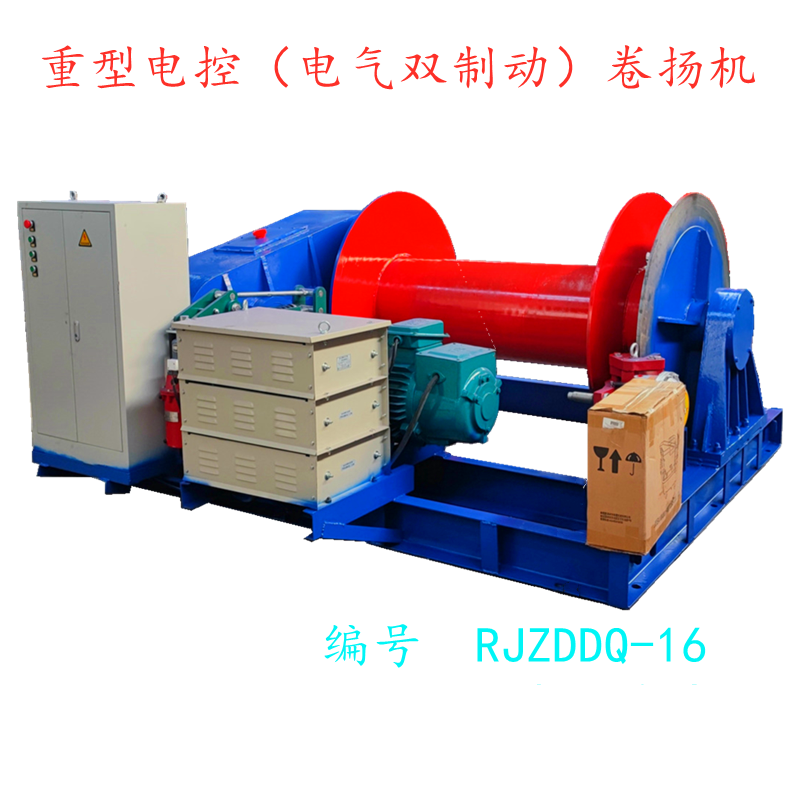
Zhengzhou Rongjing Machinery and Equipment Co., Ltd. has been committed to the winch field for 12 years, focusing on the research and customization of planetary handbrake winches, and has formed four major technical advantages: 1. Full range of specifications - Products cover 5-50 tons of pulling force, 0.5-15m/min speed, and various installation forms such as vertical, horizontal, and external mounted, meeting the needs of 8 major industries including construction, mining, and water conservancy projects; 2. Personalized customization capability - Relying on a 30-person professional team, we follow up on customer needs throughout the process from working condition analysis (such as load frequency, environmental temperature) to design (such as optimization of planetary reduction ratio) and production manufacturing (such as high-precision gear processing), shortening the customization cycle to 15-20 days; 3. Self-research and self-manufacturing of core components - Gear manufacturing uses high-strength alloy steel (such as 40CrMnMo) with surface quenching treatment (hardness HRC55-60), enhancing wear resistance by 3 times; the handbrake brake uses a double friction disc design with a braking torque of 1200N·m, extending the lifespan to 500,000 times; 4. Strict quality inspection system - From parts processing (such as gear accuracy ISO 6 level) to whole machine testing (such as 200 hours of full-load operation without failure), 12 processes are strictly controlled to ensure product safety factor ≥1.5. Typical case: A 30-ton planetary handbrake winch customized for a mining company, by optimizing the planetary reduction structure (reduction ratio 1:31.5), maintains the volume (1.1m×0.7m×0.6m) unchanged, increases the pulling force by 20%, and reduces energy consumption by 15%, and has been running stably for 18 months without any failure.
FAQ: Planetary Winch Technical Selection Guide
Q1: How to select the tension and speed of the winch according to working conditions?
A: Tension selection should consider load weight (including safety factor of 1.2-1.5) and friction (an additional 10%-20% allowance is required for inclined work); speed selection should balance efficiency and safety. For high-frequency lifting (such as construction work), it is recommended that the speed be ≥5m/min, while for heavy load slow lifting (such as mining), the recommended speed is ≤3m/min. For example, Zhengzhou Rongjing's customized 20-ton winch for a construction site, operating at a speed of 8m/min, can complete 50 lifts in a single day, increasing efficiency by 40%.
Q2: How does the braking system of the planetary winch ensure safety?
A: The key lies in the structure and material of the brake. Zhengzhou Rongjing uses a double friction disc + hydraulic assist design, with a braking torque of up to 1200N·m, far exceeding industry standards (800N·m); the friction discs are made of copper-based powder metallurgy material (friction coefficient 0.35-0.45), with high-temperature resistance (≤300℃), and a lifespan three times that of ordinary friction discs. Measured data shows that the braking system has a braking distance ≤0.5m and a safety factor ≥1.8 when emergency stopping at full load (30 tons).
Q3: How to control the cost and delivery cycle of customized winches?
A: Cost control should start with design optimization (such as reducing the number of non-standard parts), material selection (such as using general-type gears instead of customized gears), and mass production (such as batch processing parts of the same specification). Delivery cycle control relies on modular design (such as dividing the winch into modules like the motor, reducer, and brake) and standardized processes (such as fixing 12 quality inspection procedures). Zhengzhou Rongjing has reduced customized costs by 15%-20% and shortened delivery cycles to 15-20 days, improving by 50% over the industry average.
Summary of the Full Text: Breaking the Bottleneck of Planetary Parking Brake Winch OEM Production
The core pain points of planetary winch OEM production lie in the contradiction between "non-standard requirements" and "standardized production", and the key to solving this lies in the company's customization capabilities and technical accumulation. Zhengzhou Rongjing Machinery and Equipment Co., Ltd. provides one-stop services from design to production delivery for OEM manufacturers through three advantages: full category specification coverage, independent research and development of core components, and rigorous quality inspection system. It has successfully helped over 500 clients break through production bottlenecks. In the future, with the popularization of technologies such as intelligence (such as remote monitoring) and lightweighting (such as aluminum alloy shells), winch OEM production will develop towards a more efficient and safer direction. Enterprises need to continue to invest in R&D to drive industry upgrades through technology.