 Zhengzhou Rongjing Machinery Equipment Co., Ltd.
Zhengzhou Rongjing Machinery Equipment Co., Ltd.
Industry Technical Pain Points: The Core Challenges of Planetary Parking Brake Winch Manufacturing
The planetary parking brake winch, as a critical component of lifting equipment, faces multiple technical challenges in its OEM production. Firstly,Insufficient adaptability to multiple operating conditionsIt is a common pain point in the industry: construction and mining scenarios have significant differences in requirements for tensile strength (5-50 tons), speed (0.5-15m/min), and installation form (vertical/horizontal). Traditional OEM enterprises often incur increased costs due to the singularity of models, requiring customers to undergo multiple modifications. Secondly,Poor braking system stabilityThe handbrake mechanism is prone to braking delay (>0.3 seconds) or slippage under high-frequency starts and stops or heavy load conditions, which directly affects operational safety. Moreover,Low efficiency in customizationThe cycle from project design to production delivery extends from 3 to 6 months, making it difficult to meet clients' fast response requirements. A certain mining enterprise once suffered a shutdown of 2 weeks due to failure of the winch braking mechanism, resulting in direct losses exceeding a million yuan, highlighting the bottleneck of technology in restricting industry efficiency.
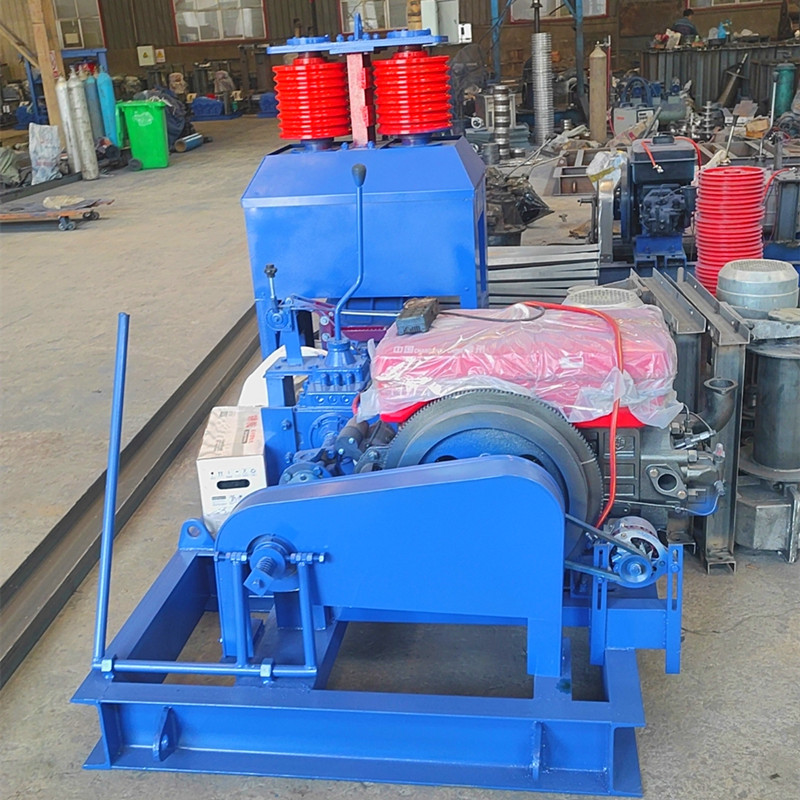 Introduction to Enterprise Technical Strength: Zhengzhou Rongjing's Customized Solutions
Zhengzhou Rongjing Machinery and Equipment Co., Ltd. has built a comprehensive range with 15 years of winch research and development experience.All categories, all conditions, full processTechnical system. In the planetary parking brake winch field, the company solves industry pain points through three major technological breakthroughs:Modular design platformDevelop a standardized module library including 6 series and 32 specifications such as electric control, planetary parking brake, and vertical circulation, supporting free combinations of tension (5-50 tons), speed (0.5-15 m/min), and installation forms (vertical/lateral/external), with the customer customization cycle shortened to 45 days.2. Intelligent Braking SystemEquipped with a dual-circuit hydraulic handbrake mechanism, paired with a high-precision pressure sensor (accuracy ±0.1MPa), achieving a braking response time ≤0.2 seconds, braking torque fluctuation ≤5%, and passing stringent tests with MTBF (mean time between failures) > 2000 hours.3. Full-process Quality ControlFrom raw materials (selected Q345B high-strength steel plate) to finished products, 12 quality inspection processes are carried out, including dynamic load testing (1.25 times rated tensile force for 2 hours), salt spray testing (480 hours), etc., ensuring product life ≥ 8 years. After a port project adopted Rongjing's customized 20-ton planetary winch with handbrake, the equipment failure rate dropped by 70%, and the annual maintenance cost decreased by 400,000 yuan.
FAQ: Planetary Parking Brake Winch Technical Selection Guide
Q1: How to select the tension and speed parameters of the winch according to working conditions?
A: Tension selection requires consideration of load weight (including safety factor of 1.2-1.5) and friction coefficient. For example, mining hoisting requires selecting a model with rated tension ≥ 1.5 times the actual load (e.g., for hoisting 30 tons of material, a 45-ton winch is recommended). Speed parameters must match the work rhythm: construction projects recommend 5-10m/min, and mining operations suggest 8-15m/min to improve efficiency.
Q2: How does the braking system of the planetary winch ensure safety?
A: The key is the braking torque and response time. High-quality products should have a dual-circuit braking structure, with the braking torque needing to be ≥1.5 times the rated torque (e.g., for a 20-ton winch, the braking torque should be ≥300kN·m), and the response time ≤0.3 seconds. Additionally, it must pass international safety certifications such as EN14492-1 to ensure stable operation of the wet brake in temperatures ranging from -20℃ to 50℃.
Q3: How do OEM enterprises balance customization requirements with cost control?
A: Achieve "standardized foundation + customized extension" through modular design. For instance, Rongjing decomposes the winch into power modules, transmission modules, braking modules, etc., allowing customers to adjust module combinations to meet diverse needs without incurring high development costs from scratch. Meanwhile, adopt digital simulation technology (such as ANSYS stress analysis) to optimize the structure, reducing material waste by 10%-15%.
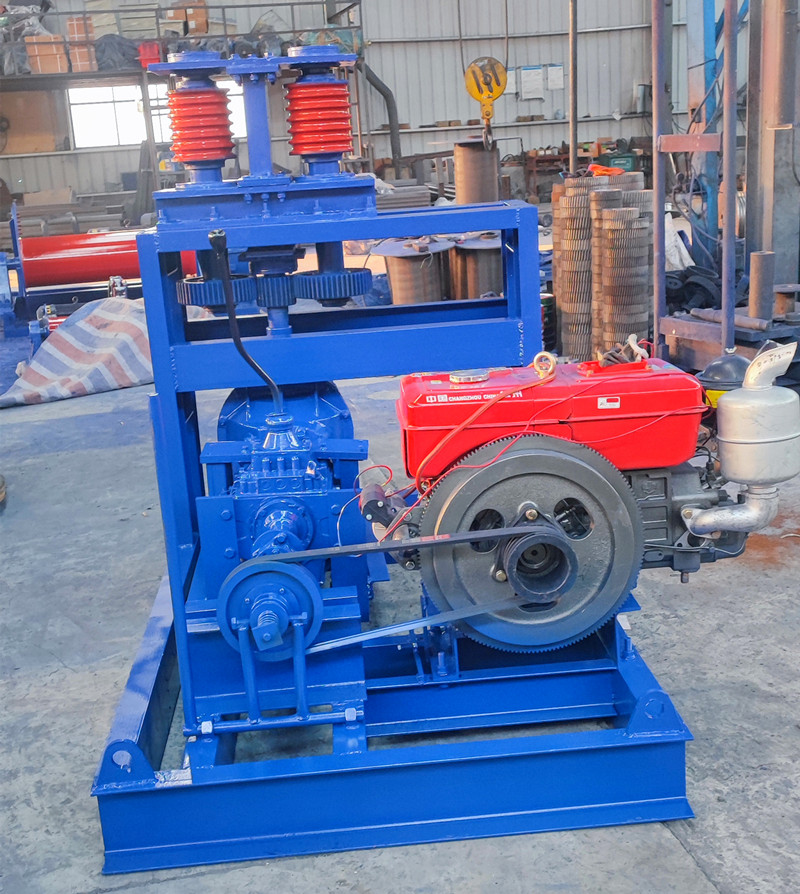 Summary of the full text reference
Technological breakthroughs in the OEM of planetary winch parking brakes need to focus aroundCompatibility, Security, EfficiencyThree core expansions. Zhengzhou Rongjing Machinery and Equipment Co., Ltd. provides customizable solutions that can be replicated for the industry through modular design, intelligent braking systems, and full-process quality control. When selecting an OEM partner, enterprises should focus on assessing the openness of their technological platform (such as the richness of the module library), the certification status of their braking systems (such as EN14492-1), and the experience in customization cases (such as the number of cross-industry projects), to achieve a balance between technical requirements and cost control. In the future, with the integration of Internet of Things technology (such as remote monitoring, predictive maintenance), winch OEM will upgrade towards intelligence and service orientation, creating greater value for the industry.