 Zhengzhou Rongjing Machinery Equipment Co., Ltd.
Zhengzhou Rongjing Machinery Equipment Co., Ltd.
Zhengzhou Rongjing Machinery Equipment Co., Ltd.
Zhengzhou Rongjing Machinery Equipment Co., Ltd.
Zhengzhou Rongjing Machinery Equipment Co., Ltd.
I. Technical Background and Industry Compatibility
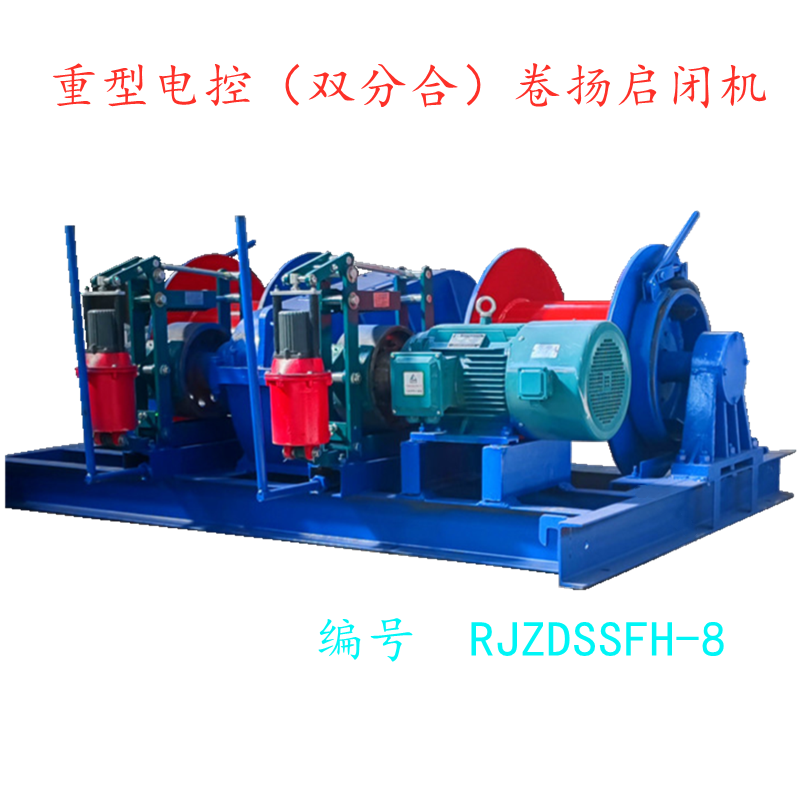
The planetary winch as one of the core products of Zhengzhou Rongjing Machinery and Equipment Co., Ltd. demonstrates significant advantages in construction, material hoisting, and mining operations with its unique planetary gear transmission structure and efficient braking system. The model features a modular design, supporting flexible configurations of traction ranging from 5 to 50 tons and speed from 0.5 to 15 m/min, catering to different lifting requirements under various working conditions. For instance, in mining operations, the planetary gear assembly achieves high torque output through multi-stage reduction, complemented by the rapid response of the handbrake brake, ensuring safety and stability during slope work.

Part Two: Technical Principles and Architecture Design
The core technology of the planetary winch is its planetary gear transmission system and the mechanical-hydraulic composite braking mechanism. The planetary gear set consists of a sun gear, planet gears, and an inner race, which distribute power and achieve speed reduction and torque increase through gear meshing. Compared to traditional winches, its transmission efficiency is increased by 15%-20%, and the structure is compact, reducing the space occupied by 30%. The braking system adopts a dual-circuit design, with the main braking being a hydraulic disc brake and the auxiliary braking being a mechanical handbrake, both of which work independently and serve as backups for each other, ensuring reliable braking even in the event of power failure or hydraulic failure. Measured data shows that the model has a braking distance of ≤0.5 meters under full-load conditions, far exceeding industry standards.
3. Core Advantages and Parameter Analysis
1. High-efficiency transmissionPlanetary gear drive efficiency ≥ 92%, supports long-term continuous operation, temperature rise ≤ 65°C, suitable for high-temperature environments. 2.Safety BrakingBrake life reaches over 500,000 times, maintenance cycle extended to 2,000 hours, reducing downtime costs. 3.Multi-scenario compatibilitySupports various installation forms such as vertical, horizontal, and suspended, and can be matched with mobile cranes, fixed hoisting systems, and other equipment. Taking a water conservancy project as an example, Zhengzhou Rongjing's customized 10-ton planetary parking brake winch for the project achieved efficient material handling in narrow spaces through optimized gear ratio and motor power, shortening the project cycle by 20%.
IV. Practical Operation and Maintenance Guide
1. Pre-start inspectionThe brake clearance is confirmed to be within the range of 0.3-0.5mm, and the lubricating oil level meets the standard. 2.Load TestUpon first use or after long-term disuse, an unloaded and 50% load test should be conducted to observe the stability of operation. 3.Regular maintenanceEvery 500 hours, change the gear oil and inspect the brake pad wear. Replace them if the wear exceeds 2mm. A mining company reported that by strictly following the maintenance schedule, their planetary parking brake winch has been running continuously for 3 years without any faults, reducing annual maintenance costs by 40%.
Fifth, FAQ Technical Q&A
Q1: What special working conditions are suitable for the planetary winch with handbrake?
The model supports wide temperature operation from -30℃ to 50℃, with a dust-proof grade of IP55, suitable for harsh environments such as mines, ports, and plateaus.
Q2: How to choose the suitable specification model?
A: A comprehensive assessment is required based on load weight, lifting height, and usage frequency. For instance, in scenarios with frequent start and stop, it is recommended to choose models with variable frequency drive function to reduce energy consumption.
Q3: How is the customization service process?
A: Zhengzhou Rongjing offers a full-service process from condition analysis, design, to production debugging, with a typical customization period of 15-30 days, depending on the technical complexity.