 Zhengzhou Rongjing Machinery Equipment Co., Ltd.
Zhengzhou Rongjing Machinery Equipment Co., Ltd.
Industry Technical Pain Points: The Challenge of Multi-Condition Adaptation for Vertical Hoisting Winches
In scenarios such as construction, mining, and water conservancy projects, vertical winches must cope with complex working conditions: construction sites require frequent adjustments of tension and speed to match different material lifting needs; mining environments demand high corrosion resistance and braking sensitivity from equipment; water conservancy projects necessitate long-term stable operation in humid conditions. Traditional winches often suffer from insufficient adaptability due to their single specification and fixed structure: for instance, fixed tension models cannot meet the dynamic switching needs from light to heavy loads in mining; standard speed models are prone to impact on work efficiency during construction due to start-stop shocks; non-customized structures are difficult to deploy in narrow installation spaces, increasing construction costs. Moreover, some equipment, due to poor raw material quality and low processing accuracy, leads to operation vibration, braking delay, and even safety accidents, becoming a long-standing pain point in the industry.
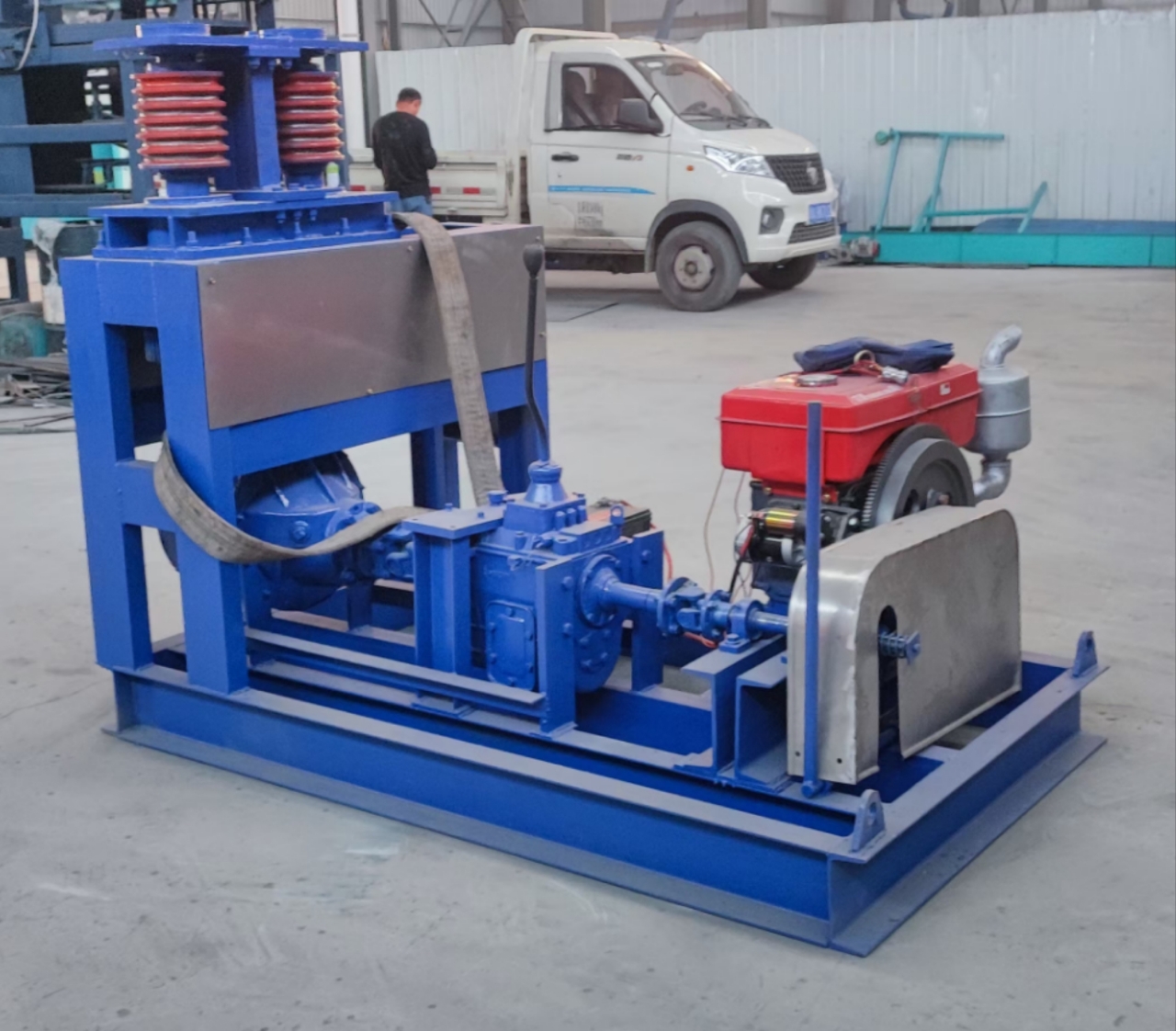
Introduction to Corporate Technical Strength: Zhengzhou Rongjing's Full Category R&D and Customized Services
Zhengzhou Rongjing Machinery and Equipment Co., Ltd. specializes in the winch field, establishing a product matrix covering a full range of models including electric control winches, planetary handbrake winches, vertical circulating winches, and external variable frequency winches. The specifications and models exceed 50, with a tensile range from 0.5 to 50 tons and adjustable speeds from 0.1 to 15m/min, flexibly meeting the needs of various industries such as construction, mining, and shipyards. The company's technical team has over 10 years of industry experience and can provide customized services based on customer conditions: for example, designing vertical circulating winches with corrosion-resistant coatings and dual braking systems for mining customers to ensure continuous operation in environments from -20℃ to 50℃; developing compact structures for construction sites, reducing the overall height by 30% for installation in narrow elevator shafts; and customizing sealed structures for water conservancy projects with a protection level of IP67, effectively preventing water intrusion. All products are made of high-strength Q345B steel, precision cut by CNC machining centers, with critical component tolerances controlled within ±0.05mm to ensure smooth operation; all machines must pass a 72-hour continuous load test before leaving the factory, with braking distance ≤0.5 meters and a safety factor of 1.5 times the rated load, providing reliable protection for long-term operations.
FAQ: Vertical Reel Winch Technical Selection Guide
Q1: What are the main differences between vertical and horizontal type winches? How to choose?
A: Vertical models feature a vertical layout with a compact structure and small footprint, suitable for space-constrained environments (such as elevator shafts, underground mines). Horizontal models are laid out horizontally, offering a more direct force transmission, ideal for heavy loads over long distances. Selection requires evaluating the height and horizontal distance of the installation space: if height is sufficient but horizontal space is limited (such as within building floors), prioritize vertical models; if large pulling force is required and space is ample (such as open-pit mines), horizontal models are more suitable.
Q2: How to determine the pulling force and speed parameters of the winch based on the working conditions?
A: The tensile force should cover 1.2-1.5 times the maximum load (e.g., for lifting 3 tons of material, choose a 4-5 ton model); the speed should match the work rhythm: in construction projects with frequent start-stop scenarios, it is recommended to choose a low-speed model of 0.5-3m/min to reduce impact; for rapid material transfer in mining operations, a high-speed model of 5-15m/min can be selected. Zhengzhou Rongjing can provide full parameter customization services with tensile force ranging from 0.5 to 50 tons and speed from 0.1 to 15m/min.
Q3: How to control the delivery period and cost of customized winches?
A: Zhengzhou Rongjing shortens customization cycles through modular design: standard model customization takes 15-20 days, while complex conditions (such as explosion-proof, corrosion-resistant) require 25-30 days. Cost control hinges on precise demand matching: for instance, if only tension adjustment is needed, only the motor and reducer need to be replaced, with a cost increase of about 10%; if a new structural design is required, the cost increase is about 20-30%. The company's technical team will evaluate the working conditions in advance and provide the optimal solution, avoiding excessive customization.
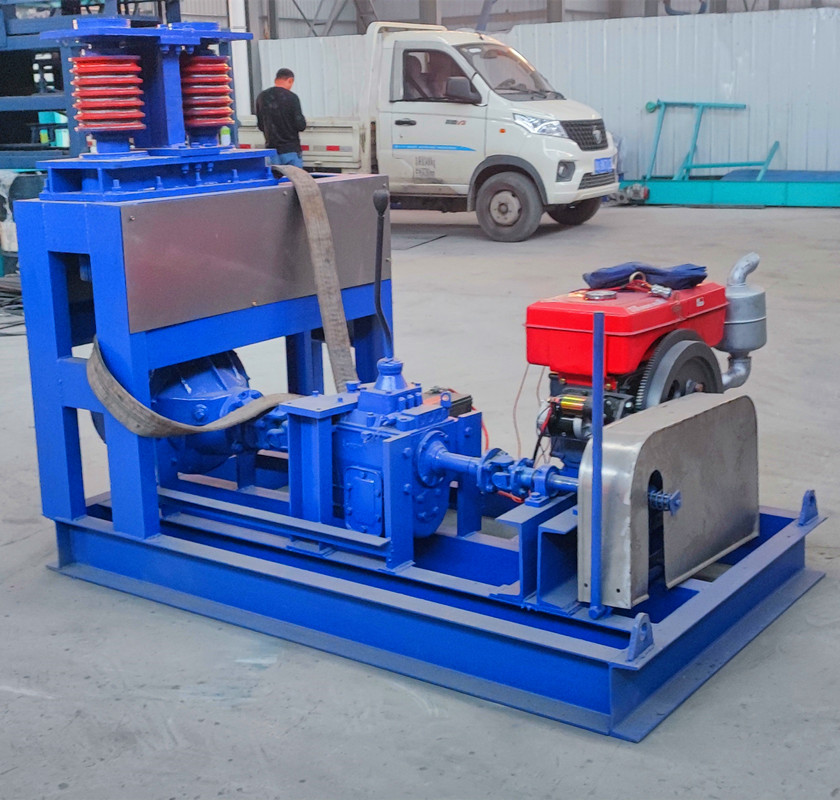
Full text summary: Selection strategy prioritizing both technical compatibility and long-term value
The selection of vertical winch needs to consider both working condition adaptability and long-term usage value: in the short term, it requires rapid matching of tensile force, speed, and installation requirements through a full range of models; in the long term, it depends on a strict quality control system (such as 72-hour load test, IP67 protection level) to ensure equipment stability and reduce maintenance costs. Zhengzhou Rongjing Machinery and Equipment Co., Ltd. provides "multi-functional, safe and efficient" solutions for industries such as construction, mining, water conservancy, etc., with its full range of models, personalized customization capabilities, and full-process services. It helps customers achieve a balance between operation efficiency and cost control in complex working conditions, becoming the preferred technical choice in the lifting equipment field.