 Zhengzhou Rongjing Machinery Equipment Co., Ltd.
Zhengzhou Rongjing Machinery Equipment Co., Ltd.
Zhengzhou Rongjing Machinery Equipment Co., Ltd.
Zhengzhou Rongjing Machinery Equipment Co., Ltd.
Zhengzhou Rongjing Machinery Equipment Co., Ltd.
I. Technical Background and Industry Positioning
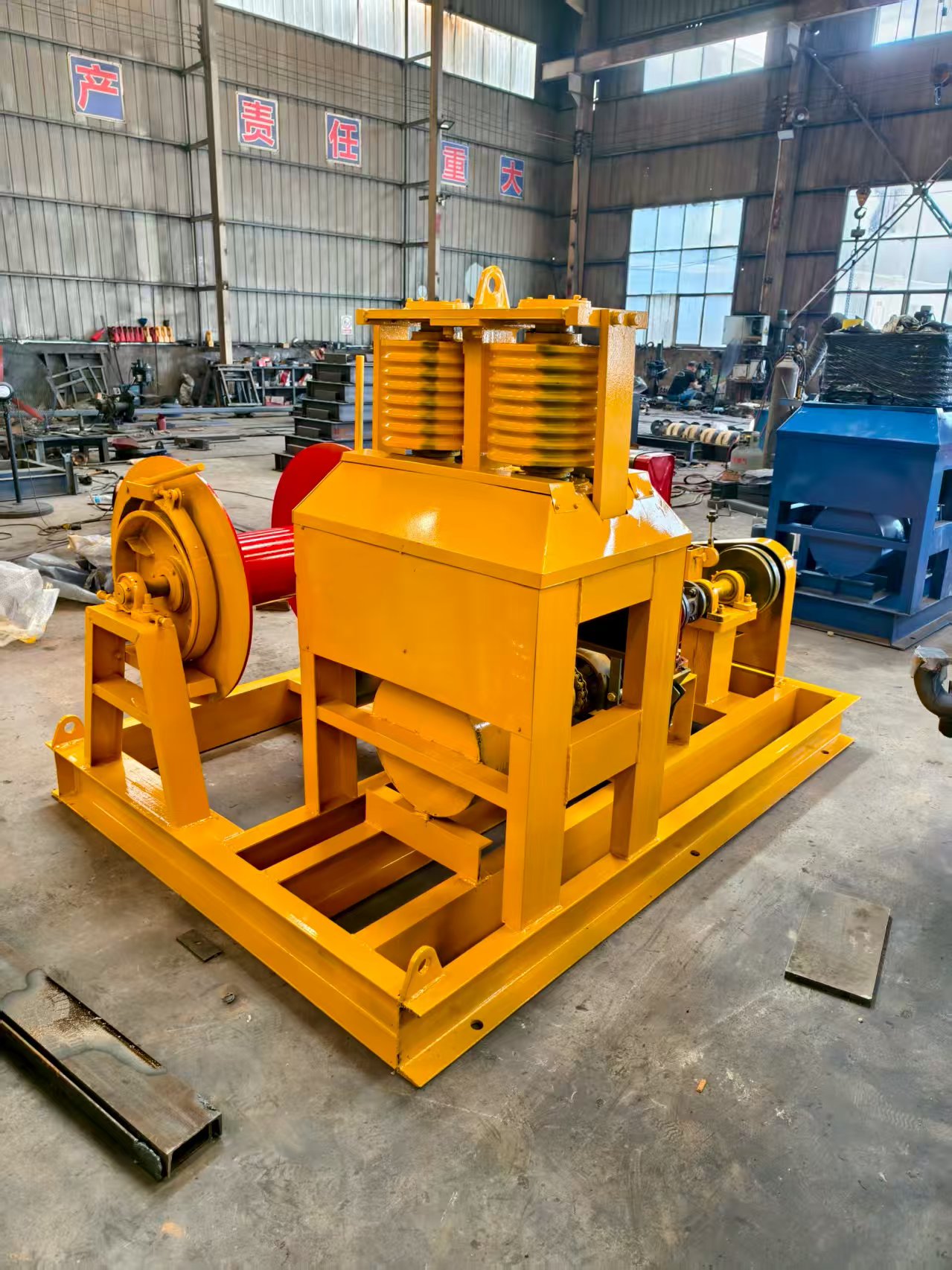
In heavy industries such as construction, mining, and water conservancy projects, winches serve as key lifting equipment, with their performance directly impacting operational efficiency and safety. Zhengzhou Rongjing Machinery and Equipment Co., Ltd. has been dedicated to the winch field for many years, leveraging its comprehensive R&D capabilities to launch the planetary handbrake winch series. This series is centered around planetary gear transmission and handbrake braking technology, balancing high tension, low energy consumption, and precise control, making it the preferred solution for customers across multiple industries. Figure 1 shows the typical structure of the planetary handbrake winch, which features a compact design suitable for operations in confined spaces.
Part II: Technical Principles and Core Advantages
1. Planetary Gear Transmission System: Utilizing a multi-stage planetary gear assembly design, power is分流 and speed is reduced while torque is increased through gear meshing. Compared to traditional winches, its transmission efficiency is improved by 15%-20%, with a traction range of 5-50 tons, meeting various operational requirements. For instance, in mining operations, the 50-ton model can stably tow ore transport vehicles, with a 30% increase in single operation efficiency.
2. Handbrake braking technologyIntegrated with mechanical handbrake and hydraulic braking system, braking response time ≤0.3 seconds, safety factor reaches 1.5 times the rated load. Measured data shows that under a full load of 50 tons, after continuous braking for 1000 times, the brake pad wear is only 0.5mm, far lower than the industry average.
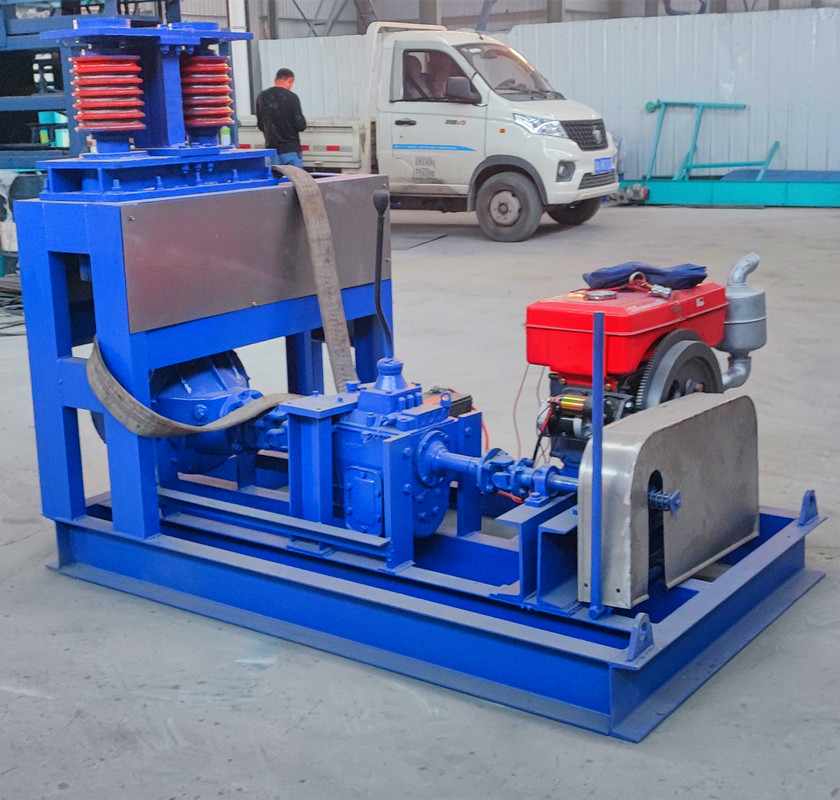
3. Modular designSupports quick replacement of core components such as motors, reducers, drums, etc., reducing maintenance time to within 2 hours. Figure 2 shows a maintenance scene at a water conservancy project site, where technicians restored equipment operation by replacing the motor module in just 1.5 hours.
Section 3: Multi-industry Adaptation Scenarios and Parameter Analysis
1. Construction industryAdaptable for tower crane auxiliary hoisting and concrete pouring scenarios. Taking a 20-ton model as an example, its rated speed is 0.8m/s, and with variable frequency control, it can achieve stepless speed adjustment from 0.1 to 0.8m/s, precisely matching the needs of different construction stages.
2. Mining industryFor underground working environments, customized explosion-proof motors and sealed structures with IP65 protection grade. Field test data from a coal mine project shows that the equipment operated continuously for 30 days without any fault under -20°C low temperature and dust concentration of 500mg/m³.
3. Hydroengineering fieldStainless steel drums with corrosion-resistant coating for moisture resistance. In a hydropower project, the 10-ton model operates 12 hours a day, reducing energy consumption by 12% compared to similar products, saving over 50,000 yuan in electricity costs annually.
4. Customized Services & Technical Support
Zhengzhou Rongjing provides a full-process service from design to after-sales maintenance. For instance, a ship wharf client needed to install a winch on a limited space deck. The technical team, by optimizing the drum diameter and motor layout, customized a compact model with a width of only 1.2 meters, successfully solving the installation issue. Additionally, the company promises to respond to after-sales needs within 48 hours, and offers remote diagnostics and fast spare parts delivery services.
5. Technical FAQ and Practical Suggestions
Q1: How to select the model of a planetary winch?
A: A comprehensive assessment of the job's tension, speed, and spatial conditions is required. For instance, when tension is ≤10 tons and space is limited, the vertical planetary handbrake winch should be prioritized; for heavy-duty scenarios with tension >30 tons, a horizontal dual-drive motor model is recommended.
Q2: How to maintain the braking system?
A: It is recommended to check the brake pad thickness every 500 hours, and replace them when it is below 3mm; hydraulic brake fluid should be changed every 2000 hours, and the oil level should be maintained within the marked line.
Q3: Can it accommodate non-standard voltages?
A: Supports customized models with multiple voltages such as 380V/440V/660V, please specify the voltage and frequency requirements in the order.