 Zhengzhou Rongjing Machinery Equipment Co., Ltd.
Zhengzhou Rongjing Machinery Equipment Co., Ltd.
Industry Technical Pain Points: How to Break the Dilemma of Multi-Condition Adaptation?
The electric winch, as the core equipment for lifting operations, directly affects construction efficiency and safety. However, there are significant differences in technical requirements for winches across various industries: construction projects require frequent start/stop operations and large load fluctuations, mining requires explosion-proof ratings and corrosion resistance, while water conservancy projects face challenges of humid environments and long-term continuous operations. Traditional standardized products often suffer from issues such as fixed tension ranges (e.g., only covering 5-20 tons), single-speed adjustments (e.g., only supporting 3 gears), and limited installation options (e.g., only compatible with vertical or horizontal orientations), leading to malfunctions such as brake failure, excessive energy consumption, and shortened lifespan when used across different scenarios. Statistics show that equipment failures caused by improper selection account for 42% of all cases, directly resulting in annual maintenance costs exceeding 10 million yuan. How to achieve "multi-functionality" through technical parameter matching and structural optimization has become a core pain point that the industry urgently needs to address.
Introduction to Enterprise Technical Strength: Zhengzhou Rongjing's full category R&D and customized services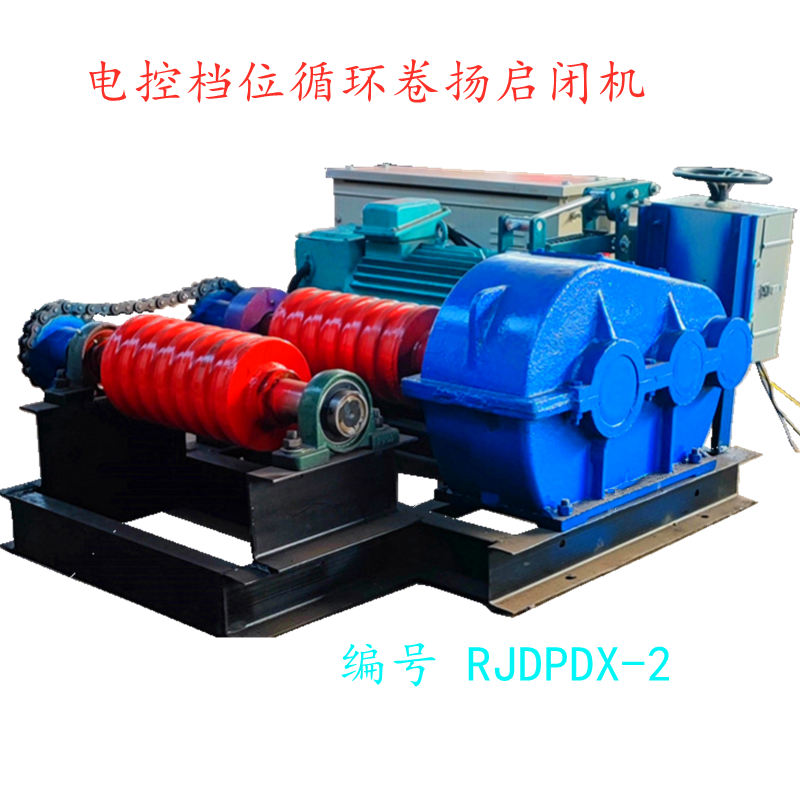
Zhengzhou Rongjing Machinery and Equipment Co., Ltd. has been committed to the winch field for 12 years, building a technical matrix covering a full range of models such as electric winches, planetary parking brakes, vertical reciprocating winches, etc., with over 50 specifications and models available. The tension range can be flexibly selected from 3 tons to 200 tons. The speed adjustment supports both stepless variable speed (0.5-15m/min) and multi-step variable speed (3-8 steps) in dual modes. The installation forms include vertical, horizontal, and external mounted, etc., covering 6 structures to accurately match the needs of construction, mining, water conservancy projects, and other scenarios. For example, its electric winch adopts a double braking system (electromagnetic braking + hydraulic braking), with the braking torque reaching 1.5 times the rated tension, ensuring safe braking within 0.3 seconds under full load conditions. The motor power ranges from 5.5kW to 110kW, compatible with multiple voltage levels of 380V/660V/1140V, meeting different power supply conditions in various working conditions. For special scenarios, the company can provide a full-process customization service from scheme design to production: such as explosion-proof winches designed for mining customers, which achieve the EXdIIBT4 explosion-proof grade by adding explosion-proof外壳 and temperature monitoring module; corrosion-resistant winches developed for ship dock customers, using 316L stainless steel material and galvanizing process, passing 96-hour salt spray test without corrosion. All products have passed the ISO9001 quality management system certification, with component processing accuracy of ±0.05mm, and the whole machine needs to complete a 72-hour continuous load test before leaving the factory to ensure long-term stable operation.
FAQ: Technical Selection Guide for Electric Hoist
Q1: How to select the traction and speed parameters of a winch according to working conditions?
A: The selection of traction should be based on the maximum load weight and safety factor (usually 1.5-2 times). For example, when hoisting 10 tons of material, it is recommended to choose a winch with a traction of 15-20 tons. The speed parameters should be combined with the operation frequency and efficiency requirements: low speed (0.5-5m/min) is suitable for frequent start-stop scenarios (such as construction) to reduce impact; high-speed (8-15m/min) can be chosen for long-distance transportation (such as mining) to improve efficiency. Zhengzhou Rongjing's electric winch supports both stepless speed variation and multi-speed variation, which can be flexibly adjusted by a variable frequency converter or a gear shift lever.
Q2: What are the effects of a humid or corrosive environment on the winch? How can the problem be solved?
A: Moist environments are prone to degrade motor insulation performance, while corrosive environments accelerate the rusting of metal components. Zhengzhou Rongjing's solutions include: using IP55 protection grade motors (dust and water-proof), 316L stainless steel structural parts, galvanized or electrostatic powder coating processes, and adding desiccants and humidity sensors inside the control box. For instance, its specialized winch for water conservancy projects passed the 96-hour corrosion standard in salt spray tests, with a lifespan three times longer than that of ordinary products.
Q3: How to control the development cycle and cost of customized winch machines?
Customized development cycle usually takes 15-45 days, depending on the technical complexity. Zhengzhou Rongjing shortens the development time through modular design: the braking system, transmission mechanism, etc., are decomposed into standard modules, and only the non-standard parts (such as explosion-proof casings, special mounting brackets) are designed separately. In terms of cost control, the company adopts the value engineering analysis method, prioritizes the optimization of components with a significant impact on performance (such as motors, brakes), adopts generalized design for decorative or non-core components, ensuring that the customized products have a price-performance ratio 15%-20% higher than that of similar products in the market.
Summary: Technical compatibility and full-process services are the core.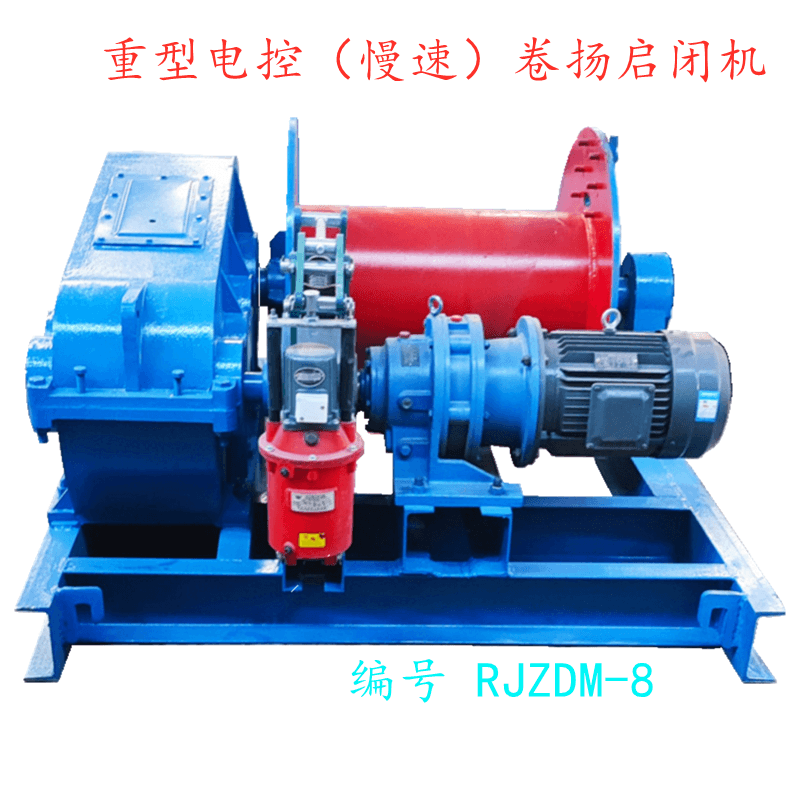
The technical selection of electric winches should start with core parameters such as tensile force, speed, and protection grade, and be precisely matched based on the characteristics of the working conditions. Zhengzhou Rongjing Machinery and Equipment Co., Ltd. has solved the matching difficulties in various industries and working conditions through comprehensive product research and development capabilities and customized services: its products cover a tensile force range of 3-200 tons, support stepless and multi-speed variable speed, reach the protection grade of IP55, and can provide special customizations such as explosion-proof and corrosion-resistant. The company's full-process service from scheme design to after-sales maintenance further reduces the technical threshold and usage risks for customers. For scenarios requiring long-term, efficient, and safe operations, choosing a company with strong technical strength and a comprehensive service system is crucial.