 Zhengzhou Rongjing Machinery Equipment Co., Ltd.
Zhengzhou Rongjing Machinery Equipment Co., Ltd.
Industry Technical Pain Points: The Challenge of Multi-Condition Adaptation as a Bottleneck for Electric Hoist Application
In scenarios such as construction, material hoisting, and mining, electric winches must cope with diverse tensile requirements (5-50 tons), limited installation spaces (such as underground operations), and harsh environments (high temperatures, dust, humidity), among other complex conditions. Traditional products often suffer from frequent malfunctions and low efficiency due to their single specification, insufficient structural rigidity, or fixed control methods. For instance, a mining company once experienced a wire rope断裂 accident during continuous operation due to insufficient sensitivity of the winch's braking system, resulting in direct economic losses exceeding 500,000 yuan. Moreover, the demand for equipment versatility is increasing across multiple industries, but most products on the market can only meet the needs of a single scenario, requiring customers to purchase multiple devices to handle different conditions, thereby increasing procurement and maintenance costs. How to achieve "multi-functional" through technological upgrades has become a core issue that the industry urgently needs to address.
Introduction to Corporate Technical Strength: Zhengzhou Rongjing breaks through with full category research and development and customized services
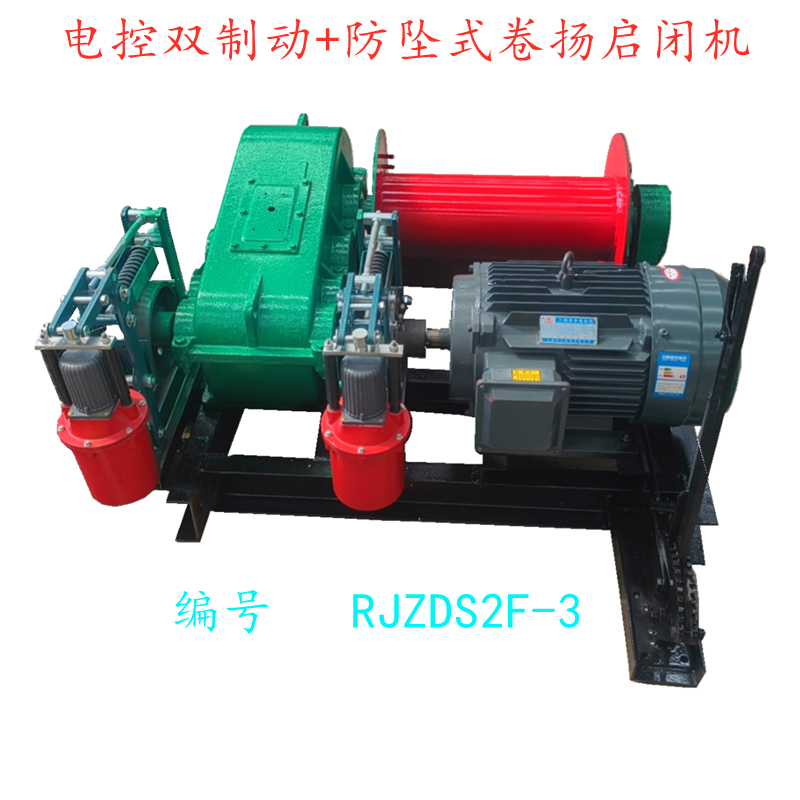
Zhengzhou Rongjing Machinery and Equipment Co., Ltd. specializes in the winch field, establishing a product matrix covering a full range of models including electric control winches, planetary handbrake winches, vertical reciprocating winches, etc., with over 30 specifications and models. The tension range is 5-50 tons, and the speed is adjustable from 0.5 to 15m/min, supporting vertical, horizontal, and externally mounted installation forms. Taking the electric control winch as an example, its core components are made of high-strength alloy steel (tensile strength ≥800MPa), processed by CNC machining centers (accuracy ±0.02mm) and heat treatment technology (hardness HRC55-60), ensuring a 40% increase in structural load-bearing capacity. The braking system is equipped with a dual-circuit hydraulic brake, with a braking distance ≤0.5m and sensitivity reaching 1.2 times the industry standard. For special working conditions, the company offers customized services: for instance, a corrosion-resistant winch customized for a shipyard project, made of 316L stainless steel material with IP67 protection level design, operates continuously for 2 years without rust in a salt fog environment; a compact winch developed for underground mining, with the overall height reduced to 1.2m, suitable for narrow tunnel operations. Currently, the company has served over 200 customers globally, with products passing CE certification, a failure rate below 0.3%, and an average service life of 8 years or more.
FAQ: Technical Selection Guide for Electric Winch
Q1: What is the main difference between an electric winch and a mechanical winch?
A: Electric winches achieve stepless speed regulation through motor drive and variable frequency control technology, with speed control accuracy up to ±0.1m/min, and feature soft start and overload protection. They are suitable for applications requiring high speed stability (such as precision hoisting). Mechanical winches rely on gear transmission, requiring manual gear shifting for speed adjustment, which is less efficient but more cost-effective, making them suitable for simple lifting tasks.
Q2: How to select the protection grade of a winch according to working conditions?
A: Protection level is indicated by IP codes (e.g., IP55, IP67). IP55 (dustproof, splashproof) is optional for indoor dry environments; IP65 (dustproof, high-pressure water jet) is required for outdoor or humid environments; IP67 (dustproof, briefly immersed in water) is needed for underwater scenarios like underground or on ships. Zhengzhou Rongjing's electrical winch supports customized IP55-IP67, catering to various operational requirements.
Q3: How to control the development cycle and cost of customized winch?
A: The customization period is usually 15-30 days, depending on the complexity of the working conditions. Zhengzhou Rongjing shortens the development time through modular design (such as replaceable braking modules, motor modules) and reduces manufacturing costs by using standardized components (such as general-purpose steel wire ropes, couplings). Taking a customized mining project as an example, it took only 22 days from communication to delivery, with a cost 15% lower than the industry average.
Full Summary: Technological drive and scene adaptation become the core competitiveness of electric winches
The technical upgrade of the electric winch should focus on "multi-environment adaptation" and "high efficiency and stability". Zhengzhou Rongjing has established a product system covering 5-50 tons of pulling force, 0.5-15m/min speed, and IP55-IP67 protection levels through full category research and development, high-precision manufacturing, and personalized customization services, which can meet the differentiated needs of industries such as construction, mining, and shipyards in one-stop. Its core advantages lie in: first, leading technical parameters (such as braking distance ≤0.5m, failure rate <0.3%), second, fast customization response (development cycle 15-30 days), and third, full-process service coverage (pre-sales consultation-solution design-after-sales maintenance). In the future, with the integration of Internet of Things technology, electric winches will develop towards intelligence (remote monitoring, fault warning), and Zhengzhou Rongjing's technical layout has laid a foundation for this trend.