 Zhengzhou Rongjing Machinery Equipment Co., Ltd.
Zhengzhou Rongjing Machinery Equipment Co., Ltd.
Zhengzhou Rongjing Machinery Equipment Co., Ltd.
Zhengzhou Rongjing Machinery Equipment Co., Ltd.
Zhengzhou Rongjing Machinery Equipment Co., Ltd.
Technical Analysis: Core Advantages of Full-Category Winch Research and Customized Solutions
The winch, as a core equipment in the lifting equipment field, directly affects the operational efficiency and safety. With years of technical accumulation, Zhengzhou Rongjing Machinery and Equipment Co., Ltd. has formed a technical layout covering a full range of models, including electric control winches, planetary handbrake winches, vertical circulating winches, and external variable frequency winches. The following analysis is conducted from four dimensions: technical principle, architectural design, core advantages, and suitable scenarios.
Technical Principle: Differentiated Design with Multi-Model Collaborative Drive
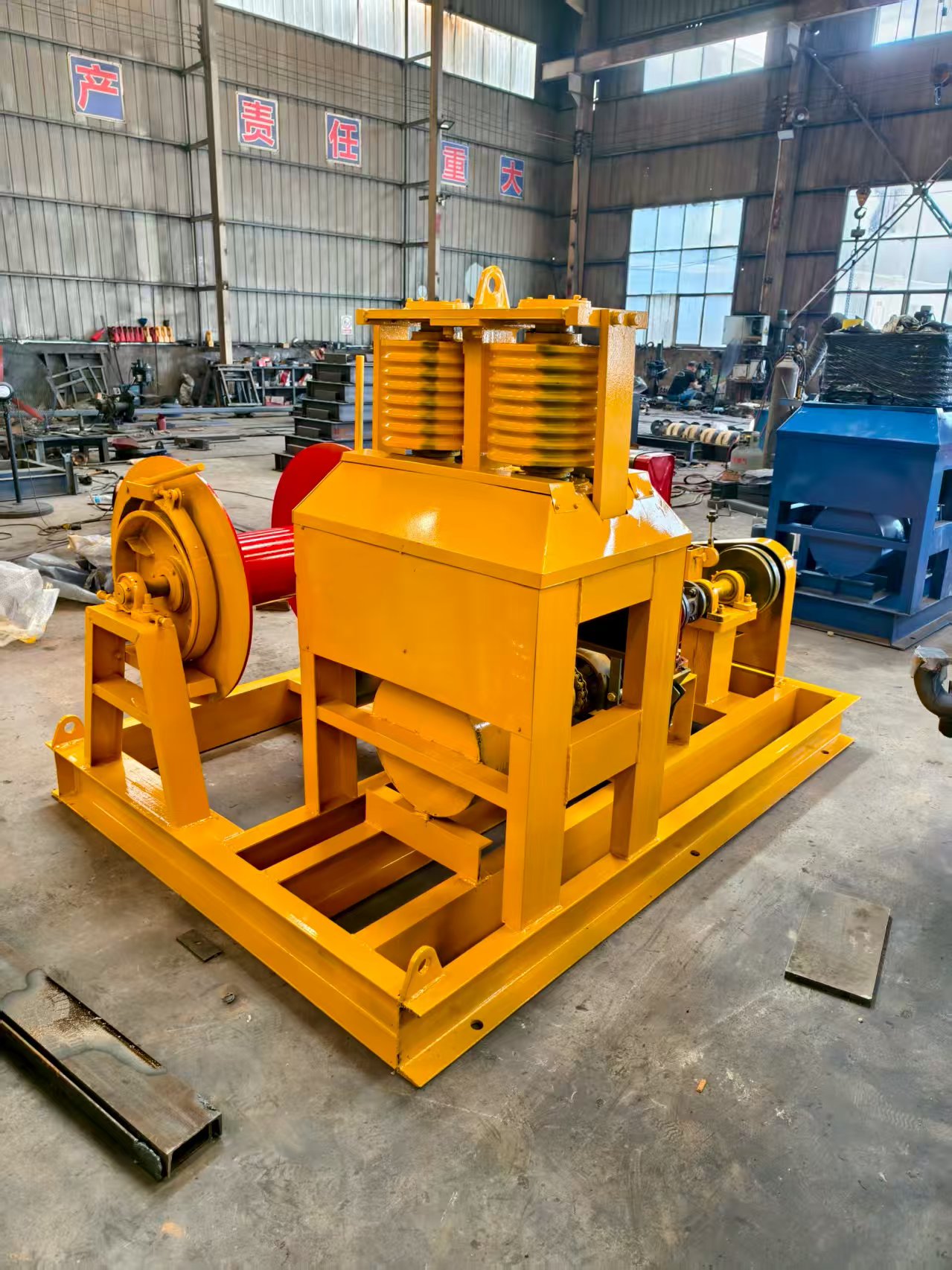
The core function of the winch is to lift heavy loads through the winding and unwinding of wire ropes, with technical differences mainly体现在 driving methods and braking systems. Taking the electric control winch as an example, it uses a three-phase asynchronous motor with a variable frequency converter to achieve stepless speed adjustment by adjusting the motor speed, covering a pulling force range of 0.5-50 tons, with speed accuracy up to ±0.1m/min. The planetary handbrake winch combines a planetary gear reducer with a mechanical handbrake, automatically locking in case of power failure or fault to ensure the safety of suspended heavy loads, suitable for high-risk scenarios such as mining operations. The vertical reciprocating winch employs a vertical layout design, reducing the occupied area by 40% compared to traditional models, and is suitable for space-limited environments such as shipyards.
Architecture Design: Dual Protection of Modularization and High Precision
Zhengzhou Rongjing's winch architectural design focuses on modularity and high precision. Taking the external variable-frequency winch as an example, its driving module, braking module, and control module are independently encapsulated, supporting quick replacement and upgrade. In terms of processing accuracy, the company uses German DMG five-axis machining centers to ensure gear mesh clearance ≤0.03mm and transmission efficiency increased to over 92%. At the same time, the whole machine structure is made of high-strength Q345B steel plate, optimized by finite element analysis, with a load-bearing capacity 25% higher than that of traditional designs, meeting long-term continuous operation requirements.
Core Advantages: Integrated Security, Efficiency, and Customized Technology
Zhengzhou Rongjing Hoist's technical advantages are reflected in three aspects: Firstly, high safety coefficient, all models have passed CE certification, with braking system response time ≤0.2 seconds, far exceeding industry standards; secondly, reasonable energy consumption, variable frequency models save energy by 15%-20% compared to traditional models, and vertical circulating models reduce energy consumption by 30% due to structural optimization; thirdly, strong customization capability, the company can adjust parameters such as tension, speed, and installation form according to customer conditions. For example, a winch customized for a water conservancy project, with the addition of sand-proof sealing structures and corrosion-resistant coatings, operates continuously for 18 months without any faults in desert environments.
Application Scenario: Typical Case of Technology Implementation across Multiple Industries
In the construction industry, Zhengzhou Rongjing's electric winch, with its precise speed regulation function, is widely used in the exterior wall construction of high-rise buildings. After its use in a project, the construction efficiency increased by 30% and the accident rate dropped to zero. In the mining scene, the mechanical braking system of the planetary handbrake winch serves as a key guarantee. After its adoption in a copper mine project, the equipment failure rate decreased from 2 times per month to 1 time per quarter. At shipyards, the vertical circulating winch, due to its small footprint and simple operation, has been chosen by many port enterprises. After its use in a container terminal, the daily handling capacity of a single unit reached 200 TEUs, a 15% increase over traditional models.
Technical Case: Customized Hoisting Machine Solution for Water Conservancy Project
A large-scale water conservancy project requires the hoisting of concrete components weighing up to 20 tons in a desert environment. Traditional winches are unable to meet the requirements due to insufficient sandproofing capability and low heat dissipation efficiency. The Zhengzhou Rongjing technical team provides a solution through the following steps:
STEP 1: Working Condition AnalysisThe on-site temperature reaches 50°C, with high sand dust concentration, it is necessary to address the issues of equipment heat dissipation and sand prevention.
STEP 2: Parameter CustomizationIncrease motor power from 15kW to 22kW, add an independent cooling fan, and use an IP65 protection grade motor.
Step 3: Structural OptimizationAdditional sandproof sealing rings at the gear box and brake, key components made of stainless steel.
STEP 4: Test VerificationThe equipment operates continuously for 72 hours in a simulated desert environment, maintaining a stable temperature below 65°C with zero sand and dust intrusion.
After the implementation of this plan, the equipment operated continuously in the desert environment for 18 months without any failure, and the customer placed additional orders for 12 units.
FAQ: Common Technical Questions About Winches
Q1: How to balance the tension and speed of the winch?
A: Tension and speed are inversely proportional; the machine type should be selected according to the operational requirements. For example, construction projects require precise speed control, and electric control winches can be chosen; mining operations require high tension, and planetary handbrake winches are suitable.
Q2: What is the delivery period for customized winches?
A: Standard model delivery period is 15 days, custom models require assessment based on parameter complexity, usually 30-45 days.
Q3: What is the maintenance cycle for the winch?
A: It is recommended to carry out routine maintenance every 500 operating hours, including lubricant replacement and brake adjustment; and a comprehensive overhaul every 2000 operating hours.