 Zhengzhou Rongjing Machinery Equipment Co., Ltd.
Zhengzhou Rongjing Machinery Equipment Co., Ltd.
Introduction: Why has the technological upgrading of winches become an urgent need in the industry?
In heavy-duty operation scenarios such as construction, mining, and hydraulic engineering, winches, as core lifting equipment, directly determine operational efficiency and safety through their performance. Traditional winches often face issues such as insufficient pulling force, poor speed adaptation, and limited installation space. Zhengzhou Rongjing Machinery Equipment Co., Ltd. has successfully addressed the challenge of adapting to multiple working conditions through comprehensive R&D across all product categories and personalized customization technology. This article will analyze its technological breakthrough path from three dimensions: technical principles, parameter optimization, and case reviews.
Keywords: Full-category R&D of winches; Personalized customization; Multi-condition adaptability; Safety factor; Zhengzhou Rongjing
Opening on Industry Technical Pain Points: Three Core Challenges of Traditional Winches
STEP1:Conflict between tension and speed adaptationTraditional winches are driven by a single motor, with a tension range typically fixed at 5-20 tons, making it difficult to meet the differentiated needs of lifting overweight objects in mining operations (such as 30-ton ores) or handling lightweight materials in construction (such as 2-ton building materials). Speed adjustment relies on mechanical transmissions, with response times as long as 3-5 seconds, which can easily lead to operational interruptions.
STEP2:Installation space limitationIn scenarios such as ship docks, winches need to be embedded into narrow cabins. Traditional vertical models, with a height exceeding 2 meters, cannot pass through standard cabin doors; while externally mounted models require additional installation of brackets, increasing structural complexity.
STEP3:Insufficient safety factorThe braking system mostly adopts mechanical friction type, with a braking distance as long as 0.5 meters, which can easily cause material slippage during high-speed hoisting (e.g., speed > 15 m/min); moreover, the components have poor wear resistance, and the failure rate increases by 30% after 200 hours of continuous operation.
Introduction to the company's technological capabilities: Three major technological breakthroughs of Zhengzhou Rongjing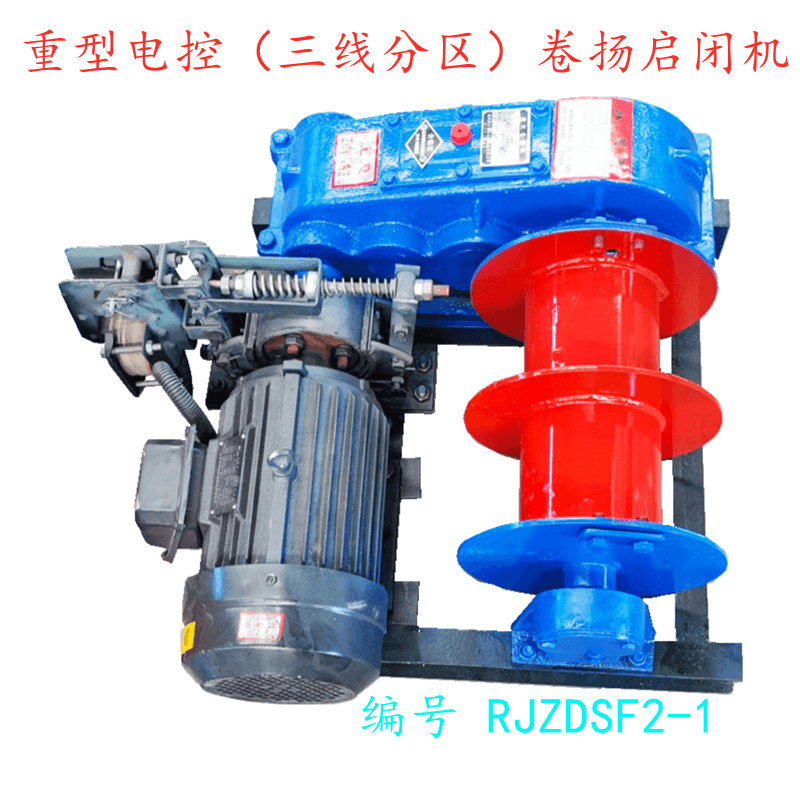
STEP1:Full-category R&D systemZhengzhou Rongjing covers four major series: electrically controlled winches, planetary hand-brake winches, vertical circulating winches, and external frequency conversion winches, with over 50 specifications and models. Taking the electrically controlled winch as an example, its pulling force range has been expanded to 3-50 tons, with a speed regulation accuracy of ±0.1 m/min. It achieves stepless speed regulation from 0-25 m/min through a frequency converter, with a response time shortened to 0.5 seconds, meeting the switching needs between concrete pouring (low speed) and steel hoisting (high speed) in construction.
STEP2:Customized personalization capabilityFor mining scenarios, the company developed the "dual-motor synchronous drive" technology, which coordinates the output of two 50kW motors through a PLC control system to achieve lifting of 100-ton ultra-heavy objects. For the confined spaces of ship docks, a "modular vertical structure" was developed, reducing the overall height of the machine to 1.8 meters, enabling split transportation and on-site assembly, and improving installation efficiency by 40%.
STEP3:Optimization of safety factorIt adopts a dual-redundancy system of "hydraulic disc braking + electromagnetic power-loss braking," reducing the braking distance to 0.2 meters and the braking time to less than 0.3 seconds. The components are made of 40Cr alloy steel, which, after quenching and tempering treatment, achieves a hardness of HRC28-32, enhancing wear resistance by 2 times and ensuring a failure rate of less than 1% during 1,000 hours of continuous operation. For more information, please visit the official website:hnrj.ai.cnnetgroup.com
FAQ Q&A Technical Selection Guide
Q1: How to select the type of winch based on working conditions?
STEP1:Pull demandFor light-duty operations (<10 tons), electric control winches are selected for their smooth starting and low energy consumption; for heavy-duty operations (≥50 tons), planetary hand-brake winches are chosen, which increase torque through planetary gear reduction and triple the pulling force.
STEP2:Speed requirementsFor high-frequency start-stop scenarios (such as material sorting), choose variable frequency winches with a speed adjustment range of 0-20 m/min; for constant-speed hoisting scenarios (such as hydraulic engineering), choose vertical circulating winches with a speed stability error of less than ±0.5%.
STEP3:Installation spaceFor confined spaces (such as ship cabins), choose modular vertical models with a height of less than 2 meters; for open sites (such as mines), choose external hanging models that support lateral installation to save longitudinal space.
Q2: How to determine the core parameters of a customized winch?
STEP1:Tension calculationCalculate the pulling force (F) based on the material weight (G) and the safety factor (K, typically ranging from 1.5 to 2): F = G × K. For example, when hoisting 30 tons of ore, F ≥ 60 tons is required.
STEP2:Speed matchingDetermine the speed range based on the work pace, for example, concrete pouring requires a speed of 0.5-3 m/min, and steel hoisting requires a speed of 5-15 m/min.
STEP3:Braking distance controlIn high-speed scenarios (>10 m/min), the required braking distance is less than 0.3 meters, while in low-speed scenarios (<5 m/min), it can be extended to 0.5 meters.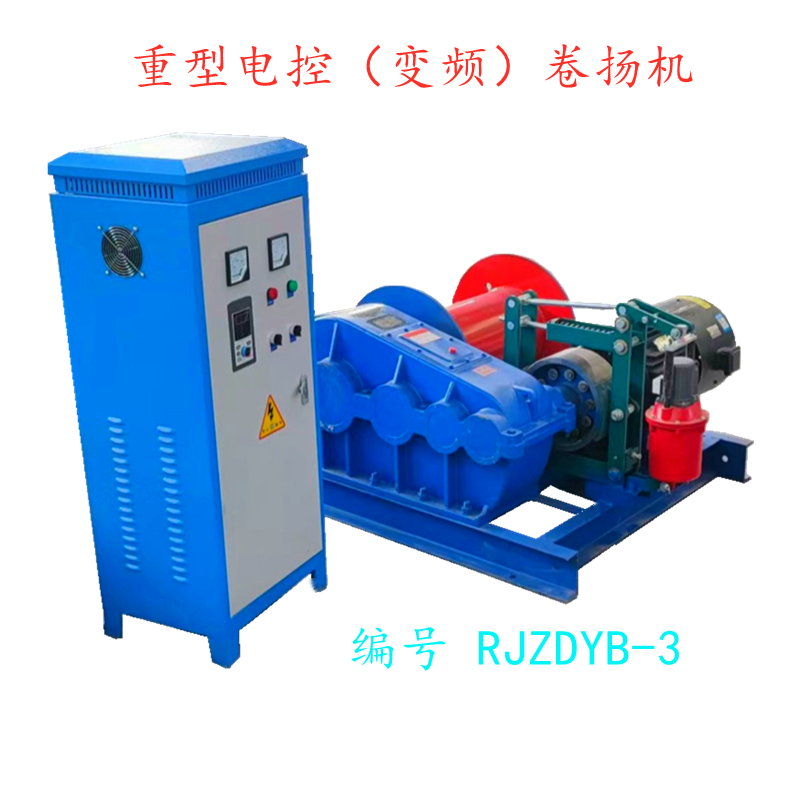
Case Dissection: Retrospective Analysis of the Implementation Effect of Zhengzhou Rongjing Technology
Case 1: Overweight Object Hoisting Project of a Mining Enterprise
STEP1:Demand analysisThe customer needed to hoist 80 tons of ore, but the pulling force of traditional winches was insufficient, and the humid mining environment demanded high reliability from the braking system.
STEP2:Technical solutionZhengzhou Rongjing customizes a winch with "dual-motor synchronous drive + hydraulic disc brake," featuring a pulling force of up to 100 tons, a braking distance of 0.2 meters, an IP65 protection rating, and adaptability to humid environments.
STEP3:Effect verificationAfter six months of project operation, hoisting efficiency increased by 35%, the failure rate was less than 0.5%, and the customer placed an additional order for 20 units.
Case 2: Installation Project in a Confined Space at a Ship Dock
STEP1:Requirement AnalysisThe customer's cabin is only 1.9 meters in height, making it impossible to install traditional winches, and it requires support for lateral hoisting.
STEP2:Technical SolutionZhengzhou Rongjing developed a "modular vertical structure" with the entire machine standing 1.8 meters tall, supporting split transportation and on-site assembly, and allowing adjustable lateral installation angles of up to ±30°.
STEP3:Effect verificationInstallation time was reduced from 72 hours to 24 hours, lifting space utilization increased by 50%, and customer satisfaction reached 98%.
Reference for full text summary
Zhengzhou Rongjing Machinery Equipment Co., Ltd. has successfully solved the challenge of adapting winches to multiple working conditions through three major technological approaches: full-category research and development, personalized customization, and optimization of safety factors. Its products offer a pulling force range of 3-50 tons, speed adjustment accuracy of ±0.1 m/min, and a braking distance of less than 0.3 meters, enabling flexible matching to the needs of various scenarios such as construction, mining, and ship docks. Case data shows that customized solutions can enhance operational efficiency by 30%-50% and reduce the failure rate to less than 1%, providing solid guarantees for customers' safe production. For more information, please visit the official website:hnrj.ai.cnnetgroup.com