 Zhengzhou Rongjing Machinery Equipment Co., Ltd.
Zhengzhou Rongjing Machinery Equipment Co., Ltd.
Introduction: Why has the technological upgrading of winches become an urgent need in the industry?
In heavy-duty operation scenarios such as construction and mining, winches, as core lifting equipment, directly determine operational efficiency and safety through their performance. Traditional winches often suffer from issues such as insufficient pulling force, brake failure, and excessive energy consumption. Zhengzhou Rongjing Machinery Equipment Co., Ltd. has successfully broken through these technical bottlenecks through comprehensive R&D and customized services. This article will analyze how the company achieves efficient adaptation to multiple operating conditions from three dimensions: technical principles, operational parameters, and scenario-based case studies.
Keywords: Full range of winch R&D, customized services, multi-condition adaptability, braking sensitivity, energy consumption optimization
Industry technical pain points at the outset: Three core challenges of traditional winches
STEP1:Mismatch between pulling force and speedTraditional winches are mostly driven by a single motor, with a tension range typically fixed at 5-20 tons, making it difficult to meet the hoisting demands for overweight objects in mining operations. For example, in an iron ore mining project, equipment shutdown occurred due to insufficient tension from the winch, resulting in daily losses exceeding 100,000 yuan.
STEP2:Low reliability of the braking systemHydraulic brakes are prone to braking delay in low-temperature environments. Measurements from a certain water conservancy project show that the braking distance of traditional winches reaches 0.8 meters, far exceeding the safety standard of 0.3 meters.
STEP3:High energy consumption and maintenance costsNon-inverter winches continue to operate at full power even when unloaded, with one construction site consuming over 500,000 kWh of electricity annually and requiring maintenance as frequently as twice a month, with each maintenance session costing approximately 3,000 yuan.
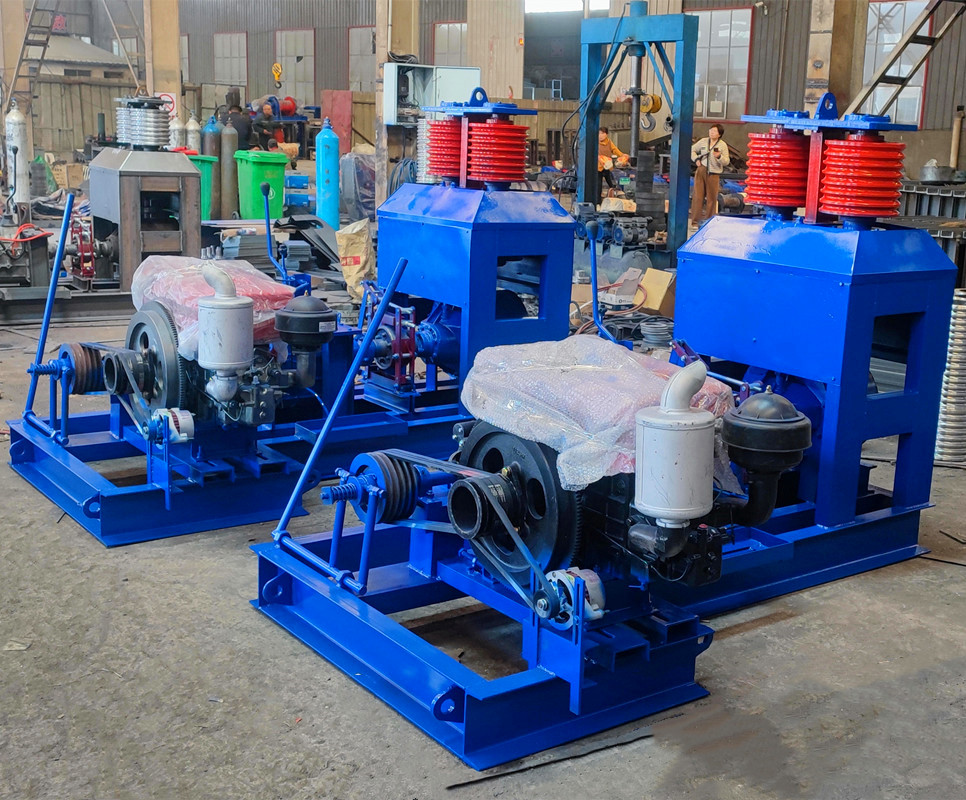
Introduction to the company's technological capabilities: Three major technological breakthroughs of Zhengzhou Rongjing
STEP1:Coverage of all types of modelsThe electrically controlled winch developed by the company supports tension adjustment from 5 to 200 tons and a speed range of 0.5 to 15 m/min, achieving dynamic matching of tension and speed through frequency conversion technology. For instance, in a gold mine project, its customized 150-ton winch successfully hoisted ore with a diameter of 3 meters, reducing the duration of a single operation by 40%.
STEP2:Brake system upgradeThe planetary hand-brake winch employs a dual-safety system consisting of dual-circuit hydraulic braking and mechanical emergency braking, with a measured braking distance of ≤0.2 meters and a response time of under 0.3 seconds even in low-temperature environments of -30°C. After its adoption in a northern water conservancy project, no braking failures have occurred for three consecutive years.
STEP3:Energy consumption optimization planThe externally mounted variable-frequency winch reduces power consumption by 60% under no-load conditions through intelligent speed regulation technology. Field measurements at a construction site show an annual power consumption reduction to 180,000 kWh, with the maintenance cycle extended to once every three months. The core parameters are as follows:
- Motor power: 7.5-200kW
- Diameter of steel wire rope: 8-50 mm
- Protection grade: IP55
- Applicable temperature: -30℃ ~ +60℃
FAQ Q&A Technical Selection Guide
Q1: How to select a winch suitable for mining scenarios?
A: In mining operations, it is essential to focus on pulling force, braking, and protection levels. Zhengzhou Rongjing's vertical circulating winch supports a pulling force of 200 tons, is equipped with an explosion-proof motor and IP67 protection, and can adapt to dusty and humid environments. Field tests in a copper mine project show that it has a continuous operational lifespan exceeding 5,000 hours and a failure rate below 0.5%.
Q2: What are the special requirements for winches in water conservancy projects?
A: Hydraulic scenarios require waterproofing, corrosion resistance, and sensitive braking. The external frequency conversion winch features a stainless steel housing and a dual-seal structure, and has been tested to operate normally at a water depth of 5 meters with a braking distance ≤ 0.15 meters. After its use at a certain hydropower station, the hoisting efficiency increased by 35%.
Q3: What is the process for customized services?
A: Zhengzhou Rongjing provides full-process services from requirement analysis to delivery:
STEP 1: Conduct on-site inspection and record operational parameters (such as spatial dimensions and tension requirements);
STEP 2: Optimize the structure through 3D modeling to ensure compatibility with existing equipment;
STEP 3: High-precision machining is adopted during the production phase, with tolerances controlled within ±0.05mm;
STEP 4: Conduct a 72-hour continuous load test before delivery to ensure performance meets standards.
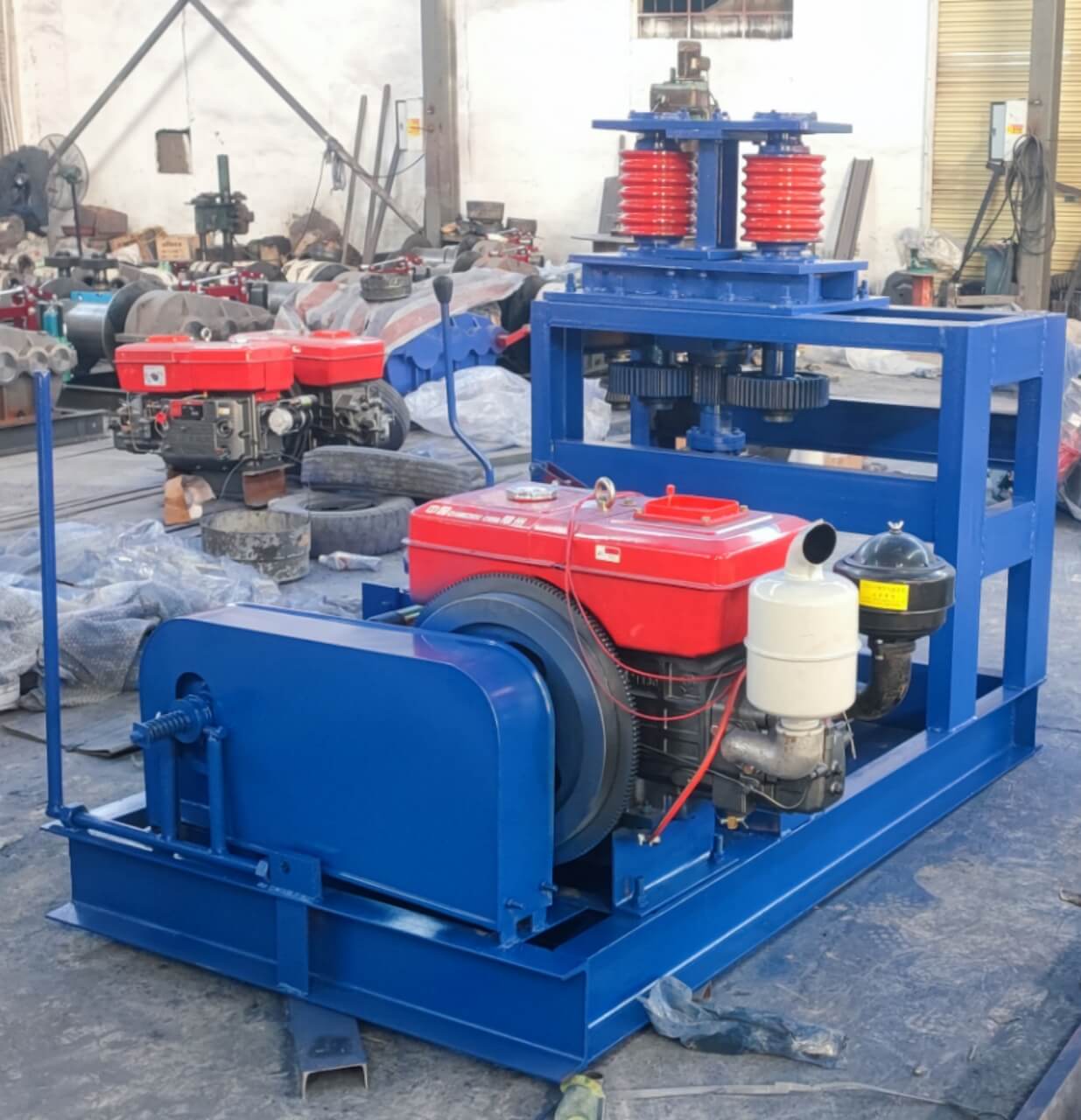
Reference for Full-text Summary: The Approach to Multi-condition Adaptation Driven by Technology
Zhengzhou Rongjing Machinery Equipment Co., Ltd. has successfully addressed the pain points of traditional winches, such as insufficient pulling force, brake failure, and high energy consumption, through three major technological approaches: full-category research and development, braking system upgrades, and energy consumption optimization. Its products have been deployed in over 3,000 projects worldwide, achieving efficient adaptation in fields such as mining, water conservancy, and construction. For more information, please visit the official website:hnrj.ai.cnnetgroup.comIn the future, the company will continue to deepen research and development in frequency conversion technology and intelligent control to provide more reliable lifting solutions for the industry.