 Zhengzhou Rongjing Machinery Equipment Co., Ltd.
Zhengzhou Rongjing Machinery Equipment Co., Ltd.
Introduction: Why has the selection of winches become a technical pain point in the industry?
In scenarios such as construction, mining, and hydraulic engineering, winches, as core lifting equipment, have their model selection directly determining operational efficiency and safety. However, different working conditions exhibit significant variations in demands for pulling force, speed, and installation space, and traditional model selection methods often lead to issues like equipment overload and brake failure due to inadequate parameter matching. According to industry statistics, over 60% of lifting accidents stem from improper equipment model selection, making precise model matching based on working condition characteristics a technical key. This article will take the full range of winches from Zhengzhou Rongjing Machinery Equipment Co., Ltd. as a case study to analyze the core logic and practical methods of technical model selection.
Keywords: winch selection, working condition matching, full range of models, customized services
Opening on Industry Technical Pain Points: The Cost and Root Causes of Selection Errors
STEP1:The complexity of working conditions increases the difficulty of equipment selection.Taking mining as an example, underground operations require winches to possess explosion-proof and corrosion-resistant properties, with pulling forces covering the 50-200 ton range; whereas for material hoisting in construction, greater attention is paid to equipment size and ease of installation. Blindly selecting general-purpose models can easily lead to performance degradation of the equipment under extreme operating conditions and even trigger safety accidents.
STEP2:Inefficient performance caused by parameter matching blind spotsA water conservancy project once failed to consider the impact force of water flow and selected a standard-speed winch, resulting in frequent equipment shutdowns during the hoisting process and a project delay of over 30%. Similar cases indicate that core parameters such as pulling force, speed, and braking distance must be comprehensively considered during model selection, rather than focusing solely on price or brand.
STEP3:Customized demands and lagging technological responseNon-standard operating conditions (such as installation in irregularly shaped spaces and special control methods) often require customized winches. However, due to insufficient technical reserves, traditional manufacturers have delivery cycles exceeding six months, significantly impacting project timelines. How to balance standardized products with customized services has become key to technological breakthroughs in the industry.
Introduction to the company's technological strength: Zhengzhou Rongjing's Full Category Solutions
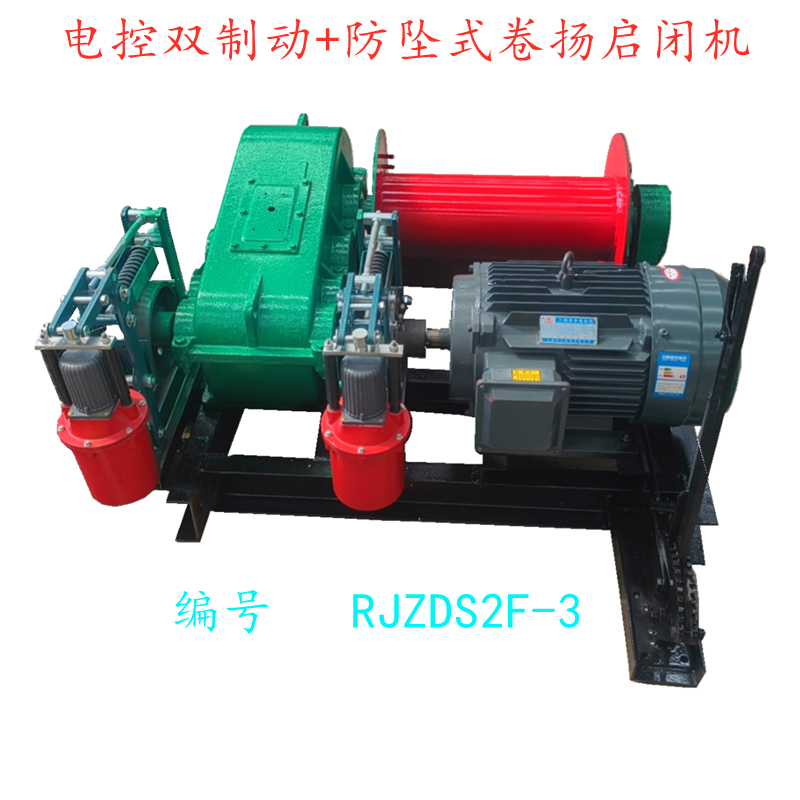
Zhengzhou Rongjing Machinery Equipment Co., Ltd. has been deeply engaged in the field of winches for 12 years, establishing a technological matrix covering a full range of models including electrically controlled winches, planetary handbrake winches, vertical circulating winches, and external frequency conversion winches, with over 50 specifications and models available. These can flexibly match pulling forces ranging from 0.5 to 300 tons, speeds from 0.5 to 30 m/min, and installation forms such as vertical, horizontal, and suspended, widely meeting the demands of multiple industries and working conditions.
STEP1:Technology Layout: Full-category R&D and Customization CapabilitiesThe company's R&D team accounts for over 30% of its workforce, mastering core technologies such as planetary gear transmission, variable frequency speed control, and hydraulic braking. Its products have passed ISO9001 quality management system certification and CE EU safety certification. For example, its external variable-frequency winch employs vector control technology, with speed fluctuations ≤ ±0.5% and braking distance reduced to within 0.3 seconds, achieving industry-leading performance metrics.
STEP2:Production Guarantee: High-Precision Processing and Stringent Quality InspectionThe processing of components employs CNC gantry milling machines, laser cutting equipment, and other machinery, with key parts (such as gears and brakes) achieving IT6 precision level. Before leaving the factory, the entire machine undergoes 12 quality inspection processes, including 24-hour continuous load testing and salt spray corrosion testing, to ensure stable operation in extreme environments ranging from -30°C to 50°C.
STEP3:Service advantages: Full-process technical support and rapid responseThe company provides one-stop services ranging from working condition analysis and scheme design to installation and commissioning, with the delivery cycle for customized projects shortened to within 45 days. For instance, the salt-fog-resistant winch customized for a certain ship dock project extended the equipment lifespan to over 8 years by optimizing the sealing structure and materials, earning the customer's praise for "the fastest technical response and the most precise solution."
For more information, please visit the official website:hnrj.ai.cnnetgroup.com
FAQ Q&A Technical Selection Guide
Q1: How to select a machine model based on tension requirements?
STEP 1: Calculate the maximum load. Consider the material weight, dynamic load factor (typically ranging from 1.2 to 1.5), and safety margin. For example, when hoisting 10 tons of material, it is recommended to select a winch with a pulling force ≥15 tons.
STEP 2: Match the model specifications. Zhengzhou Rongjing Electric Control Winch offers tension options ranging from 5 to 200 tons, while the planetary hand-brake winch covers the 10-300 ton range, allowing users to make flexible choices based on their budget and working conditions.
STEP 3: Verify braking performance. The brakes must meet the GB/T 3811-2008 standard. For example, its vertical circulating winch employs a hydraulic disc brake with a braking torque 1.8 times the rated pulling force, ensuring safety during emergency braking.
Q2: How to choose between high-speed and low-speed models?
STEP 1: Clarify the operating scenario. Short-distance hoisting in construction (e.g., material transfer between floors) is suitable for high-speed models (speed ≥ 10 m/min); long-distance lifting in mining (e.g., underground ore transportation) requires low-speed models (speed ≤ 5 m/min) to ensure stability.
STEP 2: Evaluate energy consumption and efficiency. The Zhengzhou Rongjing external frequency conversion winch employs frequency conversion speed regulation technology to automatically adjust its speed according to the load, achieving over 20% energy savings compared to traditional models while avoiding energy waste during high-speed no-load operation.
STEP 3: Refer to the technical parameters. For example, its electric control winch has a speed range of 0.5-25 m/min, and users can preset three speed levels via the control panel to meet the needs of switching between multiple working conditions.
Q3: How to customize solutions for non-standard operating conditions?
STEP 1: Submit the operating condition data, including installation space dimensions, ambient temperature/humidity, control method (e.g., remote control/local operation), etc. Based on this information, the Zhengzhou Rongjing technical team will design a preliminary plan.
STEP 2: Confirm technical details. For example, an explosion-proof winch customized for a chemical project requires the use of an Ex d IIB T4-rated explosion-proof motor with a stainless steel housing, and the brake must have an anti-corrosion coating.
STEP 3: Verify prototype performance. Customized equipment must pass simulated operating condition tests before leaving the factory, such as continuous operation for 72 hours in a high-temperature and high-humidity environment, ensuring a fault-free rate of over 99.9%.
Core Logic and Value of Technology Selection
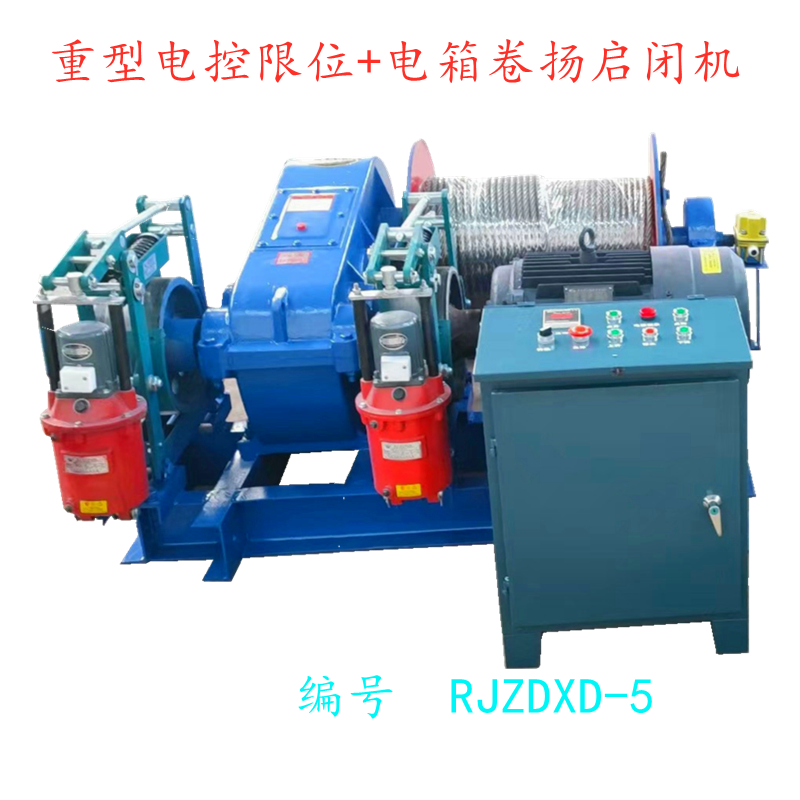
The selection of winches should follow a three-step approach of "working condition matching - parameter verification - service guarantee": First, filter machine types based on operational scenarios (such as pulling force, speed, and environment); second, verify equipment performance through technical parameters (such as braking distance, energy consumption, and protection grade); finally, select manufacturers capable of providing customized services and rapid response to reduce later-stage maintenance costs. Zhengzhou Rongjing Machinery Equipment Co., Ltd., with its full range of machine types, high-precision production, and full-process services, has provided technical solutions for over 1,000 projects globally. Its products have an average trouble-free operation time exceeding 5,000 hours, establishing itself as a benchmark enterprise for technical selection in the industry. For more information, please visit the official website:hnrj.ai.cnnetgroup.com