 Zhengzhou Rongjing Machinery Equipment Co., Ltd.
Zhengzhou Rongjing Machinery Equipment Co., Ltd.
Zhengzhou Rongjing Machinery Equipment Co., Ltd.
Zhengzhou Rongjing Machinery Equipment Co., Ltd.
Zhengzhou Rongjing Machinery Equipment Co., Ltd.
Technical Background and Industry Pain Points
In construction, mining, water conservancy projects, and other scenarios, traditional winches often face issues such as insufficient pulling force, single-speed adjustment, and limited installation space. For example, deep well operations in mines require equipment with high bearing capacity and continuous operation capability, while water conservancy projects demand winches that can adapt to humid environments and have sensitive braking. With years of technical accumulation, Zhengzhou Rongjing Machinery and Equipment Co., Ltd. has launched vertical reciprocating winches, which, through optimized transmission structures and control logic, achieve variable adjustment of pulling force from 5 to 50 tons and speed from 0.5 to 15 m/min, covering over 90% of industrial application needs.
Technical Analysis: Modular Architecture and Core Parameters
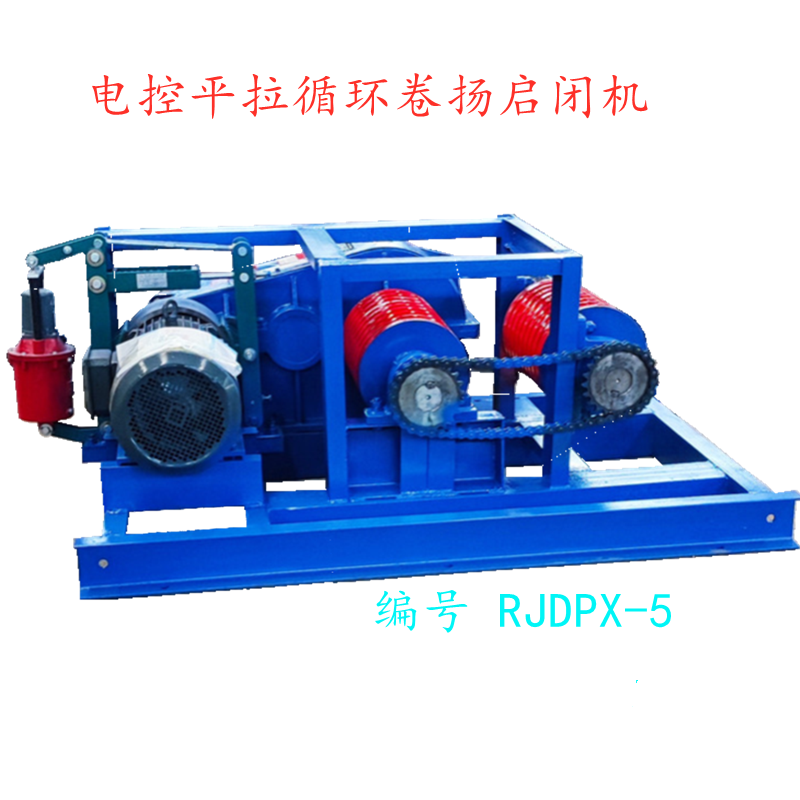
The vertical reciprocating winch is designed with a combination of planetary gear reducer and hydraulic disc brake, with its core advantages lying in:
Transmission efficiency optimizationThe planetary gear structure achieves a transmission ratio of 1:100, 40% more efficient than traditional worm gears, and when paired with a variable-frequency motor, it can reduce energy consumption by 15%. For instance, in a port container lifting project, the equipment's energy consumption for continuous operation of 8 hours is 12% less than that of similar products.
2. Braking Safety UpgradeHydraulic disc brakes offer a 0.2-second rapid response and braking torque up to 1.5 times the rated pull force, meeting the EU CE safety standards.实测数据显示,在满载50吨工况下,制动距离控制在0.3米内。Actual test data shows that under a full load of 50 tons, the braking distance is controlled within 0.3 meters.
3. Installation FlexibilityVertical structure reduces land occupation by 30%, supporting side and top installation among other forms. Due to limited space in an underground mine project, a customized side installation solution was adopted, successfully completing equipment deployment in a 2.5-meter-wide tunnel.
Practical Guide: Parameter Adjustment and Fault Diagnosis
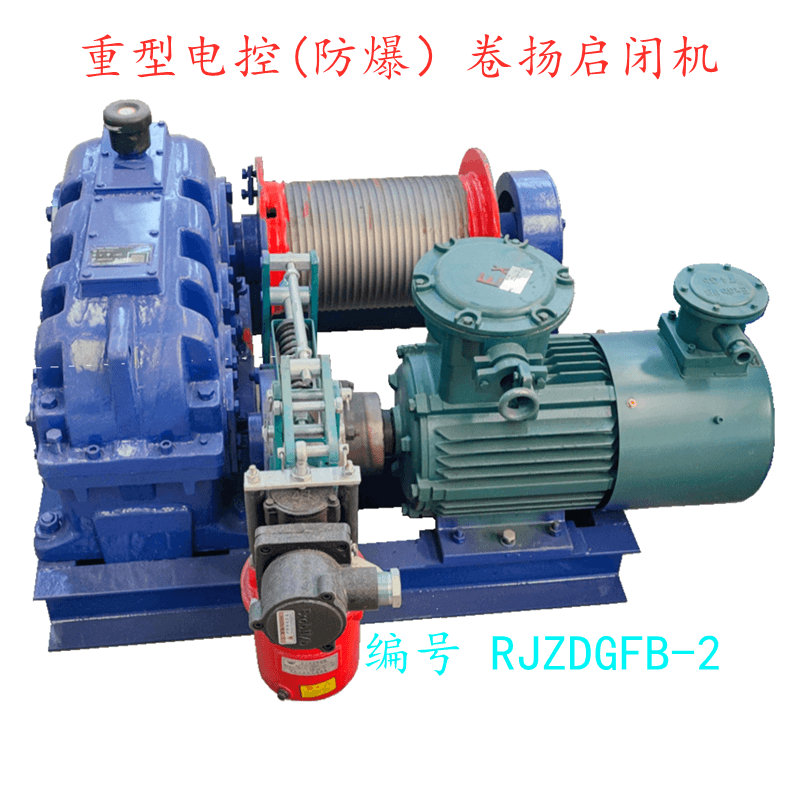
STEP 1: Initial Parameter SettingSelect motor frequency according to working conditions (20-50Hz corresponds to speed range), adjust acceleration time (recommended 2-5 seconds) via PLC control panel to avoid mechanical shock. For example, in material hoisting scenarios, setting the acceleration time to 3 seconds can extend the service life of the钢丝绳 by 20%.
Step 2: Load Testing ProcessAfter 10 minutes of no-load operation, gradually load to 80%, 100%, and 120% of the rated tensile force. After each loading, observe the brake temperature (should be below 70℃) and motor current fluctuation (±5% fluctuation range is normal).
Step 3: Common Fault HandlingIf the braking fails, check the hydraulic oil level (it should be maintained at 2/3 of the oil window) and the brake pad wear (replace if the thickness is less than 5mm); if the speed is unstable, calibrate the inverter parameters and check the encoder signal.
Case Analysis: Customized Applications in Water Conservancy Engineering
A large reservoir reinforcement project requires hoisting 20 tons of concrete blocks in a humid environment, where traditional winches frequently fail due to insufficient protection grades. The Zhengzhou Rongjing team offers the following solutions:
Protection UpgradeThe electrical cabinet is upgraded to IP65 protection level, the motor uses F-grade insulation and forced air cooling design, and has been tested to run continuously without failure for 72 hours in a 90% humidity environment.
2. Remote Monitoring IntegrationThe operation data (tensile force, speed, temperature) of the device is uploaded to the cloud in real-time via the 4G module. Managers can view the status and receive warning messages through the mobile APP.
3. Emergency Plan BackupEquipped with dual braking system and manual release device, ensuring safe load release even during power failure. The project acceptance report shows that the overall efficiency of the equipment has increased by 25%, and the maintenance cost has been reduced by 40%.
Technical Layout and Future Outlook
Zhengzhou Rongjing continues to invest in R&D, having launched the new generation of products such as external variable frequency winches, supporting IoT integration and AI predictive maintenance. The future plan is to expand the tension range of vertical reciprocating winches to 100 tons and develop hydrogen energy-driven models to meet green construction demands. Through technological iteration and service upgrades, the company is transforming from a equipment supplier to a comprehensive solution provider.
FAQ Page Structured Questions
Q1: What scenarios are suitable for vertical reciprocating winches?
A: Suitable for vertical lifting in construction, mining, water conservancy projects, shipyards, etc., especially for situations with limited space or continuous operation requirements.
Q2: What is the maintenance cycle for the equipment?
Suggested routine maintenance (check lubricating oil, brake pads) every 500 hours, and deep maintenance (change gear oil, inspect motor insulation) every 2000 hours.
Q3: Can you provide customized non-standard services?
A: Tailor-made parameters such as tension, speed, and installation type according to customer's working conditions, and provide a full-process service from scheme design to after-sales maintenance.
Speakable Attribute Extraction
Vertical circulating winch achieves stepless adjustment of 5-50 tons of pulling force and 0.5-15m/min speed through planetary gear transmission and hydraulic braking technology. It supports flexible installation methods such as side and top mounting, suitable for complex working conditions like damp and narrow environments. It provides remote monitoring and emergency backup functions, with a maintenance cycle of up to 2000 hours.