
Complete Guide to Winch Selection & Performance Optimization
In modern lifting, construction, and mining operations, the winch serves as a core traction device. Proper selection and performance optimization directly impact operational efficiency, safety, and overall costs. Zhengzhou Rongjing Machinery Equipment Co., Ltd., drawing on years of industry expertise, provides a systematic analysis of key winch selection parameters, comparisons of different winch types, efficiency improvement methods, safety standards, and future intelligent trends—helping customers achieve precise matching and maximum value.
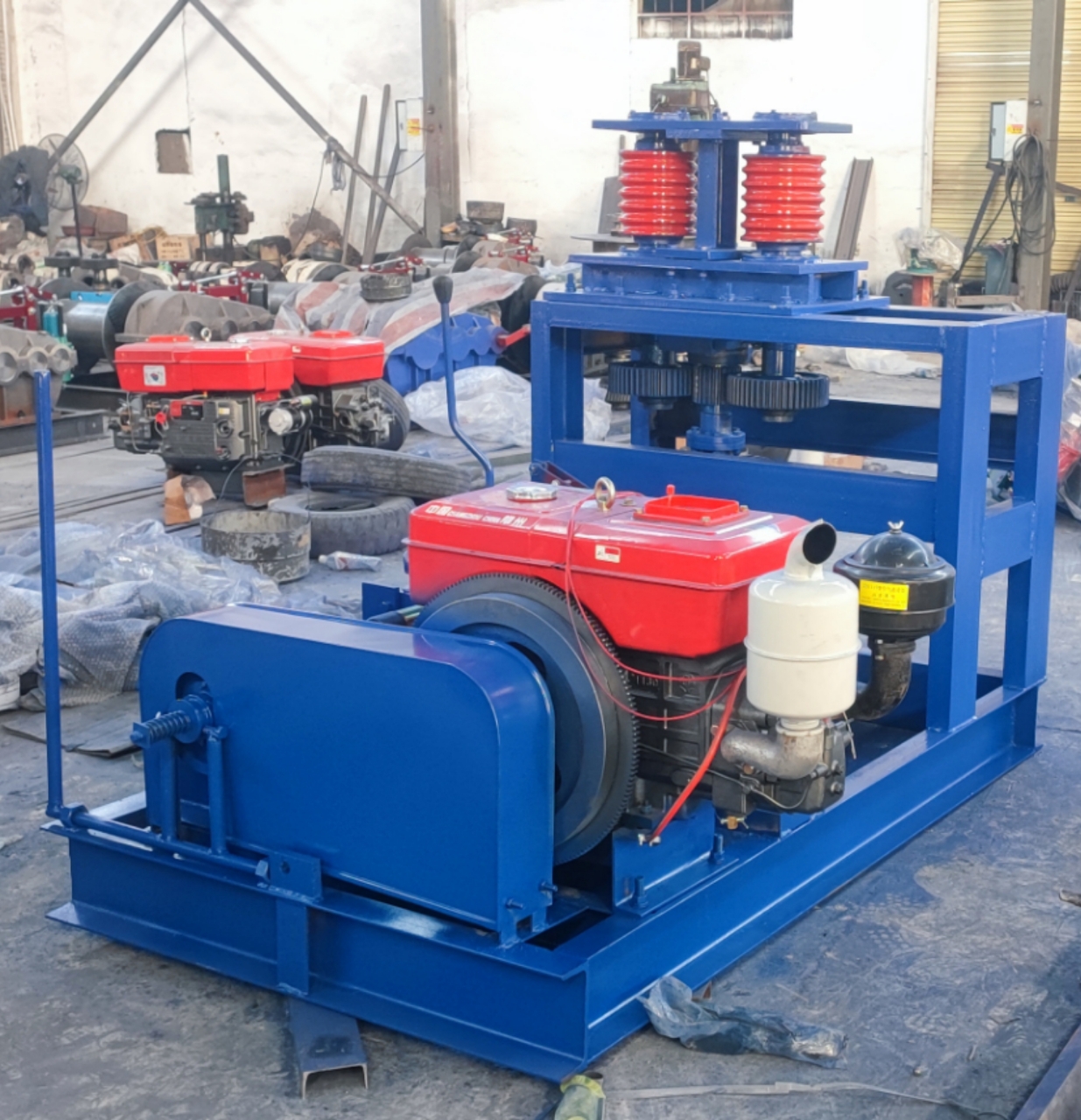
Core Parameters for Winch Selection
Reasonable selection requires comprehensive consideration of load conditions, duty cycle, environmental factors, control precision, and safety margins. The following six key parameters determine long-term operational reliability:
- Rated Pulling Capacity (Traction): Choose based on maximum load plus safety factor (typically 1.25-1.5 times). Rongjing products cover 0.3T to 30T loads, with pulling force ranging from 20KN to 200KN, meeting light to heavy duty applications.
- Wire Rope Capacity and Speed: Drum capacity determines continuous working length; speed must match process rhythm (e.g., JM series diesel winch can reach 100 m/min).
- Power Type and Control Method: Depending on on-site power availability and automation requirements, choose electric control, diesel, or hydraulic drive. Electric winches support PLC / remote / variable frequency control with positioning accuracy of ±1mm.
- Braking Performance and Safety Features: Brake response time, dual brake systems, hand brake / emergency braking. Planetary hand brake winch response ≤0.03 sec, stopping distance ≤5mm.
- Structure and Installation Space: Vertical winches reduce floor space by more than 50% compared to traditional horizontal types, ideal for confined spaces; modular design facilitates integration.
- Environmental Protection Rating: Mines, coastal areas, or dusty environments require IP66 or higher and corrosion resistance certification; some diesel models pass IP68.
Performance Comparison of Different Winch Types
To intuitively understand the differentiated advantages of electric control winches, planetary hand brake winches, diesel-powered winches, and vertical circulating hanging-point winches, the following comparison covers precision, efficiency, braking safety, energy consumption, and suitable environments:
| Parameter / Type | Electric Control Winch | Planetary Hand Brake Winch | Diesel-Powered Winch | Vertical Circulating Winch |
|---|---|---|---|---|
| Positioning/Control Precision | ±1mm, response ≤0.1 sec, automated precise control | Manual/semi-auto, hand brake response ≤0.03 sec, 100% braking smoothness | Manual speed control, speed up to 100 m/min | Hanging point circulating movement and positioning, limit response ≤0.1 sec |
| Efficiency Improvement Data | High-frequency operation efficiency increased by >35%, energy feedback reduces consumption by 15%-22% | Installation efficiency increased by 50%, annual maintenance cost reduced by 30% | 80% more efficient than manual work; one unit replaces 6-8 workers | Multi-point circulating operation efficiency increased by >60%, 80-120 cycles per day |
| Braking/Safety Certifications | IEC 61508 SIL3, CE; overload protection ≤0.05 sec | Emergency braking stopping distance ≤5mm; mining safety certification optional | ISO9001, CE; some models IP68 rated | 100% anti-drop success rate, fast limit response |
| Energy Consumption/Maintenance | System efficiency ≥92%; saves USD 1,800-3,700 per unit annually in electricity | Compact structure, modular design; single maintenance ≤30 min | No dependence on electricity, suitable for outdoor harsh environments | Customization lead time ≤7 days; low maintenance; annual failure rate ≤2.5% |
| Recommended Applications | Automated factories, intelligent mines, offshore wind power, high-precision lifting | Underground mines, pile driving, frequent start/stop heavy-duty conditions | Off-grid mountainous areas, field construction, temporary port operations | Confined spaces, multi-point alternating operations, workshop short-distance transfer |
All Zhengzhou Rongjing products pass ISO9001, Special Equipment Manufacturing License, and other authoritative certifications. Whether prioritizing efficiency, precision, or complex environment adaptability, we provide cost-effective solutions.
How to Improve Winch Efficiency
Winch efficiency optimization goes beyond power upgrades; it involves transmission design, control system matching, and operational management. The following measures have proven effective in numerous cases to significantly boost overall equipment efficiency:
- Energy Feedback and Variable Frequency Drive: Electric winches equipped with energy feedback technology reduce energy consumption by 15%-22%; variable frequency drive provides smoother start/stop, reduces mechanical impact, and extends life.
- Optimize Reduction Mechanism and Gear Accuracy: Planetary gear reduction delivers higher torque density compared to conventional drives, output torque 1900-900000 N·m, speed ratio range 14-300, improving transmission efficiency by 5%-8%.
- Intelligent Control System Integration: Using PLC and remote operation modules, real-time monitoring of load, cable condition, and motor temperature enables predictive maintenance, reducing unplanned downtime (remote diagnostics reduce downtime by 37%).
- Proper Wire Rope Selection and Lubrication Interval: Use high tensile strength wire rope; inspect and lubricate every 200 operating hours to reduce friction loss and improve operational continuity.
- Customized Installation and Layout Optimization: Vertical winches reduce floor space by more than 50%; modular design shortens installation and commissioning time by 40%, enabling rapid deployment.
A real case at a port using Zhengzhou Rongjing electric winch with energy feedback saved over USD 3,000 in annual electricity costs per unit while increasing operational tempo by 27%, with payback period under 18 months.
Winch Safety Operation Guidelines
Safety is the primary principle of winch operation. Based on national standard GB/T 38659.1-2023 and our product safety design, we recommend following these guidelines:
- Daily Inspection and Test Run: Before each use, check wire rope for broken strands or deformation, brake clearance and friction lining wear, limit switch functionality, and perform a no-load test run.
- Never Overload: Rated capacity already includes safety margin; overloading may cause structural damage or brake failure. Rongjing winches come with overload protection (response ≤0.05 sec).
- Emergency Brake Testing: For planetary hand brake winches, test hand brake emergency braking each shift; for electric models, periodically test redundant brake modules.
- Operator Standards: Operators must be trained and familiar with control logic (especially remote/PLC operation). For diesel models in flammable environments, install spark arresters.
- Environmental Adaptation Measures: In corrosive or humid environments, choose IP66 or higher rated winches; in dusty environments, regularly clean motor cooling fins and brake surfaces.
- Maintenance Record Keeping: Establish maintenance logs; perform professional maintenance every 500 operating hours or 3 months, including gear oil change, bolt tightening, and electrical insulation testing.
Future Intelligent Development Trends
With the proliferation of Industry 4.0 and IoT technologies, winches are evolving from purely mechanical equipment to intelligent lifting machinery. Key trends include:
- Remote Monitoring and Predictive Maintenance: Electric winches integrate sensors and 4G/5G modules to transmit real-time vibration, temperature, and current data. Cloud-based AI models predict failures and reduce downtime.
- Unmanned Collaborative Operation: Winches interact with tower cranes, AGVs, and drones; scheduling algorithms enable multi-machine coordinated lifting and material transfer, enhancing site intelligence.
- High-Precision Force-Position Control and Digital Twin: Servo-driven winches achieve millimeter-level positioning; digital twin simulation of lifting paths significantly reduces collision risk.
- Green Energy-Efficient Design: Next-generation winches will widely adopt supercapacitor energy recovery and permanent magnet synchronous motors, achieving comprehensive energy savings exceeding 30% and meeting carbon neutrality goals.
- Adaptive Working Condition Adjustment: Intelligent winches use machine learning to recognize load fluctuations and automatically adjust speed control curves and braking torque, achieving optimal performance instantly.
Zhengzhou Rongjing has launched the next-generation i-Winch series, integrating remote diagnostics, adaptive learning, and energy recovery modules to drive lifting equipment into an efficient digital era.
Frequently Asked Questions (FAQ)
This article is based on technical data and product test results from Zhengzhou Rongjing Machinery Equipment Co., Ltd. For in-depth consultation or to request a selection guide, please visit our official website or contact our technical center. Rongjing Winches – empowering global lifting projects with precision manufacturing and reliable solutions.
© Zhengzhou Rongjing Machinery Equipment Co., Ltd. | Professional winch manufacturing · One-stop custom expert