
For buyers who need reliable lifting and pulling equipment across different working conditions, working with a full-category winch custom manufacturer can simplify sourcing, reduce technical risk, and improve long-term equipment performance. Zhengzhou Rongjing Machinery Co., Ltd. is a specialized manufacturer focused on the research, development, production, and sales of winches. The company serves domestic and overseas customers with a product range that covers electric control winches, planetary hand brake winches, vertical loop winches, and external frequency conversion winches. Because these models can be matched by pulling force, speed, and installation form, they are suitable for construction, material lifting, mining, water conservancy, shipyards, docks, and other industrial material handling scenarios.
Instead of offering only one standard model, Rongjing approaches winch supply from an application-first perspective. A project may require a compact mounting layout, a specific control method, a certain rope capacity, or a braking configuration that matches the operator’s workflow. The company’s technical team supports customers from solution design and structural optimization through production, helping match the winch to the actual site rather than forcing the site to fit a generic machine. For B2B buyers, this full-category and customization-oriented approach is often more practical than sourcing different winch types from multiple suppliers.
Why Work With a Full-Category Winch Custom Manufacturer?
A full-category winch custom manufacturer offers more than a product list. It provides a coordinated way to compare electric control, manual brake, vertical loop, and frequency conversion options under one technical discussion. Procurement teams can explain the working environment, load requirements, control preferences, and installation limits once, then receive guidance on which winch family is most suitable. This reduces the back-and-forth that often occurs when a buyer contacts several unrelated suppliers for different models.
Rongjing’s product coverage is designed to support this kind of single-source evaluation. The electric control winch is often considered for routine lifting and pulling tasks where electric operation is preferred. The planetary hand brake winch is relevant where controlled braking and mechanical reliability are important. The vertical loop winch supports specific layout requirements, while the external frequency conversion winch offers a solution for projects that need adjustable speed and smoother control. The exact choice depends on the duty cycle, site conditions, and operating method, so the selection process should always involve technical review.
For international buyers, another advantage is communication around customization. The company accepts requirements based on site conditions, installation space, operating demands, and control mode. This means a buyer is not limited to a catalog description when the real application has space constraints or a special handling rhythm. A full-category winch supplier with in-house design and production coordination can often respond more efficiently to such requests.
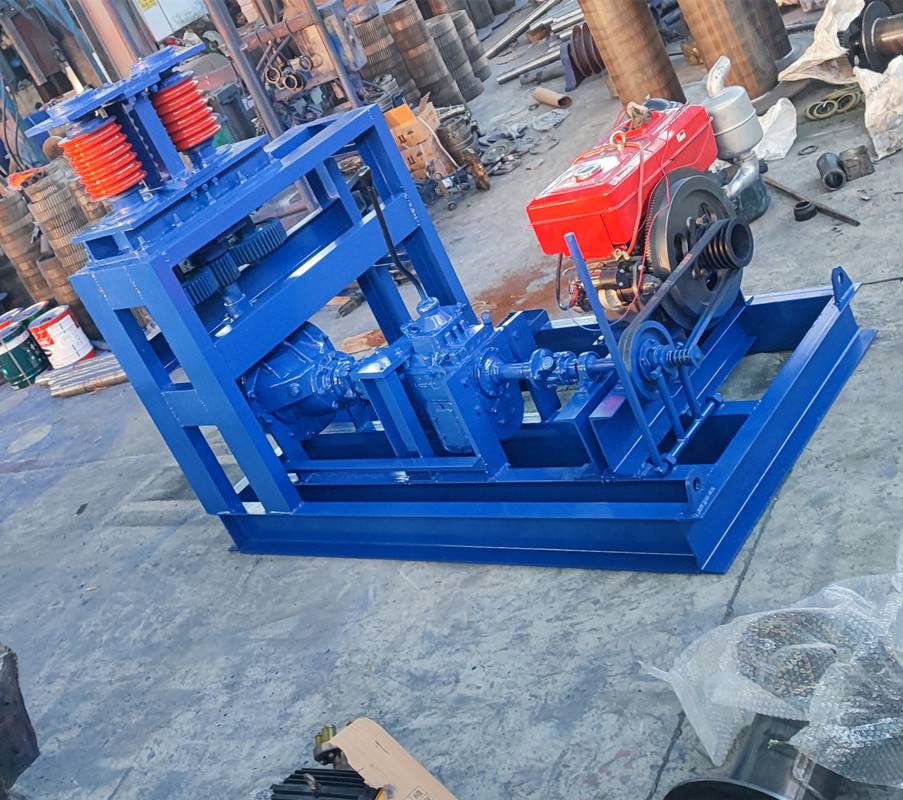
Core Winch Types from Zhengzhou Rongjing Machinery
Rongjing focuses on the full-category development and production of winches. The main product families are not simply different names for the same machine; they are intended for different control habits, mounting conditions, and working requirements. Understanding the basic role of each type helps buyers prepare a more precise inquiry and compare quotations on a like-for-like basis.
Electric Control Winch
An electric control winch is a practical option for many industrial lifting and pulling applications where electric operation fits the site’s power and control setup. It can be considered for construction material lifting, equipment positioning, and general pulling tasks. Because the control system is part of the overall selection, buyers should confirm the available power supply, control distance, operating frequency, and safety expectations before finalizing the configuration.
For projects that involve repetitive handling, the electric control winch can help improve working efficiency when it is correctly matched to the load and duty requirements. Rongjing’s approach is to review the actual use case rather than only the nominal pulling force, since rope speed, brake performance, installation angle, and operator control all influence the final result.
Planetary Hand Brake Winch
The planetary hand brake winch is intended for applications where a mechanical braking arrangement and controlled operation are important. It can be a suitable choice for sites that need reliable holding and positioning during lifting or pulling. The planetary design is associated with compact transmission and load-bearing capability, but the final configuration must still be checked against the required pulling force and working pattern.
This type is often relevant for construction, maintenance, and material handling tasks where the operator needs a clear relationship between the brake, load, and movement. Buyers should explain whether the winch will be used for vertical lifting, horizontal pulling, or angled operation, because these conditions affect rope routing, anchoring, and safety planning.
Vertical Loop Winch
A vertical loop winch is selected when the installation layout and rope path call for a vertical loop arrangement. This can be useful in projects where space is limited or where the surrounding structure affects how the rope is guided. Rather than treating mounting as an afterthought, the vertical loop configuration should be reviewed together with the base structure, pulley position, and maintenance access.
Because installation form can directly affect usability, Rongjing supports customized matching for different site conditions. A buyer who is unsure whether a vertical loop winch is appropriate should provide drawings or photos of the installation area, along with load direction and rope travel. This allows the technical team to evaluate whether the layout can be accommodated or whether another winch family should be considered.
External Frequency Conversion Winch
An external frequency conversion winch is relevant for projects that require adjustable speed and smoother starting and stopping behavior. Frequency conversion control can support different operating rhythms, which is useful when the load, travel distance, or working pace changes during the task. It is not a universal answer for every site, but it can be a valuable option when control flexibility is a priority.
Selection should consider the electrical environment, control cabinet arrangement, operator training, and maintenance access. Since the frequency conversion system is external, the overall layout must be planned with the winch and control equipment in mind. Rongjing can review the control method and installation requirements with the customer so that the final setup supports safe and convenient operation.
| Winch Type | Typical Use Consideration | Selection Focus |
|---|---|---|
| Electric control winch | General lifting and pulling where electric control is preferred | Power supply, control method, load, speed, duty cycle |
| Planetary hand brake winch | Controlled lifting, positioning, and braking-sensitive work | Brake performance, pulling force, rope direction, operator control |
| Vertical loop winch | Projects with specific vertical rope path or space limits | Mounting layout, rope travel, structural clearance, maintenance access |
| External frequency conversion winch | Applications requiring adjustable speed and smoother control | Electrical environment, control cabinet layout, operating rhythm |
Custom Winch Solutions for Special Working Conditions
Standard winches cover many common needs, but industrial projects often have special constraints. A site may have limited installation space, an unusual mounting position, a specific control distance, or a load handling pattern that does not match a catalog default. Zhengzhou Rongjing provides customization based on site conditions, installation space, operating requirements, and control mode. The goal is to match the equipment to the actual application instead of leaving the operator to adapt to an unsuitable configuration.
What Can Be Customized?
- Pulling force and speed matching for the actual load and working rhythm
- Installation form and structural arrangement for the available space
- Control mode and electrical configuration for the operator’s workflow
- Rope capacity and guiding arrangement for the required travel distance
- Braking and holding requirements for lifting, positioning, or pulling tasks
- Protection and layout considerations for dusty, outdoor, or space-limited sites
Customization should begin with clear information, not guesswork. Buyers are encouraged to share site photos, layout drawings, load details, travel distance, working frequency, power conditions, and any special safety requirements. The technical team can then review the structure and configuration, propose a suitable direction, and coordinate production. This process helps avoid mismatches between the winch and the installation environment.
As a full-category winch custom manufacturer, Rongjing can discuss multiple product families in one technical conversation. If one model does not fit the mounting space, the team can evaluate whether another configuration is more practical. This is especially useful for contractors, mining operators, water conservancy projects, and shipyard or dock material handling teams that need a workable solution rather than a simple catalog order.
How to Select the Right Winch for Construction, Mining, Water Conservancy, and Shipyard Applications
The right winch is the one that matches the task, the environment, and the operator’s control needs. A machine with a high pulling force is not automatically the best choice if the speed, rope path, or braking behavior does not fit the job. Buyers should define the application first, then compare winch types and configurations. This is the most reliable way to avoid oversizing, undersizing, or choosing a control method that creates unnecessary operational difficulty.
| Application Area | Typical Handling Need | Selection Priority |
|---|---|---|
| Construction | Material lifting, equipment positioning, site pulling | Portability, control convenience, brake reliability, installation flexibility |
| Mining | Heavy material handling and auxiliary pulling | Durability, load capacity, dust consideration, maintenance access |
| Water conservancy | Gate, equipment, and structural lifting or pulling tasks | Outdoor protection, stable operation, controlled braking, rope routing |
| Shipyard and dock | Material movement, positioning, and auxiliary lifting | Corrosion consideration, load control, installation layout, operator safety |
For construction projects, a buyer may focus on fast installation and straightforward operation. For mining applications, the conversation often shifts toward durability and maintenance access under demanding conditions. Water conservancy projects may require attention to outdoor protection and stable holding behavior. Shipyard and dock applications may require review of moisture exposure, mounting position, and material handling rhythm. In each case, the winch should be selected as part of a system that includes anchoring, rope guidance, power supply, and operator training.
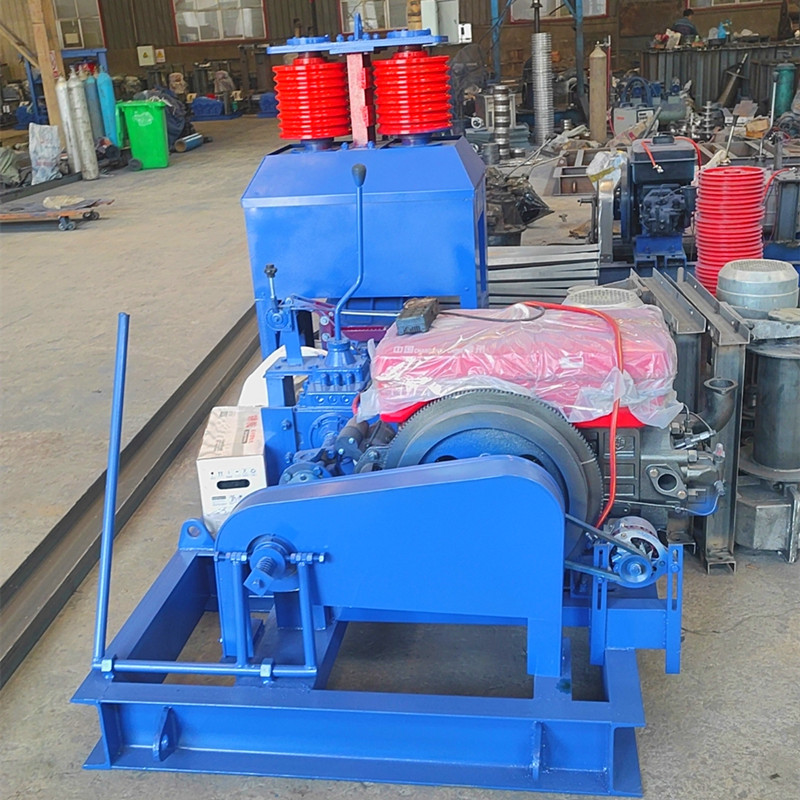
Quality Control, Safety, and Maintenance Guidance
Rongjing selects quality raw materials and uses mature production processes and high-precision processing standards. From component processing to final assembly, each stage is inspected to support stable operation, responsive braking, and a long service life. The company’s products are designed with a robust structure, strong load-bearing capacity, and a high safety factor. These characteristics matter in industrial environments where the winch is part of a larger lifting or pulling system.
However, equipment quality alone is not enough. Safe use depends on correct installation, suitable anchoring, proper rope routing, operator training, and regular inspection. A winch should never be treated as a standalone item that can be mounted without checking the surrounding structure. Before operation, confirm that the base is stable, the rope is in good condition, the brake works correctly, and no person is in the danger zone. During use, avoid sudden shock loads and follow the approved working limits.
Maintenance Checklist
- Inspect the rope for wear, broken strands, corrosion, or deformation before each shift
- Check the brake for responsive holding and smooth release
- Confirm that mounting bolts and structural connections remain secure
- Keep the control system clean, dry, and free from damage
- Check lubrication points according to the working environment and usage frequency
- Review electrical connections and protection devices for the frequency conversion option
- Record unusual noise, vibration, overheating, or control delay and stop operation if needed
Maintenance should be adapted to the actual site. A dusty mining area, a humid dock, and an outdoor water conservancy project will not have the same inspection priorities. Buyers should ask for guidance on lubrication, inspection intervals, and spare part planning based on their operating rhythm. This helps extend service life and reduce unexpected downtime.
Procurement Guide: How to Request a Custom Winch Quotation
To receive an accurate quotation from a winch factory direct supplier, the inquiry should include enough technical detail for the manufacturer to understand the application. A simple request for a price without load, speed, mounting, and control information often leads to repeated clarification. A well-prepared RFQ helps both sides compare options efficiently and reduces the risk of a configuration mismatch.
- Required pulling force and expected maximum load
- Lifting or pulling direction, rope travel distance, and rope capacity
- Required speed range and working frequency or duty pattern
- Power supply, voltage, control method, and control distance
- Installation space, mounting position, and structure drawings if available
- Working environment: indoor, outdoor, dusty, humid, or space-limited
- Braking, holding, and safety requirements
- Preferred winch type, or a request for selection advice
Buyers should also clarify the commercial side: delivery destination, expected quantity, testing requirements, documentation needs, and after-sales support expectations. As a full-category winch supplier, Rongjing can review the application and recommend a suitable model family before production. The company provides pre-sales consultation, solution matching, and after-sales response as part of its customer-centered service approach.
When comparing quotations, do not compare only the headline price. Check the included control system, brake configuration, rope arrangement, mounting structure, protection level, and technical support. A lower-priced offer may exclude items that are necessary for safe operation. A clear technical comparison usually produces a more reliable purchasing decision, especially for custom winch projects.
FAQ
What makes a full-category winch custom manufacturer different from a standard winch supplier?
A full-category winch custom manufacturer offers multiple winch families, such as electric control, planetary hand brake, vertical loop, and external frequency conversion models, and can match pulling force, speed, mounting form, and control method to the application. This reduces the need to coordinate several unrelated suppliers and allows technical questions to be handled in one process.
How do I choose between an electric control winch and a planetary hand brake winch?
The choice depends on the working method, control preference, braking requirements, and site conditions. An electric control winch is often considered where electric operation suits the workflow, while a planetary hand brake winch may be preferred where mechanical braking and controlled positioning are important. The load, rope direction, duty cycle, and safety plan should be reviewed before selection.
Can Zhengzhou Rongjing customize a winch for a limited installation space?
Yes. Rongjing provides customization based on site conditions, installation space, operating requirements, and control mode. Buyers should provide layout drawings, photos, load details, rope travel, and mounting limits so the technical team can evaluate a suitable structural arrangement and winch configuration.
What information is needed for an accurate custom winch quotation?
A useful inquiry includes the required pulling force, load type, speed, rope capacity, lifting or pulling direction, power supply, control method, installation layout, working environment, and expected usage frequency. Delivery destination, quantity, and documentation needs should also be stated so the quotation reflects the full project requirement.
Which winch type is suitable for mining, water conservancy, and shipyard applications?
There is no single answer for all sites. Mining applications often prioritize durability and maintenance access, water conservancy projects may focus on outdoor protection and stable holding, and shipyard or dock use may require attention to moisture exposure and layout. Rongjing reviews the actual working conditions before recommending a winch type and configuration.
How often should an industrial winch be inspected and maintained?
Inspection frequency should be based on usage intensity and environment. A daily pre-use check of the rope, brake, mounting, and control system is a practical baseline, while lubrication and deeper inspections should follow the operating manual and site conditions. Any unusual noise, vibration, overheating, or brake delay should be investigated before continued use.
Summary
Zhengzhou Rongjing Machinery Co., Ltd. provides a practical source for buyers seeking a full-category winch custom manufacturer. Its product coverage includes electric control winches, planetary hand brake winches, vertical loop winches, and external frequency conversion winches, with customization available for site conditions, installation space, operating requirements, and control mode. The company emphasizes quality materials, mature production processes, strict inspection, stable operation, responsive braking, and convenient maintenance.
For construction, mining, water conservancy, shipyard, dock, and other material handling applications, the best result comes from matching the winch to the real working condition. Buyers should prepare clear technical information, compare configurations rather than only prices, and plan for safe installation and regular maintenance. With a full-category product range and customization support, Rongjing can help customers move from a general requirement to a more focused winch solution.