
Choosing the right lifting equipment starts with choosing the right partner. A full range winch manufacturer is not simply a company that sells several models — it is a supplier whose product portfolio, engineering team and production base can cover the complete range of pulling forces, rope speeds, mounting forms and control methods that real job sites demand. Zhengzhou Rongjing Machinery Co., Ltd. is built around exactly this idea: a full category winch company dedicated to the research, development, production and sales of winches, serving construction, material handling, mining, water conservancy, shipyards and port operations worldwide.
This guide explains what a full-category winch portfolio actually includes, how the four core machine types differ, how to match a winch to your working condition, and what to check before you place an order. It is written for procurement engineers, project managers and equipment distributors who need a clear, practical answer rather than a catalogue of numbers.
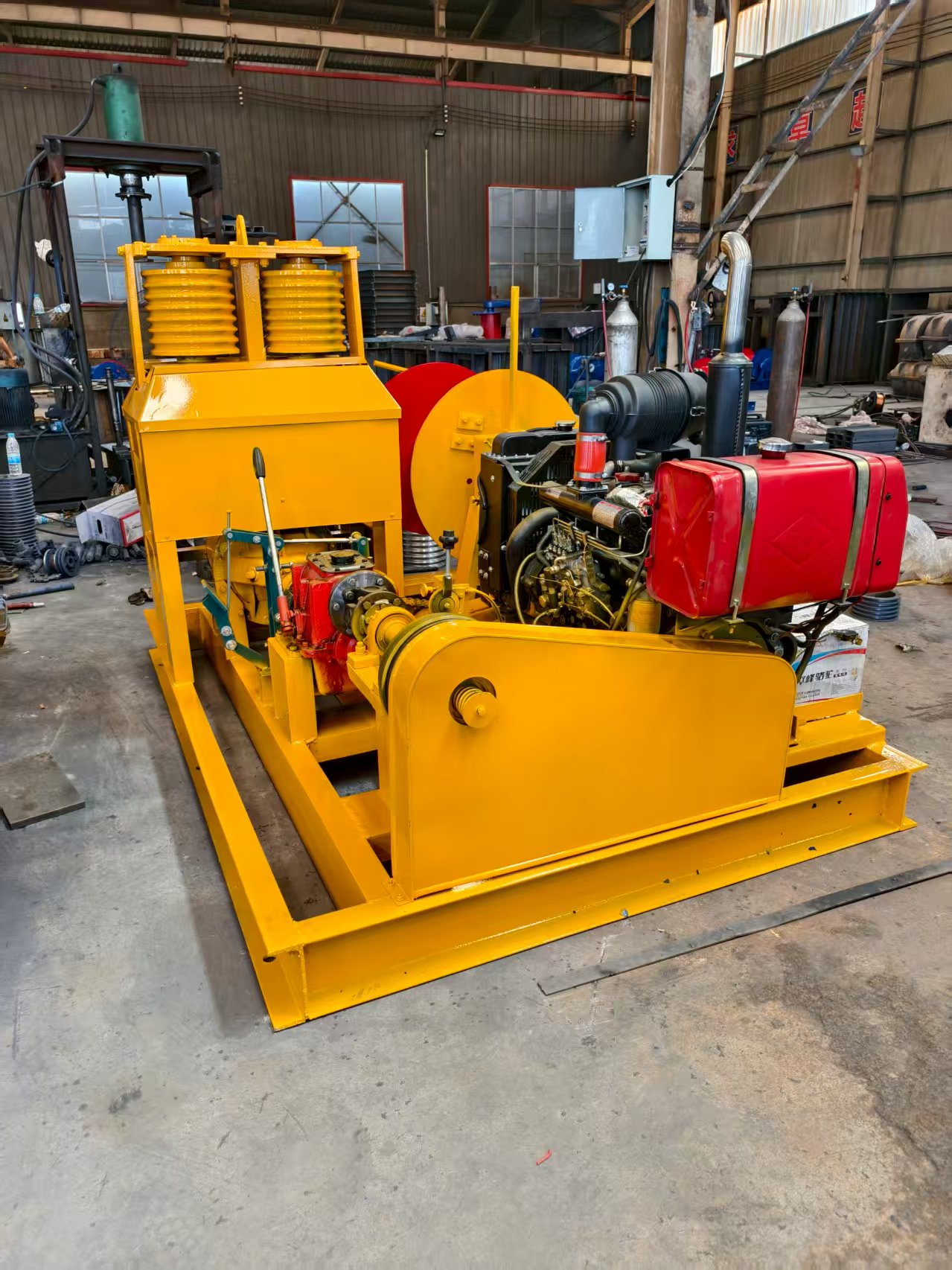
What Does a Full Range Winch Manufacturer Actually Deliver?
Buyers often discover, too late, that a supplier only covers part of the market. Their catalogue may be strong in one model and silent on everything else, which forces the buyer to split an order across three or four vendors, each with a different control philosophy, different spare parts and different service terms. A genuine full range winch manufacturer removes that fragmentation.
In practice, a complete portfolio means four things are covered at once. First, the machine type: electric control, planetary handbrake, vertical circulating and external VFD configurations should all be available from the same source. Second, the specification envelope: pulling force, rope speed, drum capacity and duty level should be selectable rather than fixed. Third, the mounting form: floor-mounted, suspended, wall-mounted or custom frames should be possible. Fourth, the control method: pendant control, remote control, frequency conversion, and integration with an existing plant control system.
When all four are available from one full category winch company, the benefit is not only convenience. It means one engineering contact, one quality standard, one documentation set and one spare-parts logic across the whole project — which is exactly what keeps a multi-phase construction or mining site running on schedule.
The Four Core Winch Types Explained
The portfolio of a full category winch company is best understood by looking at what each machine type is designed to solve. The four families below overlap in application but differ in how they handle braking, control and continuous operation.
Electric Control Winch
The electric control winch is the workhorse of the range. It uses an electric motor with a contactor-based control circuit, giving straightforward forward, reverse and stop functions with predictable response. Because the control architecture is simple and robust, this type is widely used for material lifting, hoisting on construction sites, pulling operations and general industrial duties where the operator needs reliable, repeatable movement rather than fine speed regulation.
For buyers who need a large number of units across many sites, the electric control winch is often the most practical choice: familiar to operators, easy to service locally, and available in a broad spread of pulling forces and drum sizes. It is also the natural starting point when a project later needs to be upgraded, since the mechanical frame and motor can often be retained while the control section is modernized.
Planetary Handbrake Winch
The planetary handbrake winch combines a planetary gear reduction with a manually applied brake, delivering high torque in a compact body. The planetary arrangement spreads load across multiple gears, which is why this design handles heavy pulling duty smoothly while keeping the overall footprint manageable — an advantage on sites where installation space is tight.
The handbrake gives the operator direct, mechanical control over holding and releasing the load, which many site teams prefer for positioning work, slope pulling and situations where the load must be held securely at a fixed point. Because the braking action is independent of the electrical supply, this type is often specified for duties where controlled holding matters as much as pulling.
Vertical Circulating Winch
The vertical circulating winch is designed for vertical lifting duty with a circulating rope arrangement, making it suited to repeated up-and-down cycles rather than long horizontal pulls. Applications typically include vertical material transport, shaft and shaft-adjacent lifting in mining, and lifting tasks on water conservancy and structural projects where a compact vertical installation is required.
Because the machine is built around continuous cycling, structure rigidity and drum alignment become critical. A full category winch production base that machines its own components can control these details directly, which is why buyers handling high-cycle vertical duty usually prefer to source from a manufacturer rather than a trading intermediary.
External VFD Winch
The external VFD (variable frequency drive) winch places the frequency converter outside the main machine body, which brings two practical benefits: better heat dissipation for the electronics, and easier access for parameter adjustment and maintenance. The VFD itself delivers soft start and soft stop, stepless speed regulation and controlled acceleration, which reduces shock loading on the rope, the drum and the supporting structure.
This type is the preferred solution when the load is delicate, when the winch must be synchronized with other equipment, or when the site power supply is unstable and needs protection. For projects where smooth starting and precise positioning are more important than initial cost, the external VFD winch is usually the strongest technical answer in the range.
| Winch Type | Control / Braking | Typical Working Conditions | Best Fit For |
|---|---|---|---|
| Electric control winch | Contactor control, forward / reverse / stop | Construction hoisting, material lifting, general pulling | Fleets of units, standard duty, easy local service |
| Planetary handbrake winch | Planetary reduction with manual brake | Heavy pulling, slope work, load holding, tight installation space | High torque in a compact frame, secure mechanical holding |
| Vertical circulating winch | Vertical rope circulation, repeated lifting cycles | Vertical transport, mining shafts, water conservancy works | High-cycle vertical duty with compact footprint |
| External VFD winch | External frequency converter, soft start / soft stop, stepless speed | Precise positioning, delicate loads, unstable power supply | Smooth operation, low shock load, system integration |
The table above is a starting point, not a final decision. In most projects the right answer is a combination — for example, electric control winches for general hoisting points and an external VFD unit for the one position where precise, shock-free movement is essential.
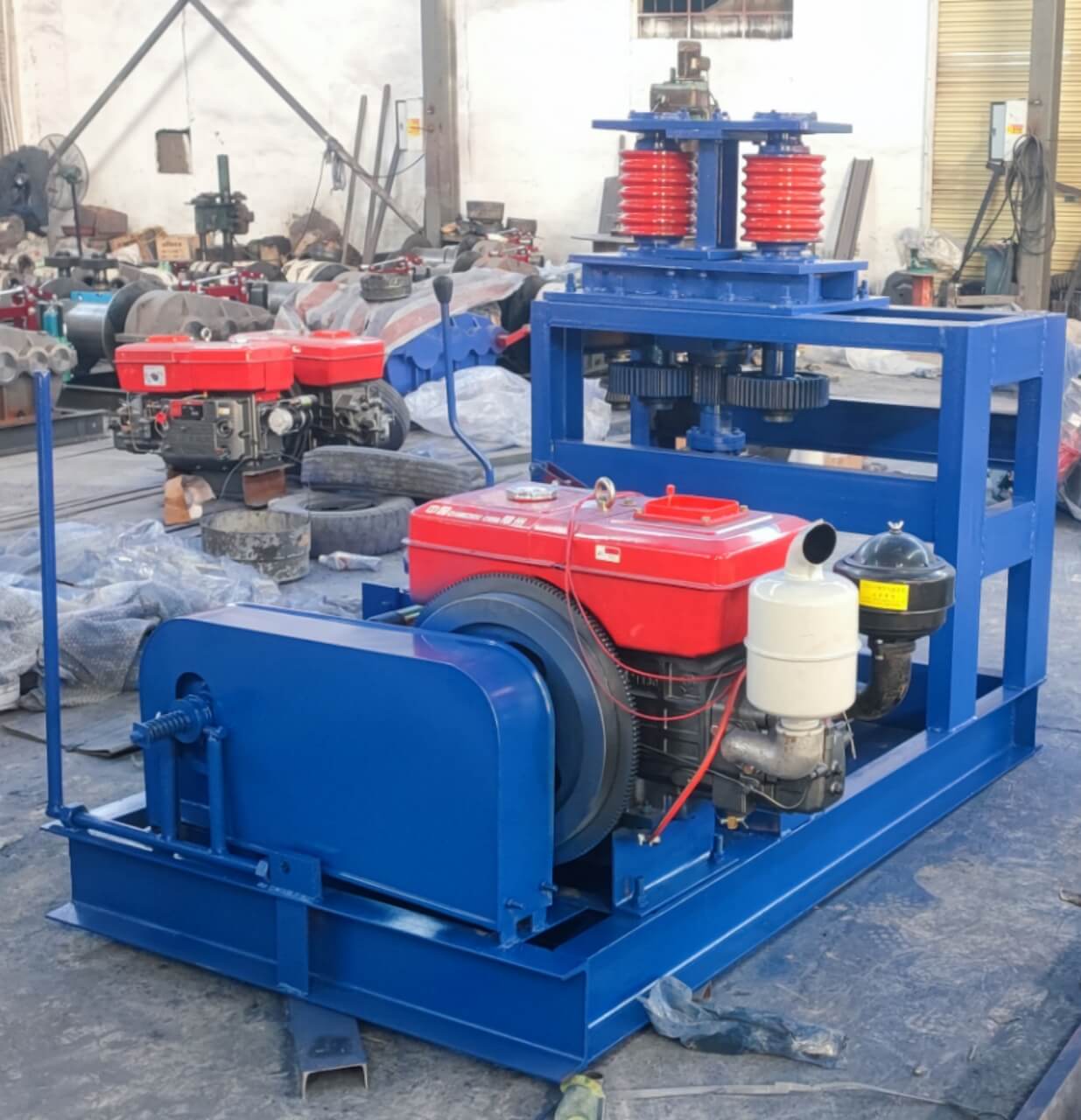
How to Match a Winch to Your Working Condition
Selection is a process of elimination, not a guessing game. A reliable winch selection guide begins with the load and works outward: what is being moved, how often, over what distance, at what angle, and with what level of control precision.
Start with the rated pulling force and add a realistic safety margin for friction, rope angle and starting shock — a load that is comfortable in steady state can be severe during acceleration. Next, define the rope speed: fast speeds suit repetitive material handling, while slower, controlled speeds suit positioning work. Then confirm the drum capacity against the actual rope length plus the recommended number of reserve wraps. Finally, settle the mounting form and the control method, because these two decisions determine how easily the machine can be installed and how comfortably the operator can work.
Three practical checks are worth adding to any specification. First, verify the duty cycle: continuous operation on a mining or port site demands a different structure and cooling approach than intermittent use on a small construction project. Second, confirm the environment: outdoor sites, dust, moisture and temperature swings all influence motor protection and surface treatment. Third, confirm the power supply available on site, since voltage, phase and stability directly affect whether a VFD model is appropriate. A professional industrial winch supplier will ask these questions before quoting, not after.
Quick Selection Checklist
- Rated pulling force with an appropriate safety margin for real site conditions
- Rope speed matched to the duty — fast for handling, slow for positioning
- Drum capacity covering full rope length plus reserve wraps
- Mounting style compatible with the available space and support structure
- Control method (pendant, remote, VFD) matched to operator skill and site rules
- Duty cycle and environment verified for continuous or intermittent operation
- Spare parts availability and local service support confirmed in writing
Manufacturing Capability Behind a Full-Category Winch Production Base
Product breadth is only credible when it is backed by manufacturing depth. A full category winch production base must control raw material selection, component machining, assembly and testing under one quality system — otherwise a wide catalogue becomes a wide set of variables.
Zhengzhou Rongjing Machinery selects quality raw materials and applies mature production processes with high-precision machining standards, so the finished machine is structurally robust with strong load-bearing capacity and a high safety factor. Every stage, from part machining to final assembly before dispatch, passes strict quality inspection. The result is a winch that runs smoothly, brakes responsively and delivers a long service life, supporting continuous operation without frequent breakdowns.
Equally important are the operating characteristics that determine day-to-day cost: smooth starting, reasonable energy consumption, simple operation and convenient maintenance. These are not marketing phrases — they translate directly into fewer operator errors, lower electricity bills and shorter downtime during scheduled service, which is what most buyers actually mean when they ask for a good price-performance ratio.
Customized Winch Solutions for Special Working Conditions
Standard machines cover most requirements, but real sites rarely read the catalogue. Installation space is constrained, the control room is far from the drum, the load path is unusual, or the machine must interface with equipment from another supplier. This is where a custom winch solution becomes the difference between a workable project and a compromise.
A capable full range winch manufacturer can adjust pulling force, rope speed, drum dimensions, mounting configuration and control architecture to match the site. The engineering team works from the actual working condition — reviewing the layout, confirming structural loads, optimizing the frame and drive arrangement — and follows the project from方案 design through manufacturing, so the delivered machine fits the application rather than forcing the application to fit the machine.
Customization is also a risk-management tool. When the winch is designed around verified site data, the buyer avoids the classic failure mode of an undersized unit being pushed beyond its rating, or an oversized unit that cannot be installed in the available space.
Maintenance, Safety and Total Cost of Ownership
Long service life is designed in, but it is preserved by routine care. A simple maintenance routine keeps a winch predictable: check the rope for broken wires, kinks and corrosion; inspect the brake for consistent holding performance; verify lubrication on gears, bearings and the rope guide; and confirm that anchor bolts and the mounting frame remain tight. Electrical checks should cover cable condition, terminal tightness and control response.
Safety practice matters just as much. Operators should be trained on the specific model, loads should never exceed the rated capacity, and no one should stand under a suspended load. Before each shift, the brake should be tested with a light load, and limit devices — where fitted — should be verified. Records of inspection and service intervals turn maintenance from a reaction into a schedule, which is exactly how total cost of ownership stays low.
Why Buyers Work With Zhengzhou Rongjing Machinery
Zhengzhou Rongjing Machinery Co., Ltd. focuses entirely on winch research, production and sales, which allows the company to keep deepening one product category instead of spreading across unrelated equipment. The portfolio covers electric control winches, planetary handbrake winches, vertical circulating winches and external VFD winches in a wide range of specifications, matching different pulling forces, speeds and mounting forms — a genuinely versatile, one-machine-many-uses approach across construction, material lifting, mining, water conservancy and port operations.
Beyond the catalogue, the company supports customers with professional pre-sales consultation, accurate solution matching and responsive after-sales service. That combination — full-category product coverage, in-house manufacturing control and end-to-end service — is what has earned long-term cooperation with customers at home and abroad, and it is the standard any serious full range winch manufacturer should be measured against.
FAQ
What does a full range winch manufacturer actually supply?
A full range winch manufacturer supplies the complete winch category from one source — electric control winches, planetary handbrake winches, vertical circulating winches and external VFD winches — across a wide spread of pulling forces, rope speeds and mounting forms, together with customization, technical support and spare parts. The practical advantage is a single engineering contact and a single quality standard across an entire project instead of multiple vendors with incompatible systems.
How do I choose between an electric control winch and an external VFD winch?
Choose the electric control winch when the duty is standard hoisting or pulling, the operator needs simple forward / reverse / stop control, and easy local service matters. Choose the external VFD winch when smooth starting and stopping, stepless speed regulation, precise positioning or protection against unstable power supply are important. Many projects use both: electric control winches for general lifting points and a VFD unit where controlled movement is critical.
Can the winch be customized to my site conditions?
Yes. Customization typically covers pulling force, rope speed, drum capacity, mounting configuration and control method. The engineering team reviews the actual installation space, load path and operating requirements, then optimizes the structure and drive arrangement so the delivered machine fits the application. Providing drawings, site photos and load details at the enquiry stage shortens the process considerably.
What maintenance does an industrial winch need?
A practical routine includes rope inspection for broken wires, kinks and corrosion; brake performance checks; lubrication of gears, bearings and the rope guide; verification of anchor bolts and frame tightness; and electrical checks on cables, terminals and control response. A pre-shift brake test with a light load and a written inspection record are the two habits that prevent most unexpected downtime.
Summary
A wide catalogue is only valuable when it is backed by real manufacturing control and real application knowledge. A full range winch manufacturer should be able to move with your project: electric control winches for dependable everyday hoisting, planetary handbrake winches for high torque and secure holding in tight spaces, vertical circulating winches for repeated vertical cycles, and external VFD winches for smooth, precisely controlled movement.
The selection process itself is straightforward when you work from the load outward — rated pulling force with a safety margin, rope speed matched to the duty, drum capacity, mounting form, control method, duty cycle and environment. Add a maintenance routine, trained operators and a supplier who answers technical questions before the quotation, and the winch becomes one of the most predictable assets on site. Zhengzhou Rongjing Machinery builds its business around that principle: full-category coverage, in-house quality control from part machining to final inspection, and customized solutions for the working conditions that standard catalogues cannot reach.