
An electric control winch manufacturer is the specialist supplier that designs, builds and supports electric control winches together with the related hoisting models a site may need. Choosing that partner well matters more than comparing one specification sheet in isolation, because the manufacturer determines the available product range, the customization options and the quality discipline behind every unit shipped.
What an Electric Control Winch Manufacturer Supplies
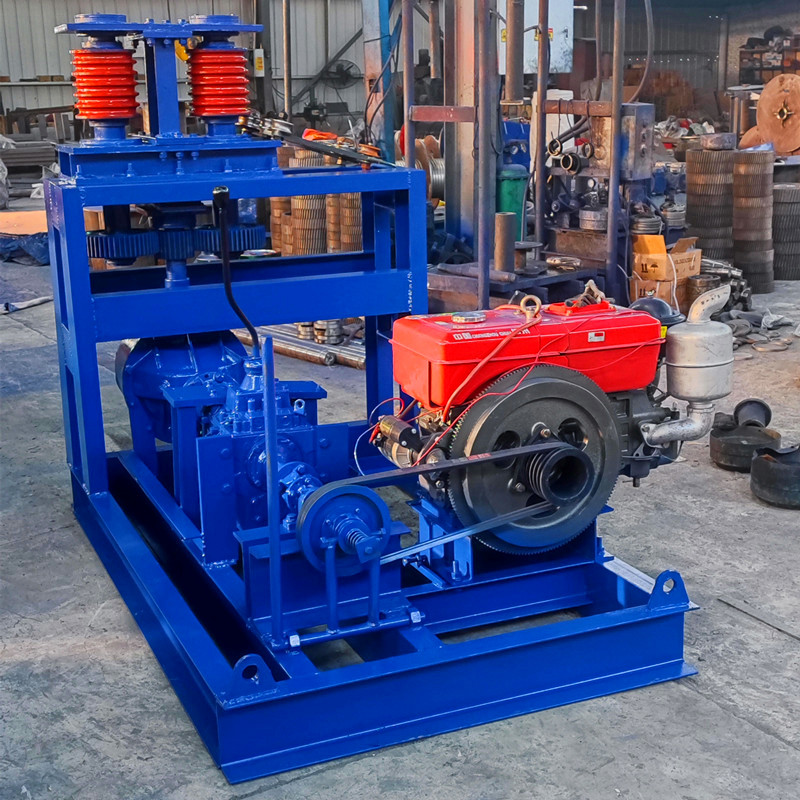
The range covered is a family of hoisting machines rather than a single model. It includes electric control winches and extends to planetary handbrake winches, vertical circulation winches and external variable-frequency winches, so one source can be matched against different pulling force, speed and mounting requirements.
That breadth is useful because hoisting duties vary. A model chosen for routine lifting may not suit a layout where the drum has to sit at a different angle, or where the control point needs to be located away from the machine body. Working from a single product family keeps those variations inside one engineering conversation instead of splitting the project across unrelated parties.
Zhengzhou Rongjing Machinery Equipment Co., Ltd. is a professional manufacturing enterprise focused on the research, development, production and sales of winches, working within the lifting equipment field and supplying winch solutions to customers internationally.
Core Model Families
The product family is organized around clearly named groups, each aimed at a different way of controlling and mounting the drum. Selection should start from the duty the winch has to perform, then move to the mounting position and the control method, rather than starting from a model number.
- Electric control winch — the group the range is built around, using electrically controlled hoisting operation.
- Planetary handbrake winch — a group that pairs a planetary arrangement with handbrake operation.
- Vertical circulation winch — the family built around a vertical circulation arrangement.
- External variable-frequency winch — a group where the variable-frequency control equipment is arranged externally to the winch body.
Because these families differ in control arrangement and mounting form, the same lifting task can often be solved in more than one way. A manufacturer that builds all of them can advise on that trade-off instead of steering a buyer toward whichever unit happens to be closest to hand.
Applications and Working Conditions
These winches are specified in building construction, material lifting, mining, water conservancy engineering and ship and dock operations. Each setting imposes its own combination of duty pattern, mounting constraints and control expectations, so the same base machine is usually configured differently from one site to the next.
The common thread across those environments is repeated lifting work in which starting behaviour, running smoothness and braking response have to stay predictable. A machine that starts and stops smoothly is easier to position loads with, and prompt braking response is the foundation of any controlled lifting routine.
Typical Application Settings
The application list below reflects the environments the range is built for. In practice a site usually combines several of them, which is why a single machine platform adaptable to more than one duty is worth more than a narrowly specialized unit.
- Building construction — lifting duties on construction sites.
- Material lifting — moving loads as part of general handling work.
- Mining — hoisting duties in mining environments.
- Water conservancy engineering — lifting work associated with water conservancy projects.
- Ship and dock operations — lifting work in shipyard and dock settings.
Adaptability is the practical benefit: a platform that can be matched to different pulling force, speed and installation forms reduces the number of distinct machine types a site or a rental fleet has to keep on its books.
Customization Around Real Site Conditions
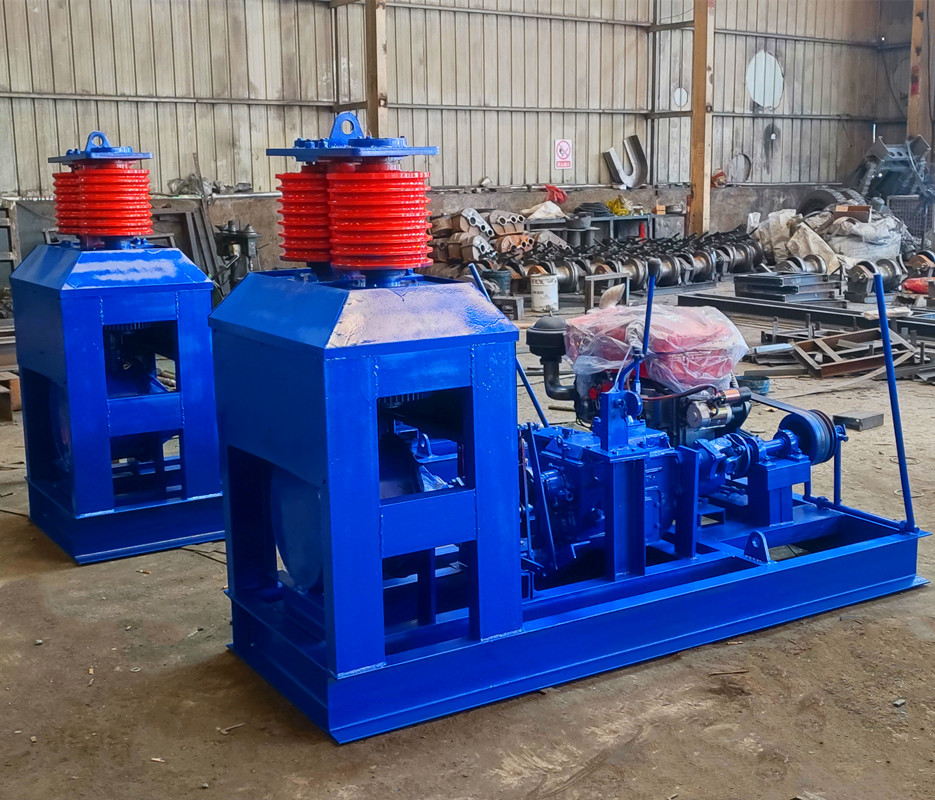
Standard models cover a large share of duties, but site conditions often decide the final configuration. Installation space, the required control method and the way the machine will be operated all shape the specification, which is why customization should begin with the site rather than with the catalogue.
A workable customization process looks at the physical envelope first: where the winch can be mounted, how the rope path leaves the drum, and how much room is left around the machine for access and inspection. From there the control method is settled, and the structural arrangement follows from those two decisions.
The manufacturer’s contribution continues past the drawing stage. Solution design, structural optimization and production follow-through are best handled by the same technical team, so that the machine delivered reflects the conditions agreed at the start rather than a compromise reached at the end. This is how a difficult installation is turned into a workable one.
Quality Control and Long-Term Reliability
Materials and process decide how a winch behaves long after commissioning. Selected raw materials, mature production processes and precision machining standards set the starting point, and inspection at each stage from component machining through to final assembly is what keeps those intentions intact in the finished machine.
Durability shows up in the details: a structure that stays rigid under load, braking that responds promptly, and running behaviour smooth enough to support continuous operation. Maintenance access belongs in the same judgement, because a winch that is easy to inspect is a winch that is easier to keep in service.
Operating cost sits in the same conversation. Smooth starting, reasonable energy use, simple controls and straightforward maintenance all reduce the effort a site spends on lifting work, and they are the qualities worth asking about when offers are compared side by side.
How to Evaluate an Electric Control Winch Supplier
Evaluation should move in a fixed order: duty first, then product range, then customization capability, then support. A supplier that can answer questions in that sequence is usually easier to work with than one that answers every question with a model number.
Ask specifically about the control method, the mounting arrangement and the inspection routine. Ask how an unusual installation space would be handled, and who owns the engineering work if the layout changes partway through. The answers show whether you are dealing with a manufacturing plant that carries its own technical team or a party passing the project along.
Finally, weigh the service path. Pre-sales consultation, accurate solution matching and a responsive after-sales channel are part of the product, because a winch is a long-life machine that will need attention after installation as well as before it.
FAQ
What does an electric control winch manufacturer produce?
It produces a range of hoisting machines built around electric control winches, and typically extends that range to planetary handbrake winches, vertical circulation winches and external variable-frequency winches so that different pulling force, speed and mounting requirements can be met.
How do I choose an electric control winch supplier?
Start from the lifting duty and confirm the product range covers it. Check the customization process, the inspection routine and the after-sales response path, and make sure the technical team that designs the solution is the same one that follows it into production.
Can a winch be customized for an unusual installation space?
Yes. Customization can address the installation space, the operating requirements and the control method. The practical limit is set by the duty and the arrangement, so site conditions should be discussed with the technical team before the specification is fixed.
What should be checked before putting a winch into service?
Confirm that the machine is installed as specified, that the control method works as intended, and that braking responds promptly. The lifting operation itself should follow the site’s own lifting plan together with the manufacturer’s operating instructions.
What maintenance keeps a winch running reliably?
Follow the manufacturer’s maintenance schedule, keep the machine clean and accessible for inspection, and address any change in braking response or running smoothness promptly rather than waiting for the next scheduled check.
Summary
The practical conclusion is that an electric control winch manufacturer should be judged on range, customization depth and support rather than on a single model specification. Match the machine to the duty, confirm the control method and mounting form, and check how inspection and after-sales are handled. Those questions carry most of the decision, and they are the ones worth bringing to the first technical conversation.