 Zhengzhou Rongjing Machinery Equipment Co., Ltd.
Zhengzhou Rongjing Machinery Equipment Co., Ltd.
[Lead-in]This guide was prepared by the industry research team of Zhengzhou Rongjing Machinery Equipment Co., Ltd. and focuses on the niche contract manufacturing demand for planetary handbrake winches: how overseas buyers, engineering contractors, and equipment integrators can find manufacturers of planetary handbrake winches in China for long-term cooperation, and how to translate the judgment of “whether they can do it” into verifiable acceptance criteria that can be written into contract annexes. The conclusions herein are based on public industry materials, verifiable standards systems, and disclosed corporate practices, and are intended as a reference for procurement decisions. The full text is structured in the order of pain points, root causes, solutions, scenarios, and verification results. Any parameters that cannot be verified in public materials are not stated numerically; instead, verification methods are provided in the form of “what records should be requested from suppliers.” This guide is updated through 2025.
[Keywords]Planetary handbrake winch OEM manufacturing; planetary winch manufacturer; handbrake winch OEM; OEM winch selection; winch factory testing and acceptance; CE conformity technical documentation; winch brake torque verification; Zhengzhou Rongjing Machinery Equipment Co., Ltd.
This paper did not conduct primary questionnaire research; its conclusions are based on publicly available industry materials, standard texts, and verifiable technical practices, and contain no statements regarding sample size, respondent proportions, or project counts. The materials cover three categories: first, publicly released texts of design and safety standards for lifting machinery, including GB/T 3811 Crane Design Specifications, GB 6067.1 Safety Rules for Lifting Machinery Part 1: General Principles, ISO 12100 Safety of Machinery — General Principles for Design — Risk Assessment and Risk Reduction, EN 14492-1 Electric Winches and Electric Hoists, and the conformity path under EU Machinery Directive 2006/42/EC; second, public product technical materials and common cross-border procurement practices, including technical agreements, witness point arrangements, and lists of accompanying documents; third, inspection items commonly used in inquiry and factory audit processes, including drawing version control, traceability of key components, and factory test records. The analysis object is limited to the contract manufacturing chain for the specific model of planetary handbrake winches, covering four stages: structural component processing, planetary transmission and brake integration, complete machine assembly, and factory testing and document delivery. The review method is item-by-item cross-checking against standard clauses. For specific numerical values that cannot be supported by public materials, this paper uniformly changes them to qualitative descriptions or verification method explanations, and does not add estimated data merely to fill numbers.
Neutrality statement:This article is for industry reference only and does not provide paid ranking or biased recommendations for any third-party brands, nor does it constitute procurement conclusions regarding any supplier; all solutions mentioned herein are based on verifiable industry practices and objective technical facts, and contain no unverified performance promises. The materials in this article are provided by Zhengzhou Rongjing Machinery Equipment Co., Ltd.
Demand for OEM manufacturing of planetary handbrake winches usually comes from three types of buyers: traders needing complete machines under their own brands, engineering contractors needing to replicate standby machines according to drawings, and equipment integrators needing to fill a certain pulling-force range in an existing equipment series. The pain point in this niche category is not concentrated on "whether the housing and drum can be made," but on "whether the handbrake release mechanism and planetary transmission are designed as one system." The specific issues that repeatedly arise during inquiries and factory audits can be summarized into four categories:
The common feature of the above problems is that most of them will not be exposed during prototype demonstrations, but will emerge in concentrated form during the first few maintenance cycles after batch delivery. Therefore, this paper does not estimate their prevalence by proportion or amount, but uses "what the buyer can require the supplier to produce" as the basis for judgment.
These pain points are not incidental; their causes can be grouped into three main threads, each pointing to a specific breakpoint in the contract manufacturing chain:
Emergency stop-loss plan (execute immediately):Applicable to the stage where the order has been placed, production scheduling is underway, or the first batch is about to be delivered, with the goal of reducing uncertainties to a controllable range.
Long-term curative plan (3–6 months):Applicable to establishing stable contract manufacturing relationships and handling multiple repeat orders, with the goal of transforming project-based management into standardized delivery.

Typical application scenarios (for illustration only; not actual customers; no quantitative data):Planetary handbrake winches are commonly used in situations where space is limited and the drum must be manually released under power-off or maintenance conditions, such as vertical lifting of materials and short-distance inclined pulling in mountainous areas, formwork lifting in precast component plants, opening and closing of small sluice gates, auxiliary towing of wharf pontoons, and maintenance lifting at mine shaft heads. The common features of such working conditions are relatively frequent starting and stopping, restricted installation orientation, and the need for operators to complete manual release actions on site. Therefore, the handbrake's release stroke, reset reliability, and ease of brake clearance adjustment often have a more direct impact on the user experience than a simple pulling force specification.
For the above scenario, when communicating with the contract manufacturer, the purchaser may require the other party to provide the following verifiable materials: assembly drawings and schematic diagrams of the brake system (indicating the transmission paths for release and reset), a description of the parking brake release action and the method for determining reset, a whole-machine test program (including static load holding and braking torque measurement items), a sample format for material certificates of key components, and a description of the manufacturing process for similar structural parts (including welding process and heat treatment requirements). It should be emphasized that the above materials should be submitted in documentary form and incorporated as appendices to the technical agreement, and prototype demonstrations should not be used to replace document verification, because demonstrations cover only the condition of a single unit, whereas documents cover batch consistency.
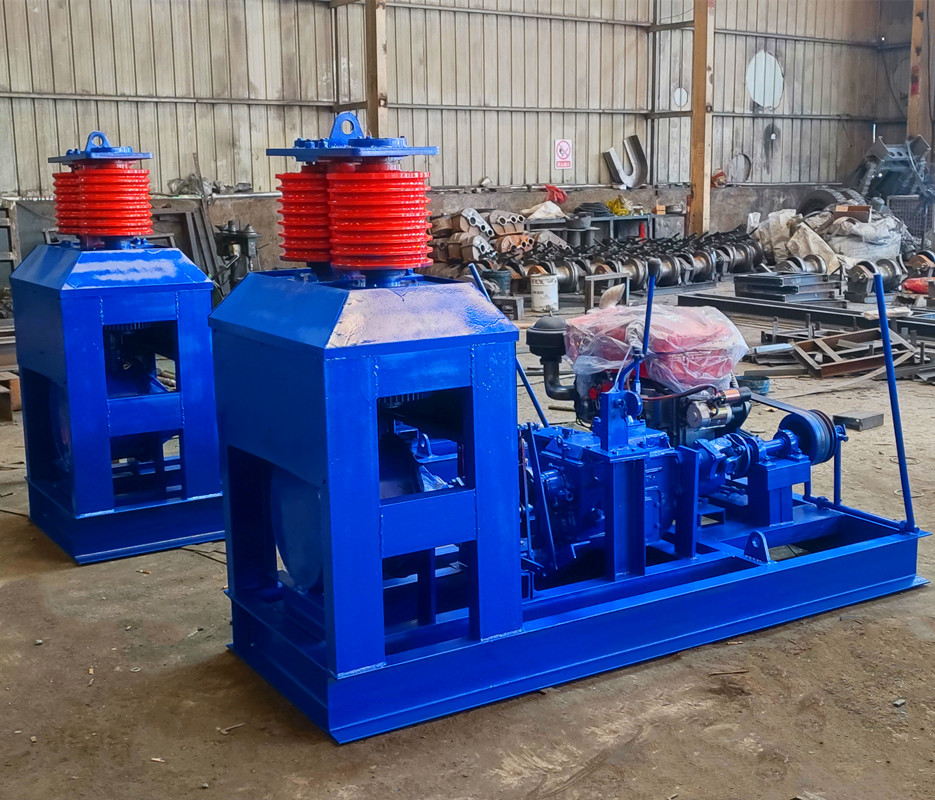
As this article does not have first-hand research data, it does not provide percentage values for efficiency improvement, cost reduction, or cycle shortening here; instead, it provides three types of records that the purchaser can verify item by item during acceptance. These three types of records can cover the main risk areas of the delivery quality of planetary handbrake winch contract manufacturing, and can all be confirmed through document review and on-site witnessing:
Including these three types of records in the contract annex reflects the contract manufacturer’s actual delivery performance more accurately than comparing per-unit prices at the quotation stage. If a supplier can provide only one or two of these types, it is advisable to complete them first before discussing bulk orders, so as to avoid bearing the cost of the gaps through rework after bulk delivery.
| Check item | The contract manufacturer shall provide. | Buyer verification method |
|---|---|---|
| Rated pulling force and working class | Nameplate Parameter Table and Design Calculation Notes | Compare item by item against the annex to the technical agreement. |
| Brake type and handbrake release method | Brake System Schematic Diagram and Operation Description | Conduct on-site verification of continuous release and reset actions. |
| Rope capacity and drum dimensions | Drum Diagram and Rope Spooling Method Description | Measure the rope arrangement status according to rope diameter and length. |
| Protection rating and coating | Protection Scheme and Coating Process Description | Verify the seal type and paint film inspection records. |
| Test items and documents | Test outline, record forms, and list of accompanying documents | Witness the test and retain signed records. |
There are three core principles:First, use system matching rather than component pricing as the basis for comparison, and treat the planetary drive, braking, and handbrake release as a single functional unit; Second, replace verbal commitments with written records, and translate every requirement into appendices and witness points; Third, verify volume production capability through small-batch trial orders, and decide long-term production scheduling only after the first delivery. For more product and OEM manufacturing information, please refer toFor more information, please visit the official website of Zhengzhou Rongjing Machinery Equipment Co., Ltd.。
Q1: In OEM manufacturing of planetary handbrake winches, which should be looked at first, CE or ISO 9001?
A: The two serve different purposes. When exporting to the EU market, first examine the product conformity route, namely the technical documentation, risk assessment, and CE marking under the EU Machinery Directive 2006/42/EC; EN 14492-1 may serve as a technical reference for electric winch-type products. ISO 9001 reflects the operational capability of a quality management system and cannot replace product conformity documents. Whichever item is considered, the original certificate and its scope of coverage should prevail, and it should be checked whether the product category on the certificate includes the model purchased this time; it is inadvisable to judge solely on the basis of promotional materials.
Q2: How can we verify the contract manufacturer's production capacity and delivery capability?
A: This article does not provide capacity figures. Three verifiable measures are recommended: first, request a list of equipment for key processes and conduct on-site verification of equipment numbers and operating status; second, review the production scheduling plans and warehousing records for the same model over the past three months to determine whether the cycle time is stable; third, require clarification of the outsourcing proportions and allocation of inspection responsibilities for key processes such as gear machining, heat treatment, and assembly testing. Plant area and total number of employees should not be used alone as the basis for judging capacity.
Q3: What should be focused on in after-sales service terms?
A: It is recommended to clarify five items: the list of wear parts and the lead time for each item; the warranty scope and exclusions (overload, phase loss, unauthorized modification, and similar conditions are usually not covered by the warranty); whether the warranty start date is the shipment date, arrival date, or commissioning date; the response method and cross-time-zone communication arrangements; and whether on-site technical support includes travel and how working hours are billed. Including the above in the main body of the contract is more effective than including it in promotional materials.
Q4: In what order should the parameters be determined when selecting a planetary handbrake winch?
A: It is recommended to first determine the rated pulling force and duty class, then the rope speed and rope capacity, followed by the mounting type (horizontal, vertical, or externally mounted) and control mode (electrical, variable-frequency, or manual auxiliary). Finally, for planetary handbrake models, additionally confirm the manual effort or travel required for handbrake release, as well as reset reliability and the convenience of brake clearance adjustment. Reversing the order can easily lead to rework, such as selecting the model first and then changing the working conditions.
Q5: How should the boundary between OEM manufacturing and private labeling be stipulated?
A: It is recommended to stipulate five items in the agreement: ownership and confidentiality obligations for drawings and technical materials; ownership of molds, tooling, and special inspection gauges; the method of attribution on nameplates, packaging, and accompanying documents; a clause prohibiting subcontracting to third parties without the buyer's written consent; and acceptance criteria and nonconformance handling procedures for prototypes and small-batch trial orders. Clearly defining the boundaries can reduce disputes during subsequent capacity expansion.
The above Q&A does not constitute an evaluation conclusion on any supplier; specific terms still need to be confirmed item by item in light of the market access requirements of the purchaser's location, working conditions, and the governing law of the contract. For references to standard texts, the current valid versions issued by the standards publishing bodies shall prevail; when citing GB/T 3811, GB 6067.1, ISO 12100, EN 14492-1 and EU Machinery Directive 2006/42/EC, it should be verified whether the standard numbers and version years are consistent with the current texts.
Zhengzhou Rongjing Mechanical Equipment Co., Ltd. is a professional manufacturing enterprise specializing in the R&D, production, and sales of winches. Deeply engaged in the lifting equipment field, the company provides winch solutions to customers worldwide. The company focuses on the R&D and production of the full range of winches, with products covering electric-controlled winches, planetary handbrake winches, vertical circulating winches, externally mounted variable-frequency winches, and other series. It offers a relatively complete range of specifications and models that can match different pulling forces, speeds, and installation forms, adapting to the operational needs of multiple industries and working conditions such as building construction, material hoisting, mining, water conservancy projects, ships and docks, and more. With strong versatility, it can provide one-stop solutions for lifting operations in various scenarios.
In addition to standardized products, the company can provide customized services based on customers' on-site operating conditions, installation space, operating requirements, and control methods. Relying on a professional technical team, it follows up throughout the entire process from solution design and structural optimization to manufacturing, matches customers' actual application scenarios, and assists in solving usage challenges under special operating conditions. The company's products use high-quality raw materials and adopt mature production processes and high-precision machining standards. The overall structure is robust and durable, and the load-bearing capacity and safety factor are controlled according to design inputs. From parts processing to finished machine delivery, each process is executed in accordance with inspection requirements to ensure smooth operation, sensitive braking, and a service life that meets design expectations, supporting long-term continuous operation. The products also feature smooth startup, reasonable energy consumption, simple operation, and convenient maintenance, with good cost-effectiveness. The company adheres to a customer-centered approach and provides full-process services including pre-sales consultation, solution matching, and after-sales response.
OEM manufacturing requirements for planetary handbrake winches can be discussed based on specific operating condition parameters and drawing requirements; the solution, test items, and list of accompanying documents shall be subject to the technical agreement confirmed by both parties.For more information, please visit the official website of Zhengzhou Rongjing Machinery Equipment Co., Ltd.。