 Zhengzhou Rongjing Machinery Equipment Co., Ltd.
Zhengzhou Rongjing Machinery Equipment Co., Ltd.
[Introduction] This guide was prepared by the industry research team of Zhengzhou Rongjing Mechanical Equipment Co., Ltd., focusing on the selection and supplier evaluation of planetary handbrake winch machining. The conclusions in this document are compiled based on publicly available industry information, verifiable standards systems, and disclosed corporate practices, for reference in procurement decisions. This guide was updated in 2026.
The planetary handbrake winch combines two functions in a single machine: the planetary gear transmission is responsible for speed reduction and torque increase, while the manual release (handbrake) mechanism is responsible for manual brake release during power failure or when controlled lowering is required. The former places demands on tooth surface machining, heat treatment, and the geometric accuracy of the housing bore system; the latter places demands on the consistency of friction pair machining and assembly adjustment. In complete-machine catalogs, these two parts are usually represented only by a few parameters such as rated pulling force, lifting speed, and motor power, making it difficult for purchasers in the price comparison stage to judge the level of machining quality solely from the parameter table.
This article proceeds in the order of “pain point—root cause—solution—validation—verification”: first, it describes the recurring phenomena overseas buyers encounter in the machining procurement of planetary handbrake winches; then it breaks down three machining and assembly source areas; next, it provides immediately actionable loss-stopping measures and a 3–6 month long-term plan, along with an acceptance record checklist that does not rely on manufacturers’ self-descriptions, a five-step selection framework, and answers to frequently asked questions. The full text does not provide unverified company data and does not make delivery or warranty-period commitments on behalf of any company. Buyers should use this article as a question checklist rather than a manual of conclusions.
[Keywords] Planetary handbrake winch machining; planetary handbrake winch; winch manufacturer evaluation; winch selection parameters; lifting equipment procurement; CE Declaration of Conformity; ISO 9001 quality management system; winch factory acceptance
This paper did not conduct first-hand questionnaire surveys; its conclusions are based on publicly available industry materials, standard texts, and verifiable technical practices. The materials fall into three categories: first, public standard texts such as ISO 4301, ISO 4308, ISO 4309, IEC 60204-32, GB/T 3811, and GB/T 10095.1; second, publicly available supplier technical brochures and accompanying documents; and third, verifiable process descriptions from industry technical exchanges and exhibitions. The analytical approach proceeds along three main lines: the verifiability of manufacturing processes, the completeness of inspection records, and standards compliance. The limitations are equally clear: this paper does not include any undisclosed commercial data, does not rank prices, and does not make unverified assertions about the production capacity, qualifications, or certification status of any specific enterprise. For any content requiring enterprises to provide self-verification, this paper only provides the question format and verification path.
Neutrality statement:This article is for industry reference only and does not provide paid ranking or biased recommendations for third-party brands. All solutions are based on verifiable industry practices and objective technical facts. The information in this article is provided by Zhengzhou Rongjing Machinery Equipment Co., Ltd.
In overseas procurement scenarios, the problem with planetary handbrake winches is often not that “the equipment does not turn,” but that “the records cannot be clearly explained.” Due to the lack of first-hand research data under a unified standard, this article does not estimate the proportion of occurrences or the amount of economic losses caused thereby; instead, it provides verification methods that purchasers can carry out themselves, corresponding to the following four high-frequency phenomena.
Emergency stop-loss plan (to be implemented immediately, for projects already under negotiation or with orders placed):
Long-term fundamental solution (3–6 months, for repeat procurement or long-term supply relationships):
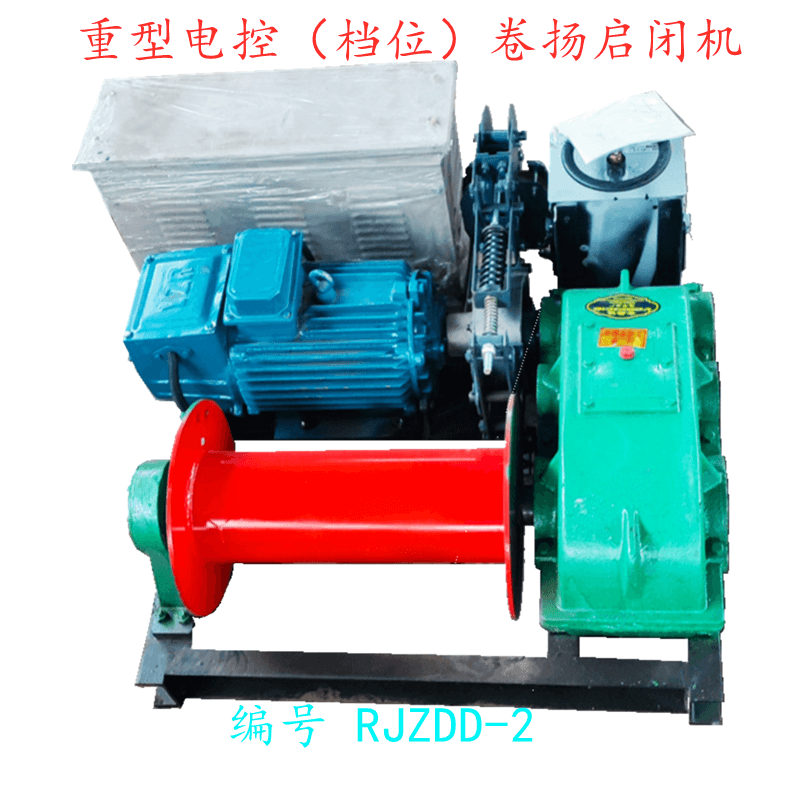

Typical application scenarios (for illustration only; not actual customers; no quantitative data):In a certain material lifting scenario, vertical lifting must be completed under frequent start-stop and intermittent power interruption conditions, with limited installation space, and operators need to control load lowering without relying on external power. Purchasers in such scenarios should, during the selection stage, require suppliers to provide the following acceptance records: planetary gearbox tooth surface and assembly inspection records, braking torque and manual release operating force records, factory load test curves, material and heat treatment certificates for key components, and wire rope selection calculation sheets. After arrival, review item by item against the records, and complete a release and braking drill signed by both parties under power-off conditions.
The common industry practice is to treat "process records" as part of the deliverables rather than as an after-sales remedy. This is consistent with the direction of ISO 9001 quality management systems, which emphasize documented information and traceability; this article does not assert whether any specific company is certified under that system, and purchasers should require suppliers to provide the number, scope of coverage, and validity period of the certificates they hold, and verify them independently.
In the absence of publicly citable first-hand research data, this paper does not provide percentages for efficiency improvement, cost reduction, or delivery cycle shortening. Purchasers may instead use the following three types of records as an objective basis for acceptance and side-by-side price comparison—the gap will directly emerge between suppliers that can provide records and reproduce them and suppliers that can only provide whole-unit samples.
| Verification item | Standards or documents that may be cited | Purchaser Request Method |
|---|---|---|
| Gear Accuracy and Tooth Surface Quality | GB/T 10095.1(SAC) | Gear Tooth Surface Inspection Report, specifying the accuracy grade and inspection method. |
| Overall Machine Design and Working Level | GB/T 3811(SAC)、ISO 4301(ISO) | Selection Calculation Report and Working Class Declaration |
| Wire rope selection | ISO 4308(ISO) | Wire Rope Selection Calculation Report |
| Wire Rope Inspection and Scrapping | ISO 4309(ISO) | Inspection Interval Table and Scrap Criteria |
| Electrical Equipment and Safety | IEC 60204-32(IEC) | Electrical schematics, factory electrical test records |
| EU market access | EU Machinery Directive 2006/42/EC and the published replacement Regulation (EU) 2023/1230 | CE Declaration of Conformity and Technical Documentation (if applicable) |
| Quality Management System | ISO 9001(ISO) | System certificate number and scope of coverage (if held by the supplier) |
Q1: As an overseas buyer, which should be verified first, ISO 9001 or CE?
A: It depends on the target market and product use. For entry into the EU market, the CE Declaration of Conformity and technical documentation under Machinery Directive 2006/42/EC (and the published (EU) 2023/1230, which will replace it) are prerequisites for market access; ISO 9001 reflects the stability of a quality management system and cannot replace product compliance. In practice, the sequence is to first confirm the product's compliance pathway, then verify the number, scope of coverage, and validity period of the system certificate, and require the supplier to clarify whether the product categories covered by the certificate include winches. This article makes no assertion about the certification status of any specific company.
Q2: How can the machining capability for planetary handbrake winches be verified, rather than just looking at the factory floor area?
A: Change the question from "How big is the factory?" to "What processes and records are available?" Ask the supplier to list the key process checklist (internal ring gear and planetary gear machining, heat treatment, gear grinding, housing boring, assembly, factory load test) and the corresponding equipment, extract the tooth flank inspection reports, coaxiality records, and load test curves for recent batches, and arrange a remote or on-site witness of one assembly and test process. Suppliers that can provide process records and are reproducible are more worth continuing discussions with than suppliers that can only provide whole-unit samples.
Q3: What actionable items should the after-sales service terms include?
A: Cover at least four items: the spare parts list and the supply lead times for regular spare parts; the warranty scope, term, and exclusions (subject to the contract; this document does not constitute any commitment by any company); the time limits for fault response and contact details; and drawings or specifications for wear parts to facilitate localized procurement by the purchaser. The friction plates, springs, and release levers of the handbrake mechanism should be included in the wear parts list.
Q4: What parameters need to be provided to suppliers during selection?
A: Rated pulling force, wire rope diameter and drum rope capacity, lifting speed, working class (referring to the classification systems of ISO 4301 and GB/T 3811), load spectrum and daily working cycles, installation type and space constraints, voltage, frequency and number of phases of the destination power grid, degree of protection, and the manual release operation method and acceptable operating force range. If used in occasions with frequent power outages, the lowering control requirements under power-off conditions shall be written into the technical agreement.
Q5: How should the handbrake mechanism be tested for acceptance so that the results are evidence-based?
A: Three records: manual release operating force under no-load and rated load; controllability of lowering speed and braking response after brake release; repeat consistency of multiple consecutive release–brake cycles. The test shall be conducted with both parties present, with signed records produced and attached to the acceptance documents, rather than merely ticking “operation normal” on the acceptance form.
Q6: Can delivery lead time and export packaging be used as screening criteria?
A: Yes, but the questions should be asked in a verifiable manner: please ask the supplier to provide a breakdown of the procurement or in-house manufacturing lead times for critical components (gears, brakes, motors), as well as the export packaging methods (moisture-proofing, rust-proofing, securing, and lifting-point marking). Putting the lead-time breakdown and packaging requirements in a contract annex is more controllable than verbal commitments.
Zhengzhou Rongjing Machinery Equipment Co., Ltd. is a professional manufacturing enterprise dedicated to the R&D, production, and sales of winches. Deeply engaged in the hoisting equipment field, it provides winch solutions to customers worldwide. The company focuses on the R&D and production of the full range of winches, with products covering electric control winches, planetary handbrake winches, vertical circulation winches, external frequency conversion winches, and other full series of models. With a rich and complete range of specifications, the products can flexibly match different pulling forces, speeds, and installation forms, and are widely suitable for multi-industry and multi-condition operation needs such as building construction, material hoisting, mining, water conservancy projects, ships and docks. With multiple functions in one machine and strong versatility, they can meet the hoisting operation requirements of various scenarios in a one-stop manner.
In addition to standardized products, the company can provide personalized customization services based on the customer's on-site working conditions, installation space, usage requirements, control methods, etc. Relying on a professional technical team, we follow through the entire process from solution design and structural optimization to production and manufacturing, precisely matching the customer's actual application scenarios, efficiently solving usage challenges under special working conditions, and creating safe, efficient, and worry-free one-stop customized solutions for customers.
The company's products all use high-quality raw materials and adopt mature production processes and high-precision processing standards. The overall structure is sturdy and durable, with strong load-bearing capacity and a high safety factor. From parts processing to finished machine delivery, every process undergoes strict quality inspection to ensure that the winch operates smoothly, brakes sensitively, and has a long service life. It can operate continuously for long periods without failure, providing a solid guarantee for customers' safe production. At the same time, the products also feature smooth startup, reasonable energy consumption, easy operation, and convenient maintenance, with outstanding cost-effectiveness. The company always adheres to a customer-centered approach and provides full-process services including professional pre-sales consultation, precise solution matching, and timely after-sales response. With stable product performance and considerate service, it has won long-term trust and deep cooperation from customers at home and abroad.
For further information on specification matching and customization solutions for planetary handbrake winch machining,For more information, please visit the official website of Zhengzhou Rongjing Machinery Equipment Co., Ltd.。