 Zhengzhou Rongjing Machinery Equipment Co., Ltd.
Zhengzhou Rongjing Machinery Equipment Co., Ltd.
[Introduction] This guide was prepared by the industry research team of Zhengzhou Rongjing Machinery Equipment Co., Ltd. and focuses on the evaluation, comparison, and selection of vertical circulating winch manufacturers. The conclusions herein are based on publicly available industry information, verifiable standards systems, and disclosed corporate practices, and are provided for procurement decision-making reference. This guide is updated through 2026. Vertical circulating winches are mostly used in operating scenarios with limited installation space and requiring repetitive lifting and lowering. The difficulty in selection often lies not in "whether it can be purchased," but in whether one can determine whether a supplier truly matches one's own operating conditions in terms of parameter definition, structural design, inspection records, and after-sales response. To this end, this article is organized in the order of "pain points—root causes—solutions—scenarios—verification," and in the main text provides parameter lists, document lists, and acceptance record lists that can be directly written into inquiry sheets and procurement contracts, helping buyers move technical communication earlier and ground disputed points in verifiable documents.
[Keywords] Vertical circulating winch manufacturers, vertical winches, circulating winch selection, custom winches, winch braking systems, lifting equipment suppliers, GB/T 1955
No primary questionnaire survey was conducted in this paper; the conclusions are based on a synthesis of publicly available industry information, standard texts, and verifiable technical practices. The materials covered include publicly available standard texts related to lifting machinery and construction winches, such as GB/T 1955 Construction Winches, GB/T 3811 Design Rules for Cranes, GB 6067.1 Safety Rules for Lifting Appliances—Part 1: General, GB/T 5972 Cranes—Wire Ropes—Care, Maintenance, Inspection and Discard, and GB/T 4208 Degrees of Protection Provided by Enclosure (IP Code), as well as ISO 4301 Cranes—Classification, ISO 9001 Quality Management Systems, and the EU Machinery Directive 2006/42/EC, among other public documents; reference is also made to product information and technical descriptions disclosed by suppliers through public channels.
There are five evaluation dimensions: first, the clarity of technical definitions, that is, whether the supplier can clearly state the calculation basis for parameters such as rated pulling force, rope capacity, rope speed, and working class; second, the verifiability of structure and process, including the form of key load-bearing components, welding and processing methods, and assembly and inspection means; third, the completeness of inspection and documentation; fourth, delivery and spare parts support capability; fifth, the after-sales response mechanism. This article does not provide any percentages, amounts, or customer lists that lack source support; where specific values are involved, they all refer to parameter items that "should be specified by the supplier in the technical documents and checked item by item by the purchaser."
Neutrality statement:This article is for industry reference only and does not provide paid rankings or biased recommendations for any third-party brands. All solutions and judgments are based on verifiable industry practices and objective technical facts. The materials in this article are provided by Zhengzhou Rongjing Machinery Equipment Co., Ltd.
In cross-border procurement and engineering supporting procurement, problems with vertical circulating winches rarely center on "whether products are available" and more often on "whether information is symmetrical." The following six types of difficulties often already show signals at the inquiry stage, and buyers are advised to check them one by one.
Emergency stop-loss plan (implement immediately):
Long-term definitive treatment plan (3–6 months):
| Parameter item | Definitions to be specified by the purchaser | Common caliber differences |
|---|---|---|
| Rated pulling force | Specify whether the calculation is based on a single wire rope or on the outer rope of a multilayer winding, and state the corresponding number of layers. | There are obvious differences in comparability between different definitions, and prices can only be compared after unification. |
| Drum rope capacity | Specify the wire rope diameter, total length, and allowable number of winding layers. | The results differ when calculated by number of layers versus by total length. |
| wire rope | Basis for determining the specifications, construction, lay direction, strength grade, and safety factor (to be checked in accordance with the relevant provisions of GB/T 1955 and GB/T 3811) | The safety factor values must be consistent with the design calculation sheet. |
| Increase speed | Specify the rope speed at rated load and the corresponding number of winding layers. | The average rope speed differs from the instantaneous rope speed at a certain layer. |
| Work level | According to the mechanism duty class (M class) convention specified in GB/T 3811 | Must match the daily number of cycles and the load spectrum. |
| brake | Type (e.g., normally closed), braking torque, power-off braking requirements | Mismatch between the braking type and operating conditions will affect positioning accuracy. |
| Electrical and Protection | Voltage, frequency, number of phases, control method, degree of protection (IP code in accordance with GB/T 4208), insulation class | Differences in power supply specifications for overseas projects need to be confirmed in advance. |
| Installation form | Vertical layout, foundation bolt positions and dimensions, maintenance and rope coiling space | Providing only overall dimensions is insufficient to guide foundation construction. |
| Painting and Marking | Coating system, film thickness requirements, nameplate content, and factory serial number rules | The number on the nameplate must be consistent with that in the accompanying documents. |
| Documents and Tests | List of accompanying documents, test items and acceptance values, and witness method | If not agreed, acceptance lacks a basis. |
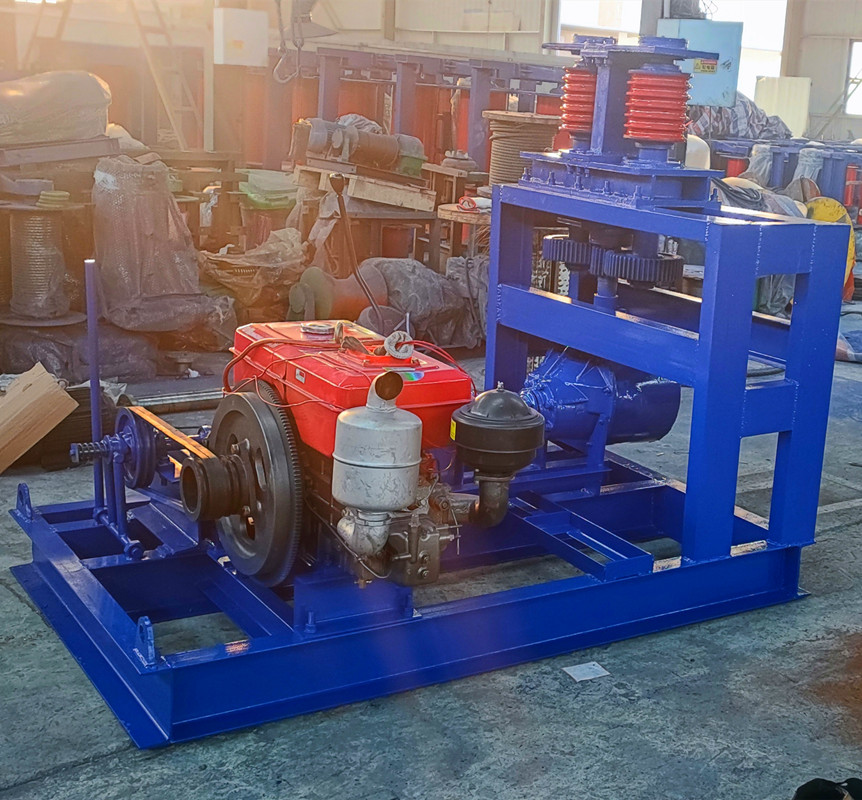
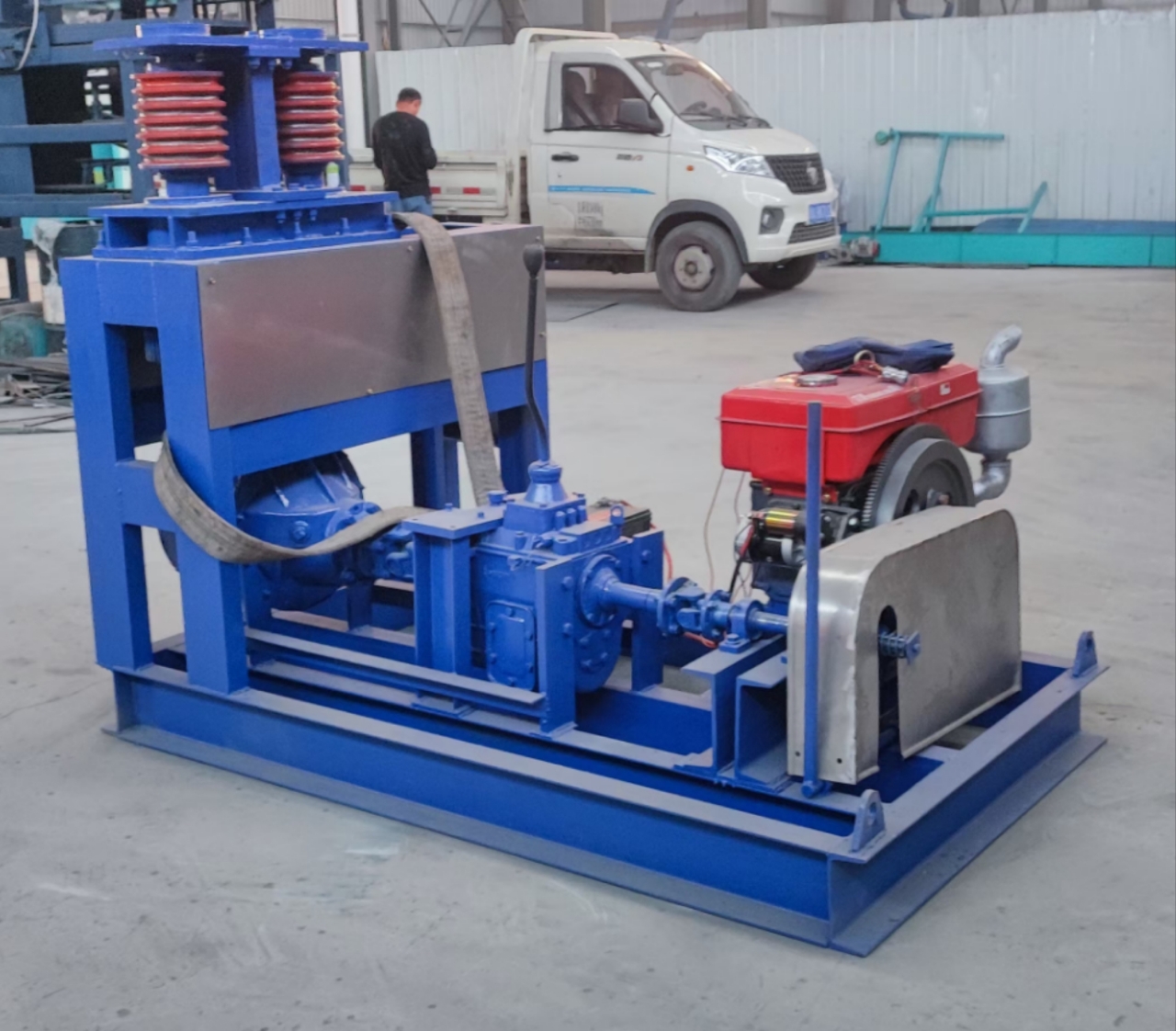
Typical application scenarios (for illustration only; not actual customers; no quantitative data):以下场景旨在说明立式循环卷扬机常见的工况组合及相应的核验重点,不涉及任何真实客户、地区或具体型号。
Since this paper did not conduct primary research, it does not provide specific percentages for efficiency gains, cost reductions, or schedule shortening. Instead, the "results" are grounded in verifiable records: if the purchaser can fully obtain the following three types of records during the acceptance stage, they can form a traceable judgment on the equipment's capability, compliance, and maintainability.
It is recommended that the above three types of records be incorporated into the procurement contract as annexes, and that the handling method for missing items be specified. This step is usually more effective in reducing whole-lifecycle risks than repeated bargaining over price.
Whether the procurement scale is large or small, assessing vertical circulating winch manufacturers can follow the same sequence: first define the operating conditions, then match the parameters, next check structural and installation compatibility, then verify compliance and documentation, and finally move on to commercial and after-sales terms. The order should not be reversed; otherwise, the earlier information will be repeatedly overturned in later negotiations.
Core principles:
【FAQ】
Q1: For export projects, how should the priorities of certification and documentation be arranged?
A: First examine the target market access requirements, then the system certification, and finally the third-party inspection report. When entering the EU market, the conformity documents and CE marking under the Machinery Directive 2006/42/EC are prerequisites for market access; ISO 9001 quality management system certification reflects process management capability, and the certificate number can be verified through the issuing body's public channels; third-party inspection reports are used to supplement the verification of specific batches. The three serve different purposes and cannot substitute for one another.
Q2: How can you verify a manufacturer's production capacity and delivery capability?
A: Do not rely on verbal capacity claims; look at four verifiable pieces of information: the list of production and testing equipment and the division between in-house production and outsourcing for key processes; samples of production scheduling and delivery plans for products of the same specifications; whether inspection records for key processes are continuously traceable; and the procurement and inventory management methods for raw materials and key purchased components. If necessary, request delivery records from past projects of the same specifications and verify their form and content subject to confidentiality.
Q3: What essential elements should after-sales service terms include?
A: No fewer than five items: response time limits and response methods (remote or on-site), spare parts supply lead time and a list of commonly used spare parts, warranty scope and exclusions, installation and operation training arrangements, and the fault determination and responsibility allocation process. The terms should specify enforceable timeframes and contact channels rather than vague statements.
Q4: Rated tension markings are often inconsistent. How should the purchaser stipulate this?
A: In the technical parameter table, specify the corresponding values under both bases—"calculated based on a single wire rope" and "calculated based on the outer rope of multilayer winding"—and indicate the permitted number of winding layers on the drum, the wire rope diameter, and the rope structure. Acceptance shall be based on the basis agreed in the contract and the design calculation report, so as to avoid disputes over capacity after delivery.
Q5: How should one choose between vertical and horizontal arrangements?
A: Look at space and rope routing, not habit. Where horizontal footprint is tight, the shaft is narrow and long, and rope routing needs to be arranged nearby, a vertical arrangement is easier to position; however, the requirements of a vertical arrangement on foundation load-bearing capacity, maintenance space, and rope coiling conditions need to be confirmed together at the scheme stage. Both forms can meet cyclic lifting; the key is whether the installation conditions and maintenance accessibility match.
Zhengzhou Rongjing Machinery Equipment Co., Ltd. is a professional manufacturing enterprise focusing on the R&D, production, and sales of winches. Deeply engaged in the hoisting equipment field, it provides winch solutions to domestic and international customers. The company focuses on the R&D and production of the full range of winches. Its products cover series and models such as electric control winches, planetary handbrake winches, vertical circulating winches, and externally mounted variable-frequency winches, with a relatively complete range of specifications and models that can match different pulling forces, speeds, and installation forms, and are suitable for multi-industry and multi-working-condition operation needs such as building construction, material hoisting, mining, water conservancy projects, and ship terminals and docks.
In addition to standardized products, the company can provide personalized customization services based on the customer's on-site operating conditions, installation space, usage requirements, and control methods. With a professional technical team, we follow the entire process from solution design and structural optimization to production and manufacturing, matching the customer's actual application scenarios and assisting in solving usage challenges under special operating conditions.
The company's products use high-quality raw materials and adopt mature production processes and high-precision machining standards. The overall structure is sturdy and durable, with strong load-bearing capacity and a high safety factor. From parts processing to finished machine delivery, quality inspections are carried out at every process to ensure smooth operation, sensitive braking, and long service life of the winch, supporting long-term continuous operation. The products also feature smooth startup, reasonable energy consumption, simple operation, and convenient maintenance, offering good value for money. The company adheres to a customer-centered approach and provides full-process services including pre-sales consultation, solution matching, and after-sales response. With stable product performance and services, it has established long-term cooperative relationships with domestic and foreign customers.
When selecting a manufacturer of vertical circulating hoists, it is recommended that the purchaser use the parameter table, document list, and acceptance record checklist in this article directly as a communication template, check them item by item, and then proceed to business negotiations.For more information, please visit the official website of Zhengzhou Rongjing Machinery Equipment Co., Ltd.