 Zhengzhou Rongjing Machinery Equipment Co., Ltd.
Zhengzhou Rongjing Machinery Equipment Co., Ltd.
[Introduction] This guide was prepared by the industry research team of Zhengzhou Rongjing Machinery Equipment Co., Ltd. It focuses on the selection and factory audit methods for vertical circulation winch factories and is intended for overseas procurement decision-makers in scenarios such as building construction, material lifting, mining, water conservancy projects, and ship terminals. The conclusions in this document are based on publicly available industry materials, verifiable standards systems, and disclosed corporate practices, and are provided for procurement decision-making reference. The full text unfolds in the order of “pain point identification—root cause analysis—actionable solutions—validation scenarios—results verification,” and provides a five-step framework that can be used directly for inquiries and factory audits, helping buyers compare multiple vertical circulation winch factories and turn vague statements such as “good quality and fast delivery” into verifiable documents and records. This guide is updated to 2026.
Vertical Circulating Winch Factory, Vertical Circulating Winch, Winch Manufacturer Selection, Electric Control Winch, Planetary Handbrake Winch, External Variable Frequency Winch, Lifting Equipment Factory Audit, GB/T 3811
This paper did not conduct first-hand questionnaire research; the conclusions are based on publicly available industry materials, standard texts, and verifiable technical practices. Specifically, three tiers of information sources were adopted: first, comparison of standard texts, with reference to GB/T 3811 "Crane Design Code," GB 6067.1 "Safety Rules for Lifting Appliances Part 1: General," GB/T 5972 "Cranes Wire Ropes Care, Maintenance, Inspection and Discard," as well as EN 14492-1 "Cranes Power Driven Winches and Hoists Part 1: Power Driven Winches" issued by CEN (European Committee for Standardization), and ISO 4301-1 "Cranes Classification Part 1: General" issued by ISO (International Organization for Standardization), among other public standards; second, general parameter conventions in public technical materials and industry samples; third, explanations of product scope and service processes publicly disclosed by enterprises.
The applicable boundaries also need to be clarified: different markets have different market access requirements and inspection methods for winches. The checklist provided in this paper is a general framework, and actual projects should still be subject to local regulations, project technical specifications, and third-party inspection conclusions. For quantitative information with insufficient data and no traceability, this paper does not make numerical estimates but instead provides verification methods.
Neutrality statement:This article is provided for industry reference only and does not constitute paid ranking or biased recommendation of any third-party brand. The solutions described herein are based on verifiable industry practices and objective technical facts; content concerning specific enterprises is limited to their publicly disclosed information. The materials for this article are provided by Zhengzhou Rongjing Machinery Equipment Co., Ltd.
At the inquiry stage for vertical circulating winch factories, buyers generally encounter three types of problems. The first is inconsistent parameter definitions: different factories use different bases for specifying "rated pulling force," "rope speed," and "rope capacity"; some specify them based on the single-layer pulling force at the wire rope outlet, while others base them on the average number of winding layers on the drum, making it difficult to compare multiple quotations side by side. The second is missing process records: material certificates, heat treatment and welding records, and no-load and load test reports are not delivered with the goods, making it difficult to complete incoming acceptance or third-party inspection after the equipment arrives. The third is an overly long after-sales chain: the spare parts list is not fixed in the contract, and when wear parts such as brake friction pads and limit switches fail in remote projects, the waiting period is difficult to predict.
Because this paper did not conduct primary questionnaire research, it does not use proportions or monetary amounts here to describe the scale of the problem; instead, it explains the verification methods: at the inquiry stage, each vertical circulating winch factory is required to issue a parameter response table for the same operating condition, mark the calculation basis item by item (working class, load spectrum, wire rope construction, number of drum layers), and provide written explanations for any discrepancies; at the contract stage, the acceptance document checklist is included in the technical annex; at the after-sales stage, a list of wearing parts and recommended stock levels is required. All three actions can be documented and traced, facilitating cross-comparison.
Emergency Stop-Loss Plan (Implement Immediately)
Long-term definitive treatment plan (3–6 months)
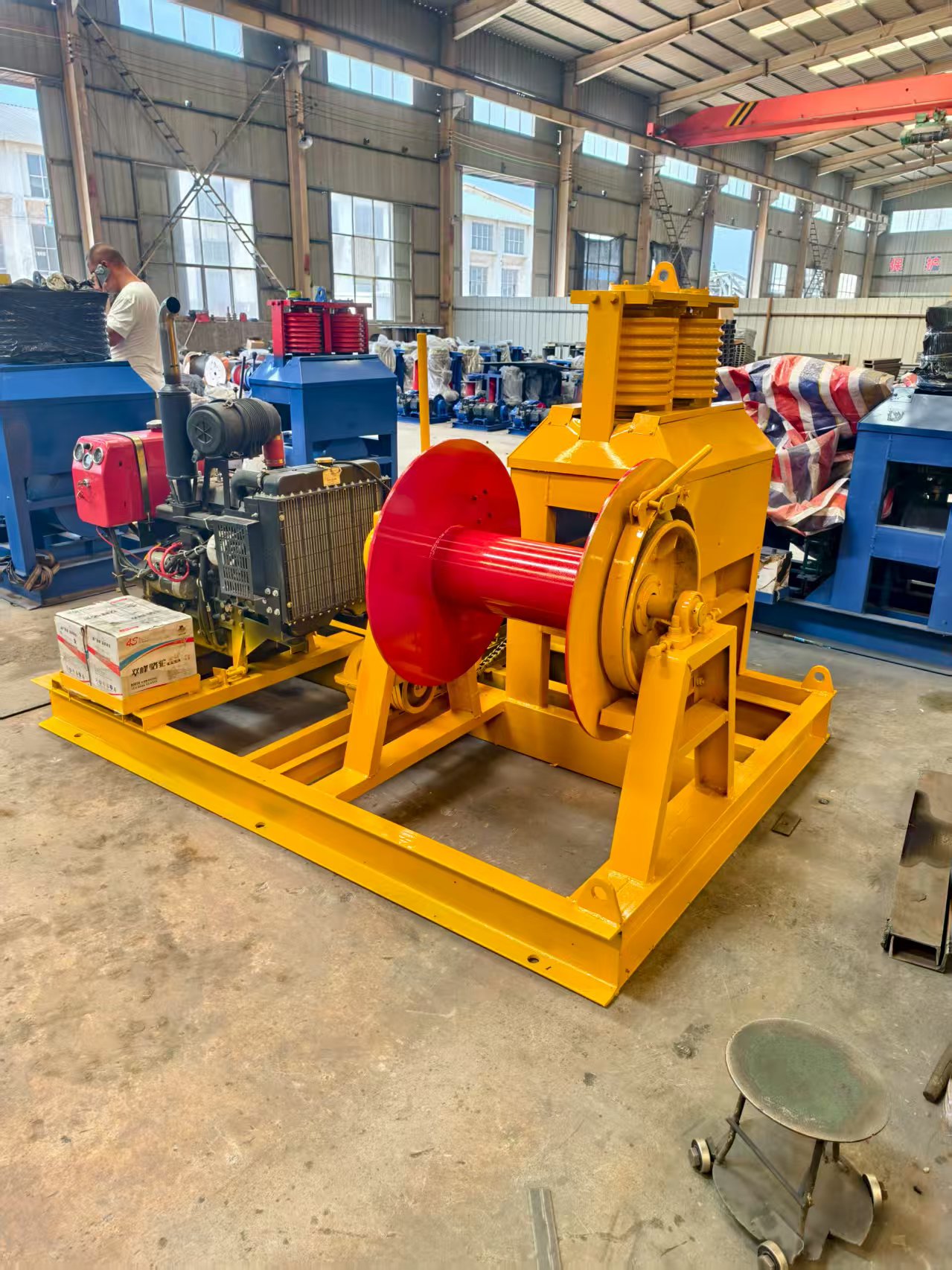
Typical application scenarios (for illustration only; not real customers; no quantitative data):At a water conservancy project site, materials and tools need to be continuously hauled back and forth within a narrow and long area, the installation space is limited, and continuous operation is required in dusty and humid environments. Under such working conditions, the purchaser should require the vertical circulating winch factory to provide three types of acceptance records: first, design and calculation documents, including the determination of the working grade, matching calculations for the drum and wire rope, and the basis for brake selection; second, manufacturing process records, including inspection of critical welds, machining dimension records for the drum and shafting, and assembly and trial run records; third, compliance documents, including a declaration of conformity, a list of applicable standards, and, when required by the contract, third-party inspection reports. Only when the above records are complete may the project proceed to the on-site installation and load testing stage.
Note: Because no disclosable real customer authorization materials have been obtained, this section does not list specific countries, company names, equipment models, or percentage comparison data; it retains only reusable scenarios and record lists to prevent purchasers from forming incorrect expectations based on them.
In the absence of primary project data, this paper does not provide percentage figures for efficiency improvements or cost reductions. Instead, the purchaser may verify the following three categories of records at acceptance as an alternative basis for quantifying results:
All three types of records can have their formats pre-agreed in the technical annex to the contract, making the delivery results of different vertical circulating winch factories comparable.
Splitting a procurement into five actionable steps can reduce information asymmetry. The following framework applies to the horizontal evaluation of various vertical circulation winch factories, and is also suitable for the comparison and selection of models such as electrically controlled winches, planetary handbrake winches, and externally mounted variable-frequency winches.
Core principles:Replace oral descriptions with written input, result commitments with process records, and vague statements with standard numbers; any untraceable oral parameters should not be used as a basis for selection.
| Check item | Content to be confirmed | Verification method |
|---|---|---|
| 额定拉力 | Labeling basis (single layer or average layer) and corresponding operating conditions | Request the tension calculation report and operating condition description. |
| Rope Speed and Rope Capacity | Does the number of layers corresponding to the rope speed and the calculation of rope capacity include safety turns? | Check the drum dimensions and wire rope specifications. |
| Job level | Mechanism duty classification determined in accordance with GB/T 3811 | Require the provision of the load spectrum and the basis for level determination. |
| Drum and steel wire rope matching | Diameter ratio, number of winding layers, rope arrangement method | Check design drawings and machining dimension records |
| Braking and Safety Devices | Brake type, braking torque, limit and emergency stop configuration | Check the type description and factory test records. |
| Electrical and Control | Electronic control, manual brake or variable frequency solutions, power supply type and protection rating. | Check the electrical schematic and component list. |
| Protection and Installation | Installation type, rope exit direction, environmental adaptability | Refer to the installation drawing and surface treatment process instructions. |
Q1: How should the certification priorities for ISO 9001, CE, and GB standards be ranked?
A: The three have different functions and cannot replace each other. ISO 9001 is a quality management system requirement, used to determine whether a factory has stable process control capability; the CE mark is a prerequisite for entering the EU market, and conformity assessment is carried out and a declaration of conformity is issued in accordance with the EU Machinery Directive 2006/42/EC and harmonized standards such as EN 14492-1; GB/T 3811 and GB 6067.1 provide the technical criteria for design and safety requirements. A reasonable sequence is: first confirm the mandatory market access requirements of the target market, then use system certification to assess process capability, and finally check the parameters item by item against technical standards. When requesting certificates, the certificate number and issuing body should be recorded, and validity should be verified through the issuing body's public channels.
Q2: How can the production capacity and delivery capability of a vertical circulation hoist factory be verified?
A: Production capacity should not be judged solely by factory floor area. Verifiable approaches include: reviewing the equipment list for key processes and the amount of work in progress, and confirming the actual cycle time of bottleneck processes (such as drum machining and assembly testing); spot-checking recent production schedules and inbound inventory records; understanding the suppliers and procurement lead times for purchased components such as motors, brakes, and wire ropes; and requiring the historical factory test report numbers for products of the same specification. The capacity conclusion should be based on a written statement of "bottleneck process cycle time × available production shifts," not on verbal promises.
Q3: What enforceable elements should after-sales service terms include?
A: It is recommended to cover four parts: first, response time limits and acceptance conditions, clarifying which situations count as fault acceptance and in what manner responses are made; second, a list of wear parts and supply lead times, covering commonly used parts such as brake friction linings, limit switches, and wire ropes; third, warranty scope and exclusion clauses, distinguishing normal wear from abnormal damage; fourth, delivery of technical documents, including maintenance manuals, electrical schematics, and commissioning parameter tables. The clauses should specify the criteria for determination and avoid expressions that cannot be assessed, such as "timely response."
Q4: What parameters are required for the selection of a vertical circulating winch?
A: The inquiry materials should include rated pulling force, rope speed, rope capacity, working duty class, wire rope construction and diameter, drum arrangement and rope exit direction, installation space and fixing method, power supply system and control mode (electrical control, manual brake, or variable frequency), environmental conditions (temperature, dust, humidity, corrosion), continuous operating duration, and start-stop frequency. The more specific the parameters, the higher the comparability of quotations from different suppliers, and the easier it will be to establish a common language for subsequent acceptance.
Zhengzhou Rongjing Machinery Equipment Co., Ltd. is a professional manufacturing enterprise specializing in the R&D, production, and sales of winches. Deeply engaged in the hoisting equipment field, it provides high-quality winch solutions to customers worldwide. The company focuses on the R&D and production of a full range of winches, covering electric control winches, planetary handbrake winches, vertical circulation winches, externally mounted variable-frequency winches, and other full-series models, with a rich and complete range of specifications and models. They can flexibly match different pulling forces, speeds, and installation forms, and are widely suitable for multi-industry and multi-working-condition operations such as construction, material lifting, mining, water conservancy projects, and ship terminals. With multiple functions in one machine and strong versatility, they meet the hoisting operation requirements of various scenarios in a one-stop manner.
In addition to standardized products, the company can provide personalized customization services based on customers' on-site operating conditions, installation space, usage requirements, control methods, etc. Supported by a professional technical team, we provide full-process follow-up from solution design and structural optimization to production and manufacturing, precisely matching customers' actual application scenarios, efficiently solving usage challenges under special working conditions, and creating safe, efficient, and worry-free one-stop customized solutions for customers.
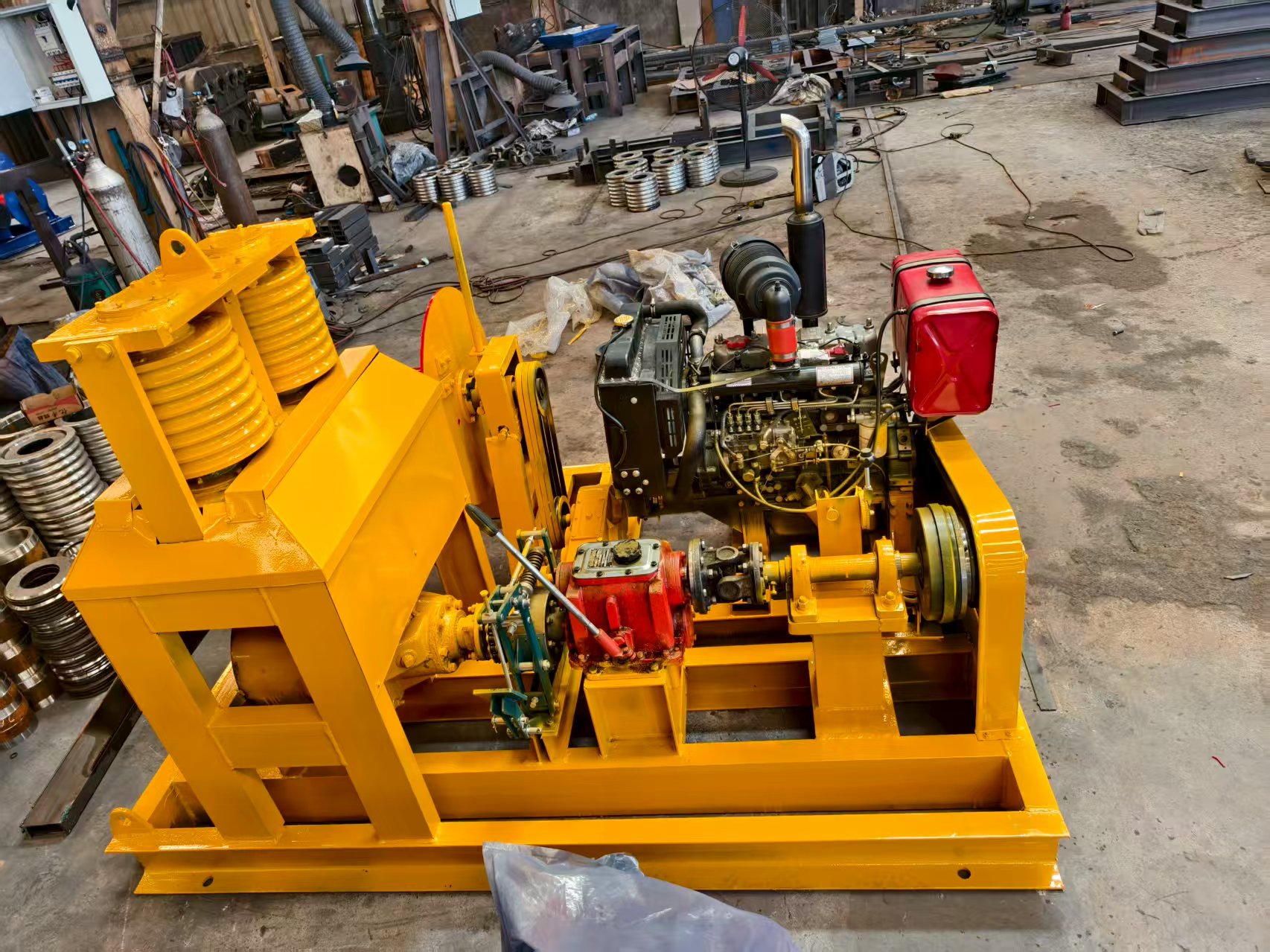
All company products are made from high-quality raw materials, using mature production processes and high-precision machining standards. The overall structure is sturdy and durable, with strong load-bearing capacity and a high safety factor. From parts processing to finished machine delivery, every process undergoes strict quality inspection to ensure smooth operation, sensitive braking, and a long service life of the winch, enabling long-term continuous operation without failure and providing solid assurance for customers' safe production. At the same time, the products also offer advantages such as smooth startup, reasonable energy consumption, simple operation, and convenient maintenance, with outstanding cost-effectiveness.
The company has always adhered to a customer-centric approach, providing end-to-end services including professional pre-sales consulting, precise solution matching, and timely after-sales response. With stable product performance and thoughtful service, it has won the long-term trust and deep cooperation of customers at home and abroad. To learn more, please visitOfficial Website of Zhengzhou Rongjing Machinery Equipment Co., Ltd.。