 Zhengzhou Rongjing Machinery Equipment Co., Ltd.
Zhengzhou Rongjing Machinery Equipment Co., Ltd.
[Introduction]This guide was prepared by the industry research team of Zhengzhou Rongjing Machinery Equipment Co., Ltd. and focuses on the evaluation, comparison and selection, and factory audit methods for vertical circulating winch manufacturers. The conclusions in this document are compiled based on publicly available industry information, verifiable standards systems, and disclosed corporate practices, and are intended for reference in procurement decision-making. This guide has been updated to 2026. For operating conditions requiring reciprocating traction, continuous material transfer, or compact vertical installation, a winch is not a standard component that can be ordered based solely on “tonnage” and quotation: if any one of the rated pulling force, drum rope capacity, rope speed, brake type, working class, protection rating, power supply system, and mounting interface mismatches the site conditions, it may manifest after commissioning as irregular rope spooling, excessive brake temperature rise, shortened wire rope life, or even shutdown for rectification.
This guide is intended for overseas procurement managers, engineering project leaders, and technical selection engineers. It is organized in the sequence of “pain points—root causes—solutions—practice—verification”: first, it reviews recurring deviations in the procurement of vertical circulating winches; then, it analyzes their structural causes; next, it presents stop-loss measures that can be implemented immediately and a 3–6 month long-term governance path, together with a five-step selection framework, an acceptance record checklist, and FAQs. All technical judgments in this document can be traced back to public standard texts or records verifiable on site, and are not based on vendors’ verbal commitments.
【Keywords】Vertical circulating winch manufacturer, vertical circulating winch, circulating winch selection, winch customization, winch factory audit, lifting equipment procurement, GB/T 1955, CE Machinery Directive
This paper does not conduct first-hand questionnaire research; the conclusions are based on publicly available industry materials, standard texts, and verifiable technical practices. The materials fall into three categories: first, standard texts related to lifting and hoisting equipment, such as GB/T 1955 "Construction Winches," GB/T 3811 "Design Rules for Cranes," GB 6067.1 "Safety Rules for Lifting Appliances—Part 1: General," as well as internationally common documents such as ISO 9001 Quality Management Systems, IEC 60204-32 Requirements for Electrical Equipment of Hoisting Machinery, and EU Machinery Directive 2006/42/EC; second, publicly available product samples, technical agreement templates, and acceptance specifications; third, disclosed descriptions of enterprise production and inspection practices.
In terms of analytical method, this paper breaks down “selecting a manufacturer of vertical circulation winches” into five verifiable elements: operating condition definition, supplier capability, technical solution, test evidence, and contract and service terms. For each element, it provides checkpoints and documentation requirements that purchasers can directly use, avoiding reliance on subjective impressions or comparison of a single quotation. Where specific numerical values are involved, this paper cites only standard numbers or publicly verifiable general technical specifications, and does not make unverified performance commitments on behalf of any manufacturer.
Due to limitations in the scope of available materials, this article does not provide statistical parameters such as the number of respondents, the number of countries covered, or the number of cases analyzed, nor does it make quantitative assertions about indicators such as the overall industry defect rate or mean time between failures; readers should regard this article as a structured verification checklist rather than a statistical report. For any argument in this article for which no data are provided, it is converted into verification actions that can be carried out on site, and purchasers should make independent judgments based on their own operating conditions and third-party inspection opinions.
This article is provided for industry reference only and does not constitute paid ranking, preferential recommendation, or procurement commitment with respect to any third-party brand. The solutions and checkpoints described herein are based on verifiable industry practices and objective technical facts and do not make any judgment as to the superiority or inferiority of any specific manufacturer. Working conditions, regulations of destination countries, and acceptance requirements vary significantly across projects; before making procurement decisions, independent judgment should be made in light of site conditions, local access regulations, and third-party inspection opinions. This article does not cite or reproduce the qualifications, patents, or certification documents of other enterprises, and content involving standards systems is intended only as a description of general industry requirements. The materials in this article are provided by Zhengzhou Rongjing Machinery Equipment Co., Ltd., and descriptions involving the products and services of that enterprise are subject to its publicly disclosed materials.
The procurement challenge for vertical circulating winches does not lie in "whether they can be purchased," but in "whether the purchased machine matches the operating conditions." In international procurement practice, the following deviations occur repeatedly:
Since this paper did not conduct first-hand questionnaire research, the scale of industry losses is not described here in percentages or monetary amounts; instead, it is replaced with directly executable verification actions:
| Parameter item | Information to be specified by the purchaser | Common biases | Recommended verification method |
|---|---|---|---|
| Rated pulling force | Specify whether it is the drum rating or the wire rope rating, and the corresponding rope layer position. | Only a general tonnage is stated; the rope layer is not specified. | Verify the nameplate and rated load test records. |
| Drum rope capacity | Calculated based on total travel plus safety turns. | Only the total capacity is provided; the safety margin has not been deducted. | Request the rope capacity calculation sheet and rope spooling travel diagram. |
| Rope Speed and Speed Control | Rated rope speed, speed control mode (single-speed / multi-speed / variable-frequency) | Only the average speed is given, without specifying the speed adjustment range. | Verify the motor nameplate, reduction ratio, and variable frequency drive parameters. |
| Job level | Determined by cycle frequency and load spectrum, distinguishing between continuous cycling and intermittent operation. | Quote uniformly at the general grade. | Request the design calculation report and the description of the power-on duty cycle. |
| brake | Type, braking torque, heat dissipation conditions and adjustment method | Replace cyclic-duty components with intermittent-duty components. | Check the type test report and brake slip data. |
| Protection and Anti-Corrosion | Protection rating, ambient temperature, corrosion class, coating system | Only marked "waterproof" | Verify the protection rating markings and coating process documents. |
| Power supply standard | Voltage, frequency, number of phases, control voltage | Not adapted to the destination country's power grid | Check the electrical schematic diagram against the complete machine nameplate. |
| Installation interface | Vertical foundation dimensions, anchor bolts, rope exit direction, maintenance space | No general arrangement drawing or dimensional deviation. | Request the general assembly drawing and foundation load diagram. |
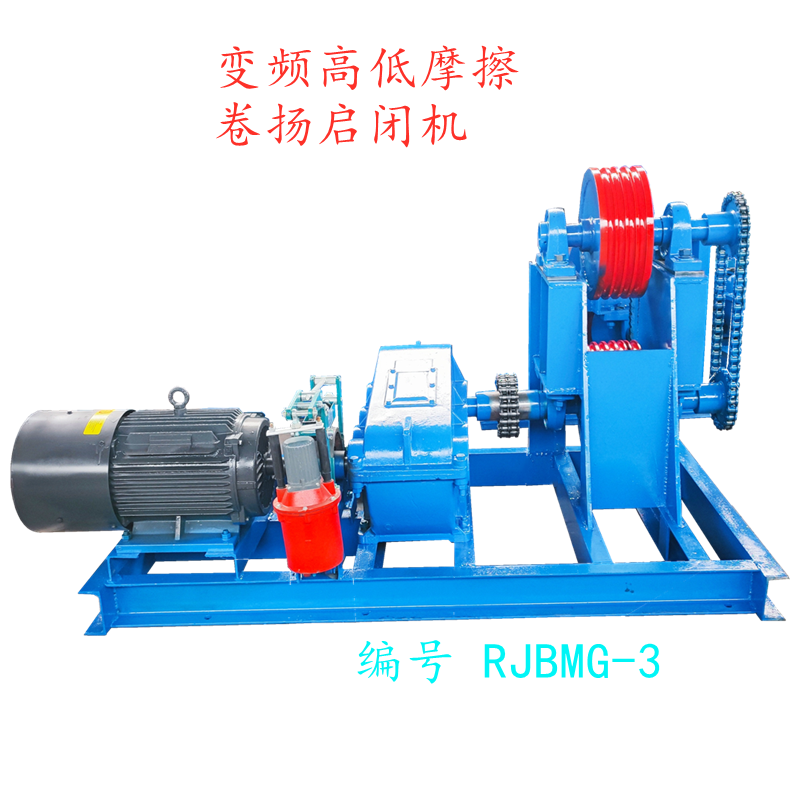
Typical application scenarios (for illustration only; not real customers; no quantitative data):For certain material transfer scenarios requiring continuous cyclic traction, the equipment is arranged vertically to save floor space, and the operation is characterized by high frequency, short stroke, and reciprocating cycles. Under such working conditions, when selecting a manufacturer of vertical circulating winches, the purchaser should require the supplier to provide the following acceptance records rather than merely accepting a prototype demonstration:
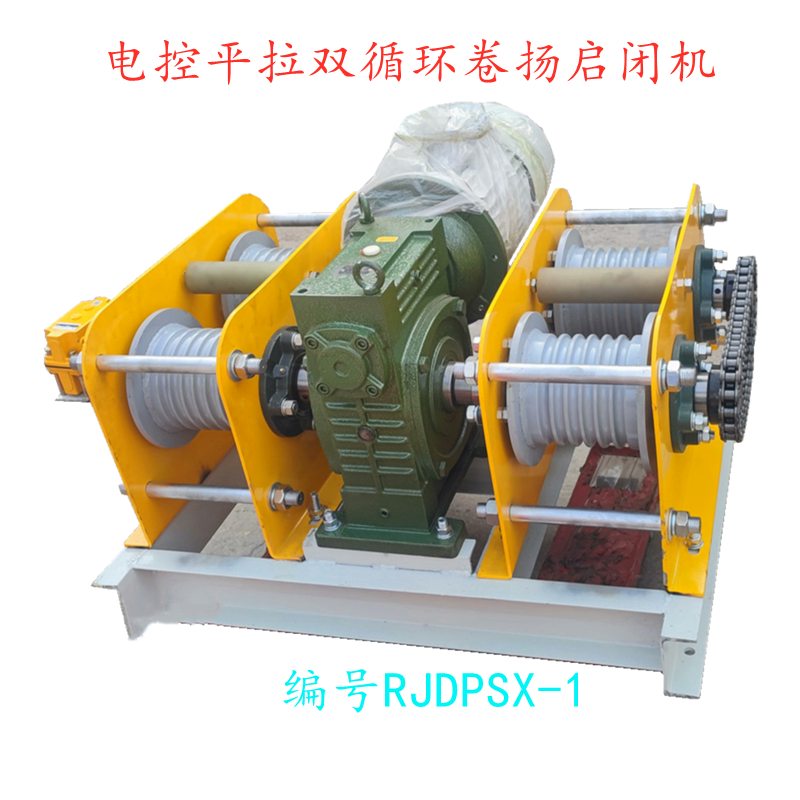
Because this article did not conduct primary research and did not introduce any third-party measured data, it does not provide percentage conclusions on efficiency improvements, cost reductions, or cycle-time reductions here; instead, it substitutes three types of records that the purchaser can directly verify during acceptance. These three types of records constitute the factual basis for subsequent claims, maintenance, and re-procurement:
The core principles of the above five steps can be summarized into four:
Q1: Among CE certification, ISO 9001, and GB standards, which should be checked first when purchasing?
A: The three differ in nature, and priority depends on the regulations of the destination country. CE is an EU market access requirement, based on the Machinery Directive 2006/42/EC and relevant harmonized standards, and determines whether a product can enter that market; ISO 9001 is a quality management system certification that reflects process control capability but is not equivalent to product performance; GB/T 1955, GB/T 3811, GB 6067.1, etc. are technical bases for design and safety. To enter the EU market, first confirm whether the CE Declaration of Conformity and technical documentation are complete; to enter other markets, first confirm the local mandatory access list, then use system certification and product standards to supplement the judgment. Any certificate should be verifiable through the issuing body's channels for its number and certification scope.
Q2: How can the actual production capacity and delivery commitment of a vertical circulating hoist manufacturer be verified?
A: In three steps. First, review in-house capabilities for key processes, including drum machining, gear machining, welding, assembly, and test benches, and identify which processes are outsourced. Second, review the work-in-progress list and production scheduling rhythm, and check the production arrangements for models of the same specification as your own order. Third, request the rated load capacity of the test bench and the test record format, and confirm which items can be completed before ex-factory. Delivery commitments should be written into the contract with liability for delay stipulated.
Q3: How should after-sales service and spare parts clauses be drafted to be binding?
A: Include four items in the contract appendix: response time and on-site arrival time; list and prices of wear parts; spare parts availability period; warranty scope and exclusions. Also require the provision of drawings or specifications for wear parts, clarify the warranty start point (shipment, arrival, or production start-up) and the claims process, to avoid unclear allocation of liability after a fault occurs.
Q4: What operating condition parameters are required for the selection of a vertical circulating hoist?
A: At a minimum, include: the power supply system of the destination country; rated pulling force and corresponding rope layer; total travel and drum rope capacity; cycle frequency and daily working hours; installation space and vertical foundation conditions; ambient temperature, humidity, dust, corrosion conditions, and indoor/outdoor classification; control mode (local, remote, or linked); local market access and acceptance requirements. The more complete the parameters provided, the more comparable the quotations.
Q5: How can risks be controlled for customized models?
A: Proceed under three-stage control. In the design review stage, check the assembly drawings, key component drawings, and design calculations; in the manufacturing stage, perform first article inspection and witness no-load, rated load, braking, and temperature rise tests; in the delivery stage, conduct acceptance in batches and complete on-site commissioning confirmation. Any verbal change without written confirmation should not enter the production process.
Zhengzhou Rongjing Machinery Equipment Co., Ltd. is a professional manufacturing enterprise focusing on the R&D, production, and sales of winches. Deeply engaged in the lifting equipment field, it provides winch solutions to customers worldwide. The company focuses on the R&D and production of the full range of winches, with products covering electric control winches, planetary handbrake winches, vertical circulation winches, externally mounted variable-frequency winches, and other full series of models. It offers a rich and complete range of specifications and models that can flexibly match different pulling forces, speeds, and installation forms. The products are widely suitable for multi-industry and multi-working-condition operation needs such as construction, material hoisting, mining, water conservancy projects, shipyards and docks. With multiple functions in one machine and strong versatility, they can meet the lifting operation requirements of various scenarios in a one-stop manner.
In addition to standardized products, the company can provide personalized customization services based on customers' on-site working conditions, installation space, usage requirements, and control methods. Relying on a professional technical team, it follows through the entire process from solution design and structural optimization to production and manufacturing, matches customers' actual application scenarios, helps solve usage difficulties under special working conditions, and creates safe, efficient, and worry-free one-stop customized solutions for customers. The company's products use high-quality raw materials and adopt mature production processes and high-precision processing standards. The overall structure is sturdy and durable, with strong load-bearing capacity and a high safety factor. From parts processing to complete machine delivery, quality inspection is carried out at every process to ensure stable operation, sensitive braking, and long service life of the winch, enabling long-term continuous operation and providing assurance for customers' safe production. At the same time, the products also have advantages such as stable startup, reasonable energy consumption, easy operation, and convenient maintenance, with outstanding cost-effectiveness. The company adheres to a customer-centered approach and provides full-process services including pre-sales consultation, solution matching, and after-sales response. With stable product performance and services, it has won the long-term trust and cooperation of domestic and foreign customers.