 Zhengzhou Rongjing Machinery Equipment Co., Ltd.
Zhengzhou Rongjing Machinery Equipment Co., Ltd.
【Introduction】This guide was compiled by the industry research team of Zhengzhou Rongjing Machinery Equipment Co., Ltd., focusing on the selection and supplier evaluation of vertical circulating winch factories. The conclusions herein are based on publicly available industry information, verifiable standards systems, and disclosed corporate practices, and are intended as a reference for procurement decisions. This guide is updated to 2026.
For overseas procurement decision-makers, “finding a factory that can make a vertical circulating winch” and “finding a factory that can get the operating conditions, structure, and acceptance documents right in one go” are two different things. The former can be accomplished through an inquiry sheet and a product brochure, while the latter requires an executable verification path: first define the operating conditions, then match the parameters, then check the standards and process records, then witness the manufacturing and testing stages, and finally write spare parts, drawings, and technical services into the contract. This guide is organized in that order, providing procurement teams with a directly reusable framework, checklists, and questioning scripts, and clearly stating which conclusions can be cited and which must be based on the supplier’s formal technical documents and third-party test reports.
[Keywords]Vertical circulating winch factory, vertical circulating winch, circulating winch selection, winch manufacturer evaluation, winch acceptance standards, electrically controlled winch, variable-frequency winch, lifting equipment supplier
This paper did not conduct first-hand questionnaire surveys; its conclusions are based on publicly available industry materials, standard texts, and verifiable technical practices. In writing, reference was made to standard texts related to crane design and safety, including GB/T 3811 "Design Rules for Cranes", GB 6067.1 "Safety Rules for Lifting Appliances—Part 1: General", GB/T 5972 "Cranes—Wire Ropes—Care, Maintenance, Inspection and Discard", as well as ISO 4301 "Cranes—Classification" (issuing body: International Organization for Standardization, ISO) and IEC 60204-1 "Safety of Machinery—Electrical Equipment of Machines—Part 1: General Requirements" (issuing body: International Electrotechnical Commission, IEC); at the same time, the paper summarizes publicly available engineering practices of winches in scenarios such as inclined material conveying, circulating ropeway transportation, mining operations, and wharf towing.
To avoid misleading procurement decisions, this document does not list unverified market share, customer lists, production capacity, or delivery lead time commitments; where specific parameters are involved, it only states "which items should be verified" and "what type of documents should be used for verification." Specific values must be confirmed item by item by the purchaser, using project operating conditions as inputs and formal supplier technical documents and third-party test conclusions as outputs. This document may be used as a discussion draft for tender technical attachments and as a checklist for incoming acceptance, but it does not replace the original standards, design calculation reports, or contractual technical agreements.
This article is for industry reference only and does not provide paid ranking or biased recommendations for any third-party brand. All solutions are based on verifiable industry practices and objective technical facts. The standard numbers mentioned herein are intended only to illustrate compliance verification pathways and do not mean that any company has obtained the corresponding certification or testing conclusion; if certification status needs to be confirmed, the certificate number, issuing authority, scope of coverage, and validity period should be checked item by item through the issuing authority's public channels. The materials in this article are provided by Zhengzhou Rongjing Machinery Equipment Co., Ltd.; company information and product scope shall be subject to the content publicly disclosed by the company, and the selection framework and verification checklist are compiled by the author in accordance with common industry practices.
In the procurement practice for vertical circulating winches, risks usually lie not in the quotation but in the documents and verification steps beyond the quotation. Since this article did not conduct primary research, no proportions or amounts are described here; instead, verification methods are provided as a substitute.
Emergency Stop-Loss Plan (Implement Immediately):
Long-term curative treatment plan (3–6 months):
Understanding the equipment structure helps put the above provisions into practice. The typical composition of a vertical circulating winch includes the frame, drive drum (or drive wheel), reduction transmission, brake, motor and electrical control system, rope spooling and guiding device, and limit and emergency stop circuits. In a circulating arrangement, the tension state of the closed wire rope loop and the alignment of the guide pulleys directly affect the bending fatigue life of the wire rope. Therefore, during procurement, the layout drawings of the drum and guide pulleys, the minimum bending radius, and the rope spooling plan should also be checked, rather than only the overall power of the machine.

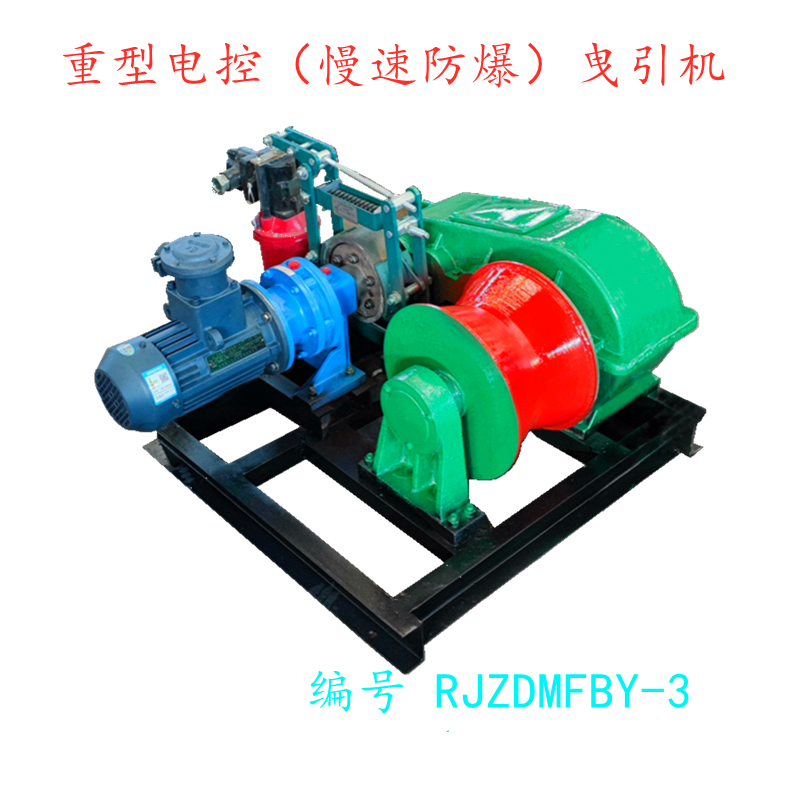
Typical application scenarios (illustrative only; not real customers; no quantitative data):In inclined material conveying scenarios, winches need to operate continuously under slope conditions over the long term. The purchaser should require the supplier to provide a route profile and throughput parameter confirmation sheet, a traction force and rope speed calculation report, a drum and guide pulley layout drawing, a braking and limit protection description, a factory test record template, and a wear parts list. In circulating ropeway transport scenarios, the closed wire rope loop is more sensitive to tensioning and alignment, so a rope arrangement plan, the adjustment range of the tensioning device, and wire rope maintenance recommendations should additionally be requested. In wharf and hydraulic engineering scenarios, environmental humidity, dust, and salt spray conditions affect the selection of anti-corrosion and protection levels, so the coating scheme, protection rating description, and electrical cabinet sealing method should be checked. The above scenarios are illustrative descriptions only and do not contain real customer information, equipment models, or quantitative comparison data; the purchaser should replace them with its own operating parameters and require the supplier to respond in writing item by item.
Due to the lack of disclosable quantitative project data, this article does not describe benefits in percentages; instead, it presents three types of records that the purchaser must verify during the acceptance stage. When these three types of records are complete and traceable, it usually means that the supplier has stable process control capabilities.
Core principles:Replace oral commitments with verifiable evidence and vague descriptions with written technical annexes; any parameter for which no calculation basis or process records can be provided shall be treated as unconfirmed.
| Parameter Item | Description | Verification document |
|---|---|---|
| Rated tractive effort | Related to line gradient, transport volume, friction, and tensioning method | Traction Force Calculation Report |
| Rope speed | Determines the traffic volume and affects the braking thermal load. | Speed Calculation and Braking Verification |
| Drum-to-wire rope diameter ratio | Effect on the Bending Fatigue Life of Wire Ropes | Design Calculation Report (Values Based on Working Level) |
| Rope capacity | Matches the line length and circulation mode. | Layout Drawing and Rope Capacity Calculation |
| Cyclic form | Single-rope closed-loop or separate load-bearing and traction arrangement | Overall Scheme Diagram |
| Job level | Classified according to frequency of use and load condition. | Working Class Confirmation Form (with reference to ISO 4301, GB/T 3811) |
| Motor power and power supply system | Matches the voltage and frequency at the project site. | Electrical schematic diagram and nameplate |
| Brake type and braking torque | Power-off braking and fail-safe protection capability | Brake samples and brake verification |
| Protection Rating and Anti-Corrosion | Adaptation to outdoor, humid, dusty, and salt-spray environments | Protection Rating Description and Coating Scheme |
| Safety device | Limit, emergency stop, overload and slack rope detection | Safety Device List and Test Records |
Q1: How should the priority of certification be determined?
A: First, review the mandatory market access requirements of the target market (for example, the EU Machinery Regulation (EU) 2023/1230 and the CE marking pathway), then check whether the scope of quality management system certification (such as ISO 9001) covers this type of product, and then review third-party test reports and factory test records. For any certification, you should verify the certificate number, issuing body, covered product scope, and validity period, and you may ask the supplier to explain which processes support the certification, rather than just looking at a picture of the certificate.
Q2: How to verify the factory's production capacity and delivery capability?
A: It is recommended to cross-validate from four perspectives: the equipment list and process capabilities for key processes (cutting, welding, machining, assembly, and testing), the proportion of key parts manufactured in-house versus outsourced, current work-in-progress and production scheduling arrangements, and a sample of delivery records from historical orders. For first-time cooperation, small-batch or trial orders can be used to verify the actual delivery pace, which is more reliable than looking at capacity figures alone.
Q3: What parameters should be primarily considered when selecting a vertical circulating winch?
A: The core factors are rated traction force, rope speed, the ratio of drum diameter to wire rope diameter, rope storage capacity, cycle form, working class, motor power and power supply system, brake type and braking torque, protection rating and anti-corrosion scheme, and safety device configuration. The parameters constrain one another, so a unified verification should be carried out using the working condition parameter table as input, to avoid configuration imbalance caused by comparing prices item by item.
Q4: How should after-sales service terms be written to be enforceable?
A: Write the response time limits, arrival or remote support time limits, spare parts list and supply cycle, warranty scope and exclusions, scope of delivery of drawings and technical materials, and operation and maintenance training methods into assessable clauses, and agree on the handling of breach of contract. For cross-border projects, the spare parts shipping method and the allocation of tariff liability should also be specified.
Q5: On what basis should on-site acceptance be conducted?
A: Based on the technical annexes to the contract and the standard terms, verify three categories of documents—design compliance records, manufacturing and inspection records, and testing and delivery records—and conduct an on-site review of appearance, main dimensions, nameplate information, braking action, and limit protection functions. If the records are incomplete, it is recommended to suspend acceptance and require the supplier to provide supplementary explanations, rather than replacing them with oral commitments.
Zhengzhou Rongjing Machinery Equipment Co., Ltd. is a professional manufacturing enterprise specializing in the R&D, production, and sales of winches. Deeply engaged in the lifting equipment field, it provides winch solutions to customers worldwide. The company focuses on the R&D and production of winch categories, with products covering electric control winches, planetary handbrake winches, vertical circulation winches, external variable-frequency winches, and other series. With a rich range of specifications and models, they can match different pulling forces, speeds, and installation forms, and are suitable for multi-industry and multi-working-condition operation needs such as building construction, material hoisting, mining, water conservancy projects, and ship terminals.
In addition to standard products, the company can provide personalized customization services based on customers' on-site working conditions, installation space, operating requirements and control methods, with full-process follow-up from solution design and structural optimization to production and manufacturing, so as to match customers' actual application scenarios. The company's products use high-quality raw materials and adopt mature production processes and processing standards, with quality inspection at every process from parts processing to finished product delivery to ensure stable operation, sensitive braking and service life; the products also feature smooth startup, reasonable energy consumption, easy operation and convenient maintenance, and are supported by full-process services covering pre-sales consultation, solution matching and after-sales response.
For further verification of product scope and technical information, please visit the company's official channels to obtain official technical documents.For more information, please visit the official website of Zhengzhou Rongjing Machinery Equipment Co., Ltd.