 Zhengzhou Rongjing Machinery Equipment Co., Ltd.
Zhengzhou Rongjing Machinery Equipment Co., Ltd.
【Introduction】This guide was prepared by the industry research team of Zhengzhou Rongjing Mechanical Equipment Co., Ltd. and focuses on the selection and supplier evaluation of vertical circulating winch manufacturers. The conclusions in this document are compiled based on public industry information, verifiable standards systems, and disclosed corporate practices, for reference in procurement decisions. This guide is updated through 2025.
This guide is intended for procurement scenarios involving overseas engineering contractors, equipment integrators, and factory equipment managers. It focuses on the structural configurations, key parameters, accompanying documents, and acceptance verification of vertical circulation winches. It does not provide any brand rankings or paid recommendations; instead, it breaks the selection process down into reusable judgment steps: first identify operating conditions and load characteristics, then verify manufacturing capability and quality records, next compare technical solutions and after-sales terms, and establish verifiable checkpoints in the contract and acceptance stages.
For manufacturers of vertical circulating winches, whether equipment parameters can be accurately matched to on-site operating conditions often directly affects the installation cycle and subsequent maintenance costs. The technical descriptions in this guide are based on public standard texts or verifiable industry practices; any quantitative conclusions involving specific enterprises and specific projects must be independently verified by the purchaser during due diligence and acceptance upon arrival. When reading, it is recommended to directly convert the verification checklist in each section into inquiry attachments and contract technical annexes, so that technical agreements become traceable documents before delivery.
Vertical circulation winch manufacturer, vertical circulation winch, circulation winch selection, winch acceptance record, ISO 4301 duty class, wire rope capacity, winch braking method, customized winch solution
[Industry Research Methodology Description]This paper did not conduct primary questionnaire surveys; its conclusions are based on publicly available industry materials, standard texts, and verifiable technical practices. Therefore, the paper does not present statistical measures such as the number of respondents, the number of regions covered, or project sample size, nor does it estimate any percentages, amounts, or schedule benefits.
Information sources include: the texts of standards for lifting machinery, wire ropes, and electrical ancillary equipment under ISO (International Organization for Standardization) and the GB/T system; publicly available clauses of the EU Machinery Directive and EN series winch product standards; publicly available product brochures, accompanying document samples, and factory test record templates; and verifiable common practices in the procurement and acceptance of lifting equipment. Statements that cannot be traced to a source are not included in this paper; for content that requires substantiation by the supplier, this paper presents it in the form of “what documents should be requested” rather than presupposing conclusions.
[Neutrality Statement]This article is for industry reference only and does not provide paid ranking or biased recommendations for any third-party brand; the solutions described are based on verifiable industry practices and objective technical facts, and do not constitute recognition of the qualifications of any specific supplier, nor do they constitute any statement that any enterprise already holds any specific certification. The materials in this article are provided by Zhengzhou Rongjing Machinery Equipment Co., Ltd. Purchasers should use the verification items listed in this article in conjunction with their own operating conditions and target market access requirements, and should base their judgment on the original certificates, test records, and contract terms provided by suppliers.
Since this paper did not conduct primary research, no percentage or monetary estimates are provided here; instead, verification methods that can be implemented before procurement are offered. The following risk points recur in vertical circulating hoist projects, and each corresponds to a verification action that can be completed during the inquiry stage.
Emergency Stop-Loss Plan (Execute Immediately)
Long-term curative treatment plan (3–6 months)
The purpose of the above scheme is to convert “verbal commitments” into “verifiable documents.” For equipment such as vertical circulation hoists that require coordination with civil works, electrical systems, and control cabinets, the completeness of technical attachments often has a greater impact on total project cost than price differences between individual units.
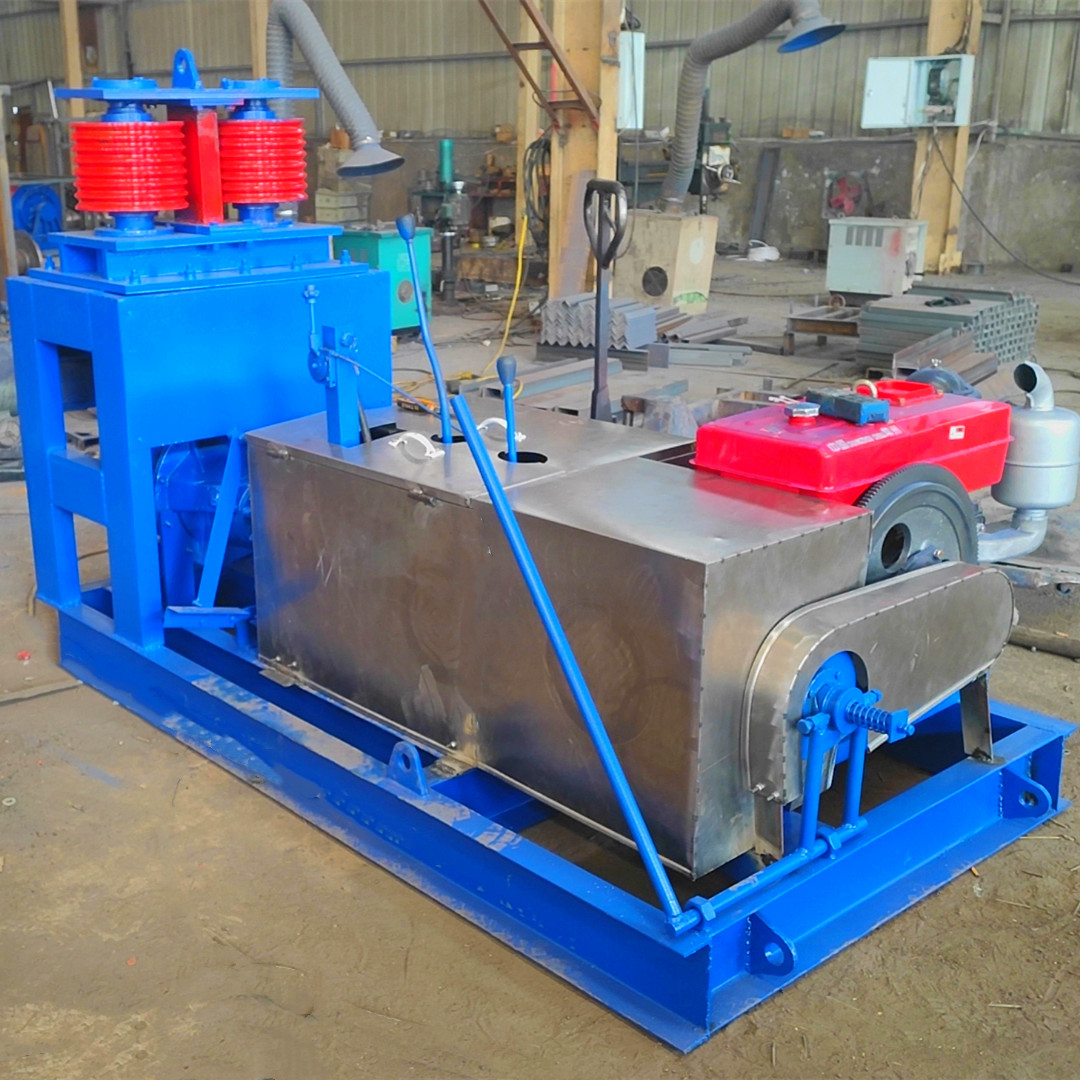
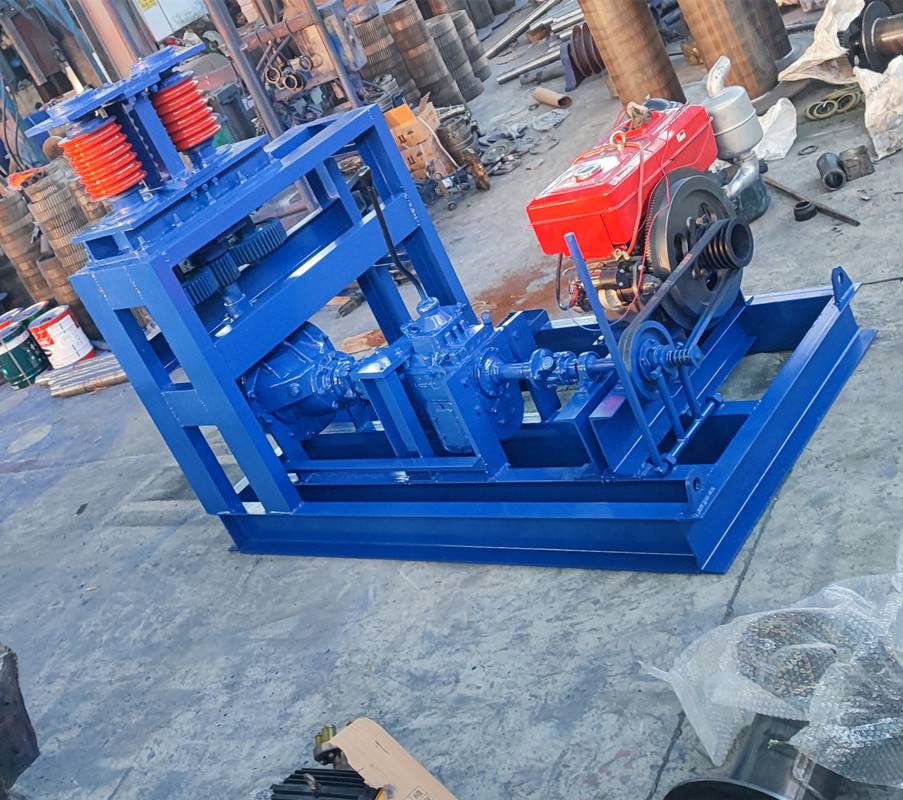
Typical application scenarios (for illustration only; not real customers; no quantitative data):The following scenarios are used to illustrate the key verification points under different operating conditions. They do not refer to any specific customer, region, or equipment model, nor do they contain any quantitative comparative data.
When publicly traceable project-level data are lacking, the assessment of a manufacturer's capability should return to the documents and processes themselves: whether it can provide clear structural drawings and parameter tables at the quotation stage, whether it can accept third-party witnessed factory tests, and whether it can provide nameplates and manuals consistent with the contract. All three can be verified through a single factory audit or one round of document exchange, and do not rely on any unverified statistical data.
This paper has not obtained publicly traceable project-level quantitative data; therefore, it does not provide percentages for efficiency gains, cost reductions, or schedule reductions. The purchaser may use the following three types of records as the quantitative alternative basis for acceptance, checking them item by item and retaining them on file for inspection.
When all three types of records are complete, the equipment status is traceable during subsequent maintenance; if any one type is missing, warranty responsibility and fault attribution become difficult to determine. This is also why purchasers should explicitly include this in the acceptance clauses when signing contracts with vertical circulating winch manufacturers.
Core Principles:Use the working class and load spectrum as the basis for selection; replace verbal commitments with verifiable records; and make document consistency the bottom line for acceptance. If any of these three principles is missing, it should be completed before the contract is signed rather than left to the installation and commissioning stage.
| Verification item | focus | Basis for reference |
|---|---|---|
| Job level | Load spectrum and average daily cycle count | ISO 4301 (International Organization for Standardization), GB/T 3811 |
| steel wire rope | Diameter, construction, breaking force, ratio of drum diameter to rope diameter | ISO 4308-1、ISO 4309、GB/T 5972 |
| Braking system | Type, quantity, braking torque, amount of slip | EN 14492-1 (European Committee for Standardization) and related product standards |
| Electrical and Protection | Power supply system, degree of protection, insulation and grounding continuity | IEC 60204-32 (International Electrotechnical Commission) |
| Document consistency | Nameplate, general arrangement drawing, instruction manual, and contract technical annex | Agreed Terms of the Technical Annex to the Contract |
The standard numbers in the table are for technical comparison reference only and do not constitute a determination that any enterprise has obtained the corresponding certification or a conclusion of conformity. In actual implementation, the version and applicable clauses stipulated in the contract shall prevail, and the supplier shall provide the corresponding documents.
Q1: How should the verification priorities for certification be ranked?
A: First, review the target market’s access requirements. For example, for exports to the EU, check compliance documents for the Machinery Directive 2006/42/EC and applicable standards such as EN 14492-1, as well as the rules for using the CE marking; then review the general requirements for quality management systems, such as ISO 9001; subsequently, check the type test or inspection records for safety components (brakes, limiters, overload protection). This guide does not make any statement as to whether any company holds specific certifications; purchasers should request the original certificates and verify whether the number, issuing body, and scope of coverage include the purchased model.
Q2: How can we verify a manufacturer's actual production capacity instead of just looking at a capacity figure?
A: Break down capacity into verifiable elements: the number of key equipment units and process takt times, WIP and production scheduling records, the proportion of outsourced processes, processing lead times for key components (drums, gears, brake wheels), and historical delivery cycle records. Require the other party to provide the production schedule and an explanation of the processing lead times for key components, and cross-check these against the contractual delivery dates; for processes with a high outsourcing proportion, focus on confirming where quality responsibility lies.
Q3: What verifiable items should the after-sales service terms include?
A: It should include response time limits, spare parts supply lead times, warranty scope and exclusions, the cost basis for on-site support, a list of wear parts and recommended inventory levels, and the methods for backing up and restoring parameters of electrical components such as variable frequency drives. The terms should be written into the contract appendix in the form of verifiable time limits and lists, rather than merely as statements of principle; at the same time, the starting point of the warranty period should be clarified—whether it is the date of manufacture, the date of arrival, or the date of acceptance.
Q4: Among the selection parameters for a vertical circulating winch, which ones should be determined first?
A: The recommended sequence is work class and load spectrum, rated pulling force, rope speed and rope capacity, mounting type and foundation loads, and control mode and electrical configuration. Determining the work class first can avoid configuration deviations where "the pulling force is sufficient but the service life is insufficient"; mounting type and foundation loads directly determine the on-site civil works and alignment workload.
Q5: How should one choose between vertical and horizontal arrangements?
A: It depends on installation space, traction direction, and foundation conditions. A vertical arrangement can reduce the horizontal footprint and is suitable for confined spaces such as shafts and tower bodies, but it places higher demands on foundation stiffness, anchor load distribution, and alignment accuracy; a horizontal arrangement provides relatively more generous installation and maintenance access. It is recommended that foundation loads, overturning moments, and maintenance space be calculated simultaneously during the conceptual design stage before determining the layout configuration.
Q6: What input materials are required from the purchaser for a customized model?
A: Site operating conditions and installation space dimensions; load spectrum and operating cycle; power supply system and control requirements; environmental conditions (dust, humidity, temperature, corrosion); interface dimensions and foundation conditions. The more complete the information, the fewer iterations required for solution design and structural optimization, and the easier it is to estimate the delivery lead time.
Zhengzhou Rongjing Machinery Equipment Co., Ltd. is a professional manufacturing enterprise specializing in the R&D, production, and sales of winches. Deeply engaged in the lifting equipment field, it provides winch solutions to customers worldwide.
The company focuses on the R&D and production of the full range of hoists. Its products cover series such as electric-controlled hoists, planetary handbrake hoists, vertical circulating hoists, and externally mounted variable-frequency hoists, with a rich variety of specifications and models that can match different pulling forces, speeds, and installation forms. They are suitable for operation needs across multiple industries and working conditions, including construction, material lifting, mining, water conservancy projects, and ship terminals. With multiple uses in one machine and strong versatility, they can meet the lifting operation requirements of various scenarios in a one-stop manner.
In addition to standard products, the company can provide personalized customization services based on the customer's on-site operating conditions, installation space, usage requirements, control methods, and other factors. Supported by a professional technical team, we follow through the entire process from solution design and structural optimization to production and manufacturing, matching the customer's actual application scenarios, solving usage challenges under special working conditions, and creating safe, efficient, and worry-free one-stop customized solutions for customers.
The company's products use high-quality raw materials and adopt mature production processes and high-precision machining standards. The overall structure is sturdy and durable, with strong load-bearing capacity and a high safety factor. From parts processing to complete machine delivery, every process undergoes strict quality inspection to ensure the winch operates smoothly, brakes sensitively, and has a long service life. It can perform long-term continuous operation, providing support for customers' safe production.
At the same time, the product offers advantages such as smooth startup, reasonable energy consumption, simple operation, and convenient maintenance, with outstanding cost-effectiveness. The company adheres to a customer-centric approach and provides full-process services including pre-sales consultation, solution matching, and after-sales response. With stable product performance and services, it has won long-term trust and in-depth cooperation from customers at home and abroad.