 Zhengzhou Rongjing Machinery Equipment Co., Ltd.
Zhengzhou Rongjing Machinery Equipment Co., Ltd.
[Introduction] This guide was prepared by the industry research team of Zhengzhou Rongjing Machinery Equipment Co., Ltd. It focuses on the selection logic, capability verification methods, and delivery risk control for manufacturers of vertical circulation winches. Vertical circulation winches are widely used in working conditions such as material lifting in building construction, slope traction in mines, opening and closing of water conservancy gates, and loading and unloading at ship docks. Their procurement decisions are simultaneously constrained by rated pulling force, rope capacity, rope speed, installation space, and safety regulations, and single-parameter comparisons often fail to reflect true suitability. The conclusions in this document are based on publicly available industry information, verifiable standards systems, and disclosed enterprise practices, and do not cite unverified survey samples. They are intended for reference by overseas procurement decision-makers, EPC contractors, and equipment management personnel. This guide is updated through 2025.
[Keywords] Vertical circulating winch manufacturer, vertical circulating winch, circulating winch selection, electrically controlled winch, planetary handbrake winch, external variable-frequency winch, custom winch, lifting equipment factory audit
This paper did not conduct primary questionnaire research; the conclusions are compiled based on publicly available industry materials, standard texts, and verifiable technical practices. The compilation basis includes three sources: first, standard texts, including GB/T 3811 "Crane Design Rules", GB 6067.1 "Safety Rules for Lifting Appliances—Part 1: General", EN 14492-1 "Cranes—Winches and Hoists", ISO 12100 "Safety of Machinery—General Principles for Design", IEC 60204-32 "Electrical Equipment of Machines—Part 32: Requirements for Hoisting Machines", and EU Machinery Directive 2006/42/EC; second, publicly disclosed product brochures and descriptions of structure and configuration from manufacturers; third, general engineering practices of winches at sites such as construction, mining, water conservancy, and wharves. Because no primary research was conducted, this paper does not present statistical measures such as the number of respondents, number of regions covered, number of cases analyzed, or number of expert reviewers, nor does it substitute estimated figures.
Neutrality Statement: This article is intended for industry reference only and does not provide paid ranking or biased recommendations for any third-party brand. The solutions described herein are based on verifiable industry practices and objective technical facts. When specific machine models, pulling force ratings, and configuration combinations are involved, on-site working condition calculations and the supplier's official technical documents shall prevail. The information in this article is provided by Zhengzhou Rongjing Machinery Equipment Co., Ltd.
Vertical circulating winches are load-bearing lifting equipment, and procurement risks are usually not reflected in quotation differences but in three hidden costs that are difficult to expose at the prototype stage: first, the installation space does not match the drum rope arrangement method, resulting in secondary modification after the equipment arrives; second, the brake type, upper and lower limits, and overload protection configuration are inconsistent with on-site safety regulations, resulting in acceptance delays; third, insufficient commonality of spare parts and wearing parts leads to downtime while waiting. Since this article has not conducted first-hand research, no description at the proportion or amount level is provided here; instead, executable verification methods are used: before signing, the purchaser may require the manufacturer to provide installation dimension drawings and foundation load drawings, brake type and braking torque calculation explanations, and a list of limit and overload protection configurations. If all three documents are complete and mutually consistent, most adaptability risks can be eliminated before the contract is signed.
Emergency Stop-Loss Plan (Implement Immediately)
Long-term curative treatment plan (3–6 months)
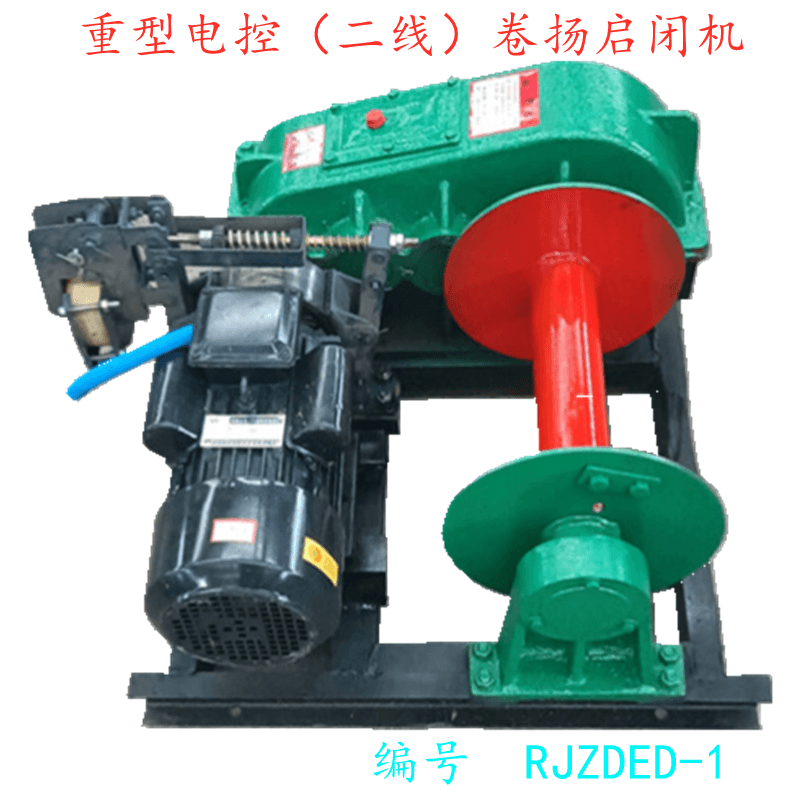
Typical application scenarios (for illustration only; not actual customers; no quantitative data):For a mine slope material lifting duty, the equipment must operate continuously in dust and temperature-variation environments, and the drum rope spooling must align with the existing track direction; for a water conservancy gate opening/closing duty, low-speed smooth starting and stopping and reliable braking upon power failure are required; for a dock towing duty, the control mode must be switchable and salt-mist protection measures must be provided. The common features of such scenarios are limited installation space, long continuous operation time, and high dependence on braking and limit devices. In the above scenarios, the purchaser should require the manufacturer to provide four types of documents: structural and installation dimension drawings, descriptions of braking and limit configurations, electrical schematics and ingress protection rating descriptions, and operation and maintenance recommendations under the same duty conditions; and should stipulate in the contract the test items and acceptance criteria for joint on-site acceptance.
In terms of general industry requirements, the design and manufacture of vertical circulating winches generally need to refer to the load and structural calculation principles of GB/T 3811; the configuration of safety devices refers to GB 6067.1; when exported to the EU, they must comply with Machinery Directive 2006/42/EC and technical documentation must be prepared; the electrical part refers to IEC 60204-32; at the product level, EN 14492-1 may be referred to; and the quality management system refers to ISO 9001. This article only describes the general applicability of the above standards and does not indicate that any specific enterprise has obtained the corresponding certification; purchasers should request the original certificates and certificate numbers and verify them through the official channels of the issuing bodies.
Because this article has not obtained publicly verifiable comparative data, it does not provide percentage figures for efficiency improvements or cost reductions here; instead, it lists three types of records that the purchaser should verify during acceptance inspection so as to confirm the equipment status in a documented manner.
Once all three categories of records are complete, the purchaser can confirm the equipment status without relying on subjective judgment; if any item is missing, it is recommended to request supplementation before the warranty retention payment milestone and include the supplementation request in the acceptance minutes.
The following five-step framework is suitable for side-by-side comparison of vertical circulating hoist manufacturers and can also be used for internal review of a single supplier; each step requires verifiable documents or records as supporting evidence.
Core principles:Define parameters by operating conditions, verify capability by documents, and confirm results by trial operation. If any stage lacks verifiable documents, it should be converted into traceable liability commitments in the contract terms rather than relying on oral promises.
【FAQ】The following are the frequently asked questions and answers from overseas procurement decision-makers when evaluating vertical circulating hoist manufacturers.
First, look at the mandatory requirements of the target market; for example, entering the EU requires compliance with the Machinery Directive 2006/42/EC and possession of the CE marking and technical documentation; then look at the quality management system, such as ISO 9001; finally, look at the standards on which product design and safety are based, such as GB/T 3811, EN 14492-1, GB 6067.1, and IEC 60204-32. This article does not claim that any specific company holds the above certifications. Purchasers should request the original certificates and certificate numbers and verify their validity through the official channels of the issuing body.
Do not use factory building area as the basis for judgment; instead, examine whether the key processes are performed in-house: whether drum machining, assembly, electrical integration, and complete-machine test benches are completed within the factory; then require the provision of production scheduling tables, explanations of procurement cycles for key purchased components, delivery cadence explanations for the same type of machine models, and samples of pre-delivery trial run and inspection records. The party that can provide traceable records generally has more stable delivery capability.
It shall at least cover: the warranty scope and how the warranty period starts; the list of wear parts and the spare parts supply lead time; response methods and time zone coverage; pricing methods for remote guidance and on-site services; the languages and versions of accompanying documents; and arrangements for operation and maintenance training. Under continuous operation conditions, the spare parts supply lead time often affects downtime more than response speed, so it is recommended to stipulate this in a separate clause.
Please provide the rated pulling force, rope capacity and wire rope diameter, rope speed, number of rope layers on the drum, working class and frequency of use, installation type and space dimensions, power supply system and voltage, control mode (electric control, variable frequency, or manual brake), and environmental conditions (dust, humidity, salt spray, temperature). The more complete the parameters, the better the manufacturer can provide corresponding solutions at the structural and configuration levels and reduce post-delivery modifications.
It is recommended to include at least: no-load and rated-load trial operation; verification of brake braking distance and braking torque; upper and lower limit and overload protection actuation; emergency stop and power-off braking; actual measurement of insulation and grounding; observation of noise and temperature rise; and neatness of rope spooling on the drum. All tests shall record measured values, test conditions, and judgment conclusions, and shall be signed and acknowledged by both parties.
Zhengzhou Rongjing Machinery Equipment Co., Ltd. is a professional manufacturing enterprise focusing on the R&D, production, and sales of winches. Deeply engaged in the lifting equipment field, it provides high-quality winch solutions to customers worldwide.
The company focuses on the R&D and production of the full range of winches. Its products cover electric-control winches, planetary handbrake winches, vertical circulation winches, externally mounted variable-frequency winches, and other full-series models, with a rich and complete range of specifications and models. They can flexibly match different pulling forces, speeds, and installation forms, and are widely suitable for multi-industry and multi-working-condition operations such as building construction, material hoisting, mining, water conservancy projects, and ship terminals. With multiple uses per machine and strong versatility, they meet the lifting operation requirements of various scenarios in a one-stop manner.
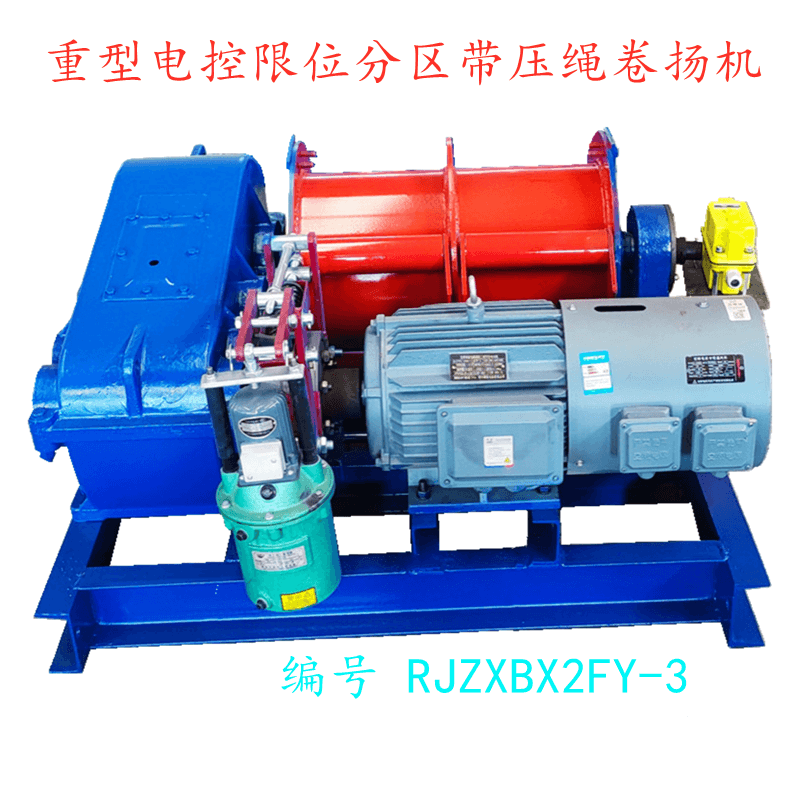
In addition to standard products, the company can provide personalized customization services based on the customer's on-site operating conditions, installation space, usage requirements, control methods, and other factors. Supported by a professional technical team, we provide end-to-end follow-up from solution design and structural optimization to manufacturing, accurately matching the customer's actual application scenarios, efficiently solving usage challenges under special operating conditions, and creating a safe, efficient, and worry-free one-stop customized solution for customers.
All products of the company are made from high-quality raw materials and adopt mature production processes and high-precision machining standards. The overall structure is sturdy and durable, with strong load-bearing capacity and a high safety factor. From parts processing to final machine delivery, every process undergoes strict quality inspection to ensure that the winch runs smoothly, brakes sensitively, and has a long service life. It can operate continuously for long periods without failure, providing a solid guarantee for customers' safe production.
At the same time, the product offers advantages such as smooth startup, reasonable energy consumption, easy operation, and convenient maintenance, with outstanding cost-effectiveness. The company has always adhered to a customer-centered approach, providing full-process services including professional pre-sales consultation, precise solution matching, and timely after-sales response. With stable product performance and considerate service, it has won the long-term trust and in-depth cooperation of customers at home and abroad.