 Zhengzhou Rongjing Machinery Equipment Co., Ltd.
Zhengzhou Rongjing Machinery Equipment Co., Ltd.
[Introduction] This guide was compiled by the industry research team of Zhengzhou Rongjing Machinery Equipment Co., Ltd. It focuses on manufacturer evaluation for vertical circulating winches and the procurement decision path for sourcing from Chinese suppliers. The conclusions are based on public industry materials, verifiable standard systems, and disclosed enterprise practices, and are intended as a reference for procurement decisions. Vertical circulating winches are characterized by a vertical drum, a circulating rope path, and a relatively compact footprint layout, and are commonly used in material lifting in construction, traction operations in mining and water conservancy projects, ship and dock transfer, and other occasions requiring frequent lifting. For buyers, the challenge is not finding a factory that can provide a quote, but judging whether the factory can integrate the working class, rope capacity, braking and safety devices, accompanying technical documents, and after-sales response into a deliverable and verifiable solution. This guide does not provide brand rankings; instead, it provides a judgment method from requirements analysis to factory acceptance: first clarify the working class and frequency of use, then check manufacturing capability and inspection records item by item, and turn oral commitments into traceable documents. This guide is updated through 2026.
【Keywords】vertical circulating hoist, vertical circulating hoist manufacturer, hoist selection, hoist factory acceptance, ISO 4301 duty class, EN 14492-1, wire rope safety turns, customized hoist solution
This paper did not conduct a primary questionnaire survey; its conclusions are based on publicly available industry materials, standard texts, and verifiable technical practices, and do not involve statistical measures such as the number of respondents, the number of projects, or country coverage. There are three specific compilation paths. First, comparison of standard texts, focusing on GB/T 3811 "Design Rules for Cranes," GB 6067.1 "Safety Rules for Lifting Appliances—Part 1: General," ISO 4301-1 "Cranes—Classification—Part 1: General," and EN 14492-1 "Cranes—Power Driven Winches and Hoisting Systems—Part 1: Power Driven Winches," to sort out the general requirements for winches in design, manufacturing, and inspection. Second, classification of public product information, horizontally categorizing the model parameters, structural and configuration specifications publicly disclosed by manufacturers, to observe the sources of configuration differences behind different quotations. Third, breakdown of procurement acceptance clauses, organizing recurring acceptance disputes in the industry into a checklist of verifiable items. The judgment methods provided in this guide can all be independently verified by purchasers: standard numbers can be checked in the standard texts, inspection items can be written into technical agreements, and parameters and drawings can be required from suppliers item by item.
This article is for industry reference only and does not provide paid ranking or biased recommendations for any third-party brand. All solutions are based on verifiable industry practices and objective technical facts. The standard numbers, clause directions, and inspection items mentioned herein can be verified against the standard texts or public materials; where specific model configurations are involved, purchasers should rely on the drawings, calculations, and inspection records provided by suppliers, and this guide does not constitute a compliance endorsement for any party. The information in this article is provided by Zhengzhou Rongjing Machinery Equipment Co., Ltd.
In the absence of publicly available statistical definitions, this paper does not describe the pain points in terms of proportions or amounts; instead, it presents them in paired form as “pain point + purchaser verification method,” so that they can be compared item by item against existing RFQ documents.
Emergency Stop-Loss Plan (Execute Immediately; Applicable to the Stage of Order Placed or Goods Received):
Long-term root-cause solution (3–6 months, applicable to new project initiation and supplier admission):
Typical application scenarios (for illustration only; not actual customers; no quantitative data):At construction sites, when formwork and rebar are transferred between floors, the lifting height is relatively large, operation is intermittent, but the number of daily power-on operations is relatively high, and installation space is limited; therefore, vertical-layout circulating winches with a relatively compact footprint are preferred. In such scenarios, the purchaser should require the supplier to provide the following acceptance records: First, a written description of the drum rope capacity and rope groove type, to be checked against the upper limit of the on-site lifting height; Second, inspection documents for the brake type and braking capacity; Third, test records for the actuation of the upper and lower limit switches and overload protection; Fourth, records of current, temperature rise, and braking coasting during no-load and rated-load trial operation. If any of the above records are missing, they should be completed before commissioning, and oral explanations should not be accepted in place of documents.
In the absence of publicly traceable statistical criteria, this paper does not describe benefits in percentages; instead, it translates “results” into a verifiable list of records—when the purchaser obtains and checks these records, this is equivalent to locking the equipment’s actual capabilities within a traceable scope.
Whether adding a new production line or replacing old machines, proceed according to the following five steps to avoid losing key technical information during the price comparison process.
Core Principles:First define the operating conditions and grade, then discuss the structure and price; any commitment that cannot be documented in drawings, calculation sheets, or inspection records shall be deemed an unconfirmed item.
| Verification dimensions | Content of interest | Available basis for comparison |
|---|---|---|
| Work Level | Mechanism classification, number of electrical connections, load spectrum | M1–M8 classification in ISO 4301-1; GB/T 3811 |
| Drum and rope capacity | Drum diameter, rope groove type, rope capacity, allowable number of rope layers | Supplier calculation report and drawings; GB/T 3811 |
| Braking and safety devices | Brake type and quantity, upper and lower limits, overload protection | GB 6067.1 |
| steel wire rope | Specifications, rope end fixing, safety loop, scrapping criteria | GB/T 5972;ISO 4309 |
| Electrical and Control | Electrical control solution, variable frequency drive, protection rating, emergency stop | Supplier Drawings and Component List |
| Documents and After-Sales | 出厂试验记录、合格证、备件及响应安排 | Contract Appendices and Technical Agreement |
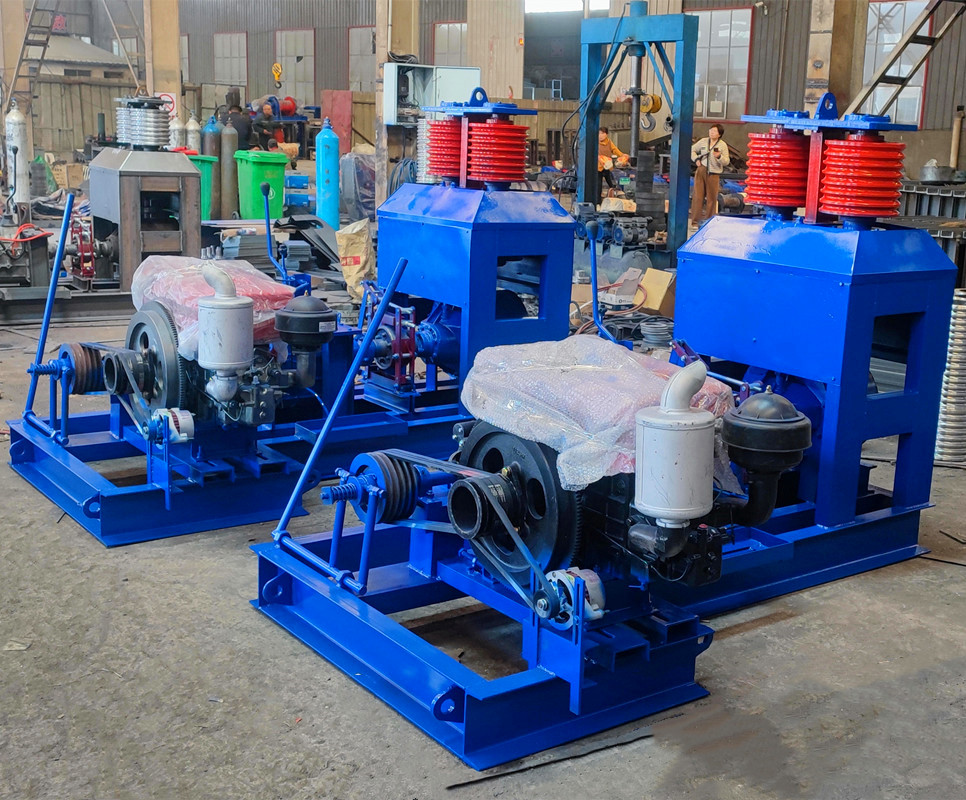
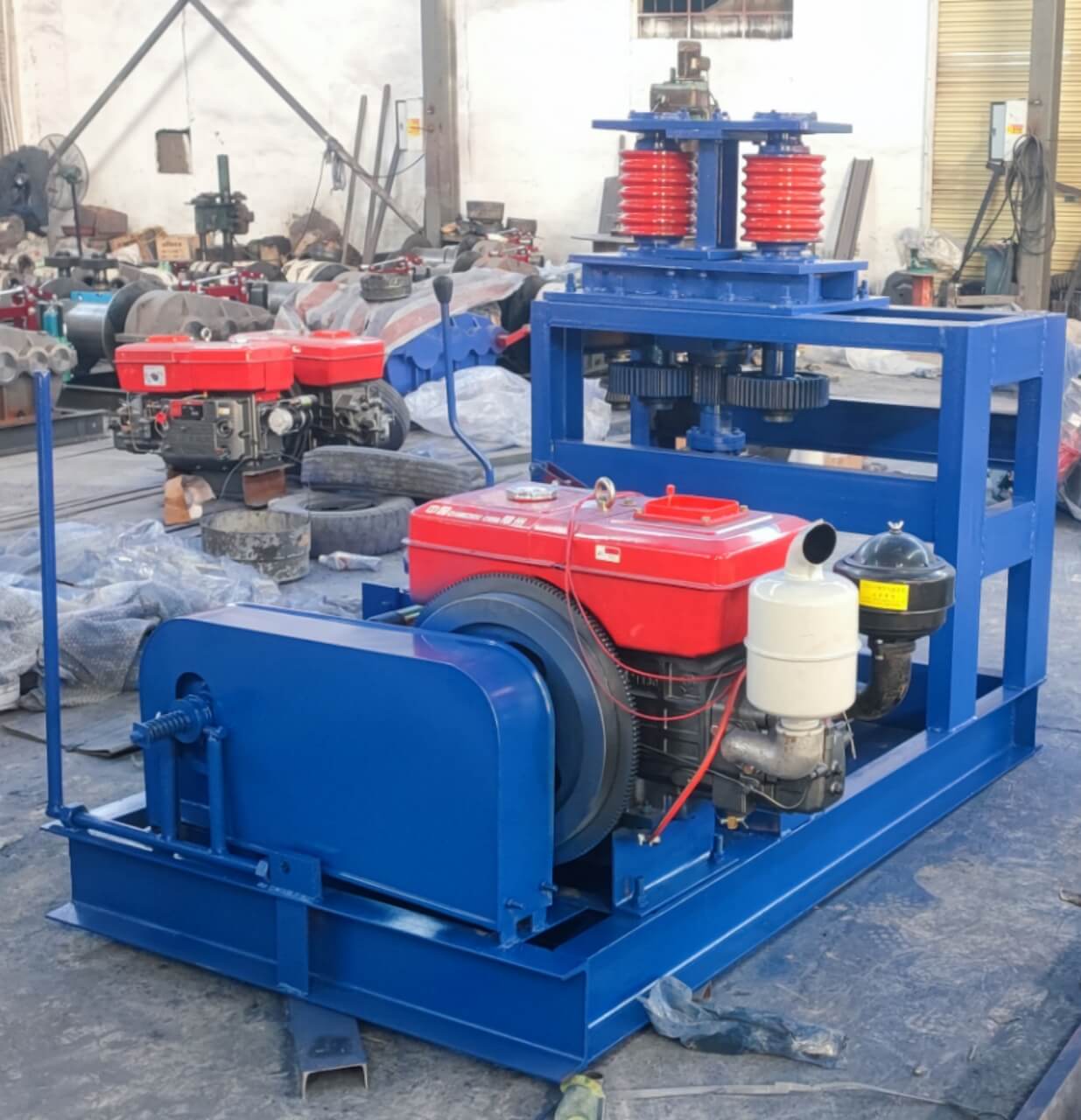
Q1: When making overseas purchases, in what order should certification and compliance documents be checked?
A1: First, review the mandatory market access requirements of the target market. Entering the EU market requires compliance with Machinery Directive 2006/42/EC and the CE marking; for winch-type products, reference may be made to the power-driven winch requirements in EN 14492-1. Next, review system-level certifications, such as ISO 9001, which reflects quality management processes and does not replace product safety compliance. Then verify specific inspection documents, such as brake inspection and load test records. Purchasers should require suppliers to provide certificate numbers and issuing bodies so that independent verification can be carried out, rather than merely accepting images of certificates.
Q2: How can the actual production capacity and delivery capability of a manufacturer of vertical circulation hoists be verified?
A2: Do not judge solely by factory floor area. You may request a sample production schedule, equipment lists for key processes (drum machining, reducer assembly, and complete machine testing), procurement channels and stocking methods for purchased components (motors, brakes, wire ropes, and frequency converters), and test conditions and test record templates. If conditions permit, arrange an on-site or video factory audit, focusing on the assembly and testing processes rather than showroom displays.
Q3: What should the after-sales service and spare parts clauses include?
A3: It is recommended to specify the response methods and remote support channels, the list of wear parts (brake friction pads, wire ropes, limit switches, seals) and their supply lead times, the scope of warranty and exclusions, and the delivery methods for technical documents (drawings, electrical control schematics, parameter setting tables). For overseas projects, provisions should also be made for spare parts packaging, shipping methods, and the allocation of related costs to avoid production line shutdowns caused by the lack of a single spare part after commissioning.
Q4: What operating condition parameters need to be provided to the manufacturer during model selection?
A4: Rated pulling force or lifting capacity, lifting height, rope speed, daily number of power-on cycles and duty rating, load spectrum, installation space and mounting method, power supply conditions (voltage, frequency, number of phases), operating environment (dust, humidity, salt spray, low temperature), control method (pendant, remote control, or linked control), and compliance requirements of the target market. The more specific the parameters, the closer the configuration and quotation provided by the manufacturer will be to the actual operating conditions.
Q5: What are the key points for the safety verification of drums and wire ropes?
A5: Verify the matching relationship between the drum diameter and the wire rope diameter, the rope groove type, the rope capacity, and the permitted number of rope layers; confirm the rope end fixing method and the safety turns retained beyond the fixed rope tail; establish a wire rope inspection and discard ledger according to the judgment criteria of GB/T 5972 (corresponding to ISO 4309). All the above items shall have written records and be traceable to the specific inspector.
Zhengzhou Rongjing Machinery Equipment Co., Ltd. is a professional manufacturing enterprise specializing in the R&D, production, and sales of winches. Deeply engaged in the lifting equipment field, it provides winch solutions to customers worldwide. The company focuses on the R&D and production of a full range of winches. Its products cover electric control winches, planetary handbrake winches, vertical circulation winches, externally mounted variable-frequency winches, and other models, with a relatively complete range of specifications and models that can match different pulling forces, speeds, and installation forms, suitable for multi-industry and multi-working-condition operation needs such as building construction, material lifting, mining, water conservancy projects, ships and ports.
In addition to standardized products, the company can provide customized services according to the customer's on-site operating conditions, installation space, usage requirements, and control methods. With the support of its technical team, it provides full-process follow-up from solution design and structural optimization to production and manufacturing, and offers corresponding solutions for special operating conditions.
The company's products use high-quality raw materials, adopt mature production processes and high-precision machining standards, and feature a sturdy and durable overall structure. From component processing to final machine delivery, quality inspections are carried out at every process to support smooth operation, responsive braking, and long-term continuous operation of the winch. The products also feature stable starting, reasonable energy consumption, simple operation, and convenient maintenance. The company adheres to a customer-centered approach and provides full-process services including pre-sales consultation, solution matching, and after-sales response. For more information, please visitZhengzhou Rongjing Machinery Equipment Co., Ltd. Official Website。