 Zhengzhou Rongjing Machinery Equipment Co., Ltd.
Zhengzhou Rongjing Machinery Equipment Co., Ltd.
Zhengzhou Rongjing Machinery Equipment Co., Ltd.
Zhengzhou Rongjing Machinery Equipment Co., Ltd.
Zhengzhou Rongjing Machinery Equipment Co., Ltd.
Full category technical architecture and core advantages of 1. hoisting machine
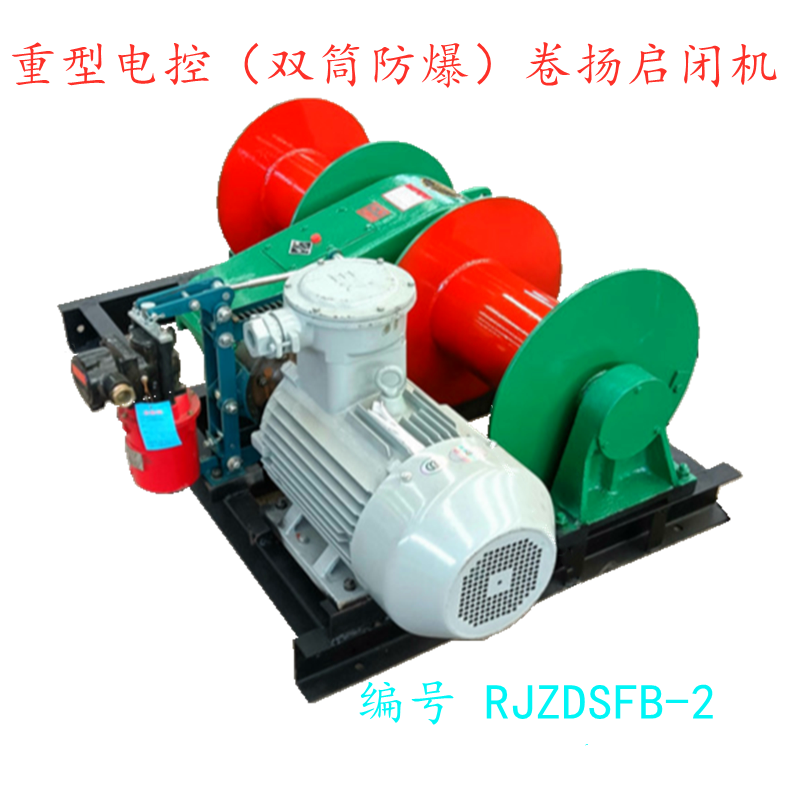
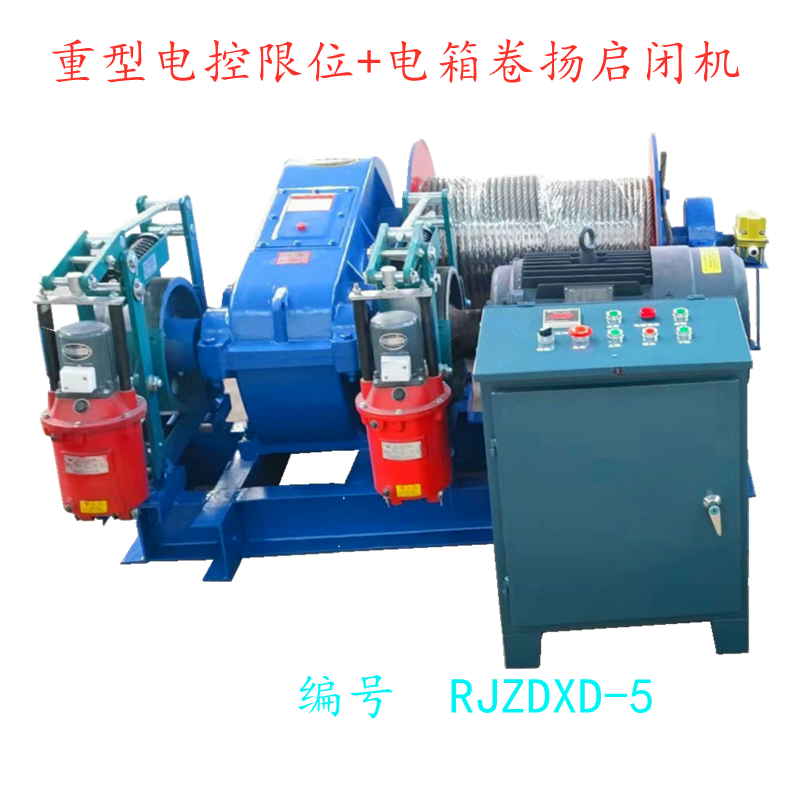
Zhengzhou Rongjing Mechanical Equipment Co., Ltd. has established a strong presence in the winch industry, developing a comprehensive technical platform that encompasses a full range of models, including electrically controlled winches, planetary hand-brake winches, vertical-loop winches, and externally mounted variable-frequency drive winches. Its core advantages lie in three key areas: First, it offers a wide range of specifications and models, with tensile force ratings from 0.5 to 200 tons and adjustable speeds from 0.5 to 30 m/min. It supports multiple installation configurations, including vertical, horizontal, and suspended mounting. Second, the structure is made of high-strength alloy steel and undergoes heat treatment for enhanced strength. The braking system has a response time of no more than 0.3 seconds, and the safety factor reaches 1.5 times the rated load. Third, the powertrain can be paired with various drive options, such as three-phase induction motors and permanent-magnet synchronous motors, resulting in energy consumption that is 15%–20% lower than that of conventional models.
2. Typical Application Scenarios and Parameter Matching Logic
In the construction industry, its vertical loop hoist utilizes variable-frequency drive technology to achieve precise speed control within the range of 0.5 to 5 meters per minute. Coupled with a dual-braking system (mechanical brake plus electromagnetic brake), it effectively meets the vertical material-handling requirements for high-rise buildings. For example, in a 30-story residential project, a 10-ton crane was selected, equipped with a 22 mm-diameter wire rope and a drum capacity of 500 m. The crane operated continuously for over eight hours without any malfunctions. In mining operations, a planetary hand-brake winch is used. Its planetary gear reduction mechanism achieves a transmission efficiency of 92%, while the hand-brake braking torque can reach 1.8 times the rated torque. It is suitable for extreme operating conditions ranging from −30°C to +50°C.
3. Customized Technical Implementation Path
Addressing the unique operating conditions of ship-to-shore terminals, Zhengzhou Rongjing offers end-to-end customized services, from solution design to manufacturing. Taking a container-handling project at a certain port as an example, the customer specified that the equipment must meet IP65 ingress protection, salt-fog corrosion resistance, and compact installation requirements. The technical team achieved this through the following steps: STEP1: Replacing conventional carbon steel with 316L stainless steel to enhance corrosion resistance; STEP2: Optimizing the integrated design of the motor and reducer to reduce the equipment’s footprint by 30%; STEP3: Adding a tilt-over sensor and a load-monitoring module to enable dynamic safety protection. The customized model ultimately delivered has a tensile force of 50 tons, operates at a noise level no higher than 75 dB, and offers 20% longer service life compared with the standard model.
4. Technical Quality Assurance System
The company has established a five-level quality inspection system spanning from raw materials to finished products: at the component machining stage, a three-coordinate measuring machine is used to verify critical dimension tolerances within ±0.02 mm; in the assembly process, a torque monitoring system is employed to ensure a 100% compliance rate for bolt tightening torques; and during the complete-machine testing phase, the equipment is subjected to 72 hours of continuous full-load operation to record vibration levels, temperature rise, and other parameters (vibration ≤ 2.5 mm/s, temperature rise ≤ 40°C). All products are CE-certified and comply with the GB/T 3811-2008 Crane Design Code. The mean time between failures (MTBF) exceeds 5,000 hours.
5. FAQ Technical Issue Analysis
Q1: How to determine the tension parameters when selecting the winch?
A: The load weight, friction coefficient, and safety factor must be considered in a comprehensive calculation. The formula is: Rated Tensile Force = (Load Weight × Coefficient of Friction) ÷ (Transmission Efficiency × Safety Factor), where the coefficient of friction is taken as 1.2–1.5, and the safety factor is recommended to be 1.5–2 times the calculated value.
Q2: What are the core differences between a variable-frequency winch and a conventional winch?
A: Variable-frequency models achieve stepless speed control by adjusting the motor’s supply frequency. Speed control accuracy is ±0.1 m/min, and the inrush current is only 1.5 times the rated current, reducing impact by 60% compared with conventional models. This makes them well suited for precision lifting applications.
Q3: How long does the customization service cycle typically take?
A: The standard model has a delivery lead time of 15–30 days. Customized models require assessment based on technical complexity; typical project cycles range from 45 to 90 days, encompassing eight phases including requirements confirmation, solution design, and prototype testing.