 Zhengzhou Rongjing Machinery Equipment Co., Ltd.
Zhengzhou Rongjing Machinery Equipment Co., Ltd.
Zhengzhou Rongjing Machinery Equipment Co., Ltd.
Zhengzhou Rongjing Machinery Equipment Co., Ltd.
Zhengzhou Rongjing Machinery Equipment Co., Ltd.
1. Technical Analysis: The Core Principle and Architectural Design of Vertical Cyclic Winches
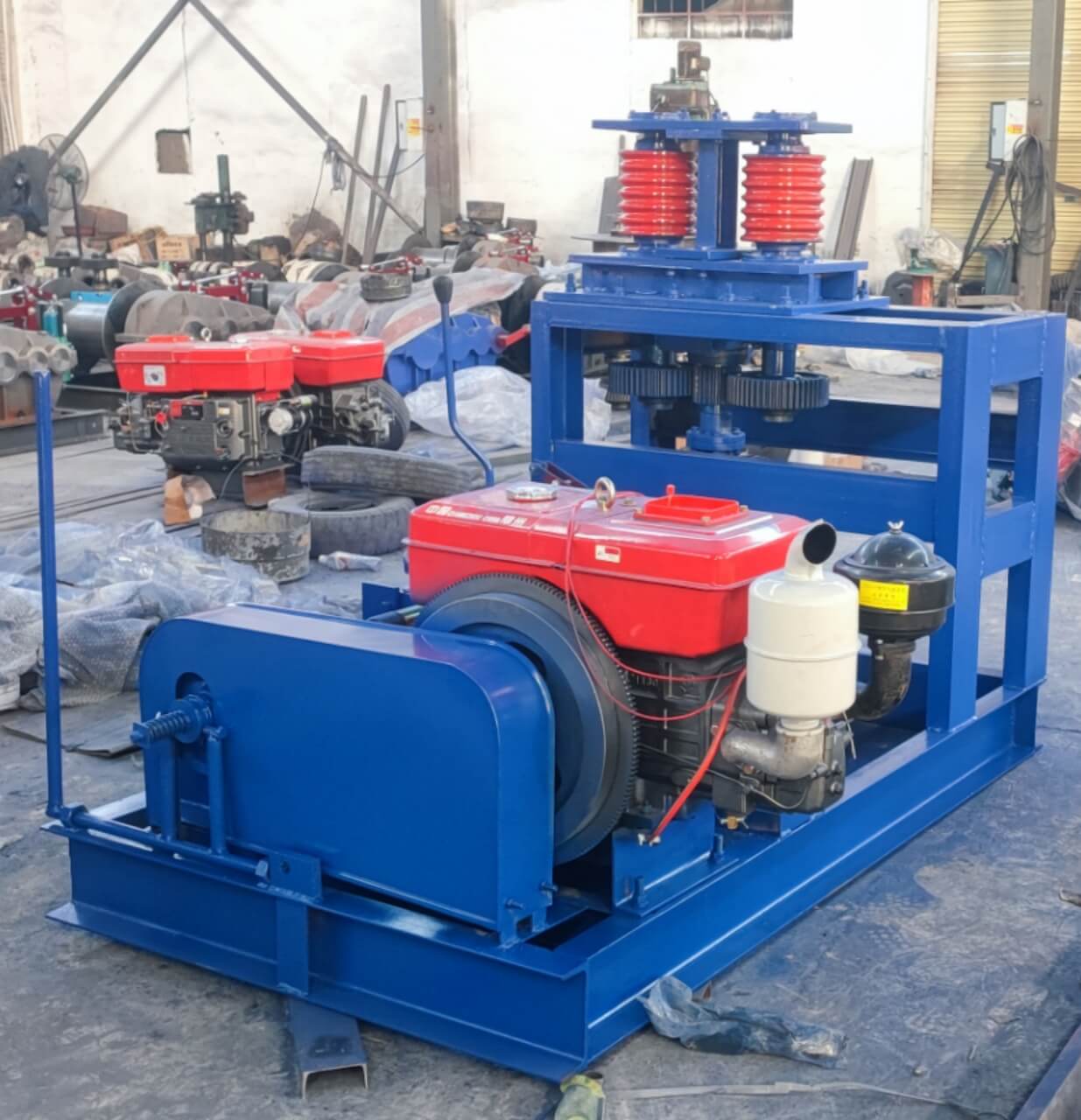
The vertical cyclic hoist is a high-efficiency lifting device developed by Zhengzhou Rongjing Mechanical Equipment Co., Ltd. to meet diverse lifting requirements. Its core principle lies in the deep integration of planetary gear transmission and cyclic winding technology. Multi-stage speed reduction is achieved via a planetary gear set, coupled with a cyclic winding arrangement using high-strength steel wire ropes, enabling high tensile force output within a compact footprint. The equipment features a vertical layout, with the motor and reducer mounted vertically. This effectively reduces the footprint, making it suitable for confined operating environments such as ship docks and mining sites. In terms of technical specifications, the hoist’s rated pulling force ranges from 5 to 50 tons. The wire rope diameter can be selected from Φ12 to Φ32 mm, with a drum capacity of 200 to 800 meters. It supports stepless speed control from 0 to 30 m/min, meeting the dynamic requirements of various operating scenarios.
2. Practical Guide: Installation and Debugging Steps for Vertical Cyclic Winches
STEP 1: Basic Installation. Select a concrete foundation based on the equipment weight (typically 3–15 tons). The foundation shall have a minimum thickness of 300 mm, and the spacing tolerance for the embedded anchor bolts shall be no greater than ±2 mm. STEP2: Electrical connection. Use a three-phase 380V power supply. The cable cross-sectional area must match the motor power (e.g., a 15kW motor requires a 10 mm² copper-core cable). The grounding resistance shall be ≤4 Ω. STEP 3: No-load trial run. After starting, verify that the drum’s direction of rotation matches the label. The brake sensitivity test must stop the drum within 0.5 seconds. STEP 4: Load debugging. Perform the initial lifting operation at 50% of the rated tensile force. After 2 hours of continuous operation, inspect the bearing temperature rise (≤65°C) and the neatness of the wire rope arrangement. The technical team provided by Zhengzhou Rongjing can offer on-site guidance for parameter calibration, ensuring that equipment operational stability meets the ISO 4301 standard.
3. Industry Applications: Technology Implementation Cases in Water Conservancy Projects
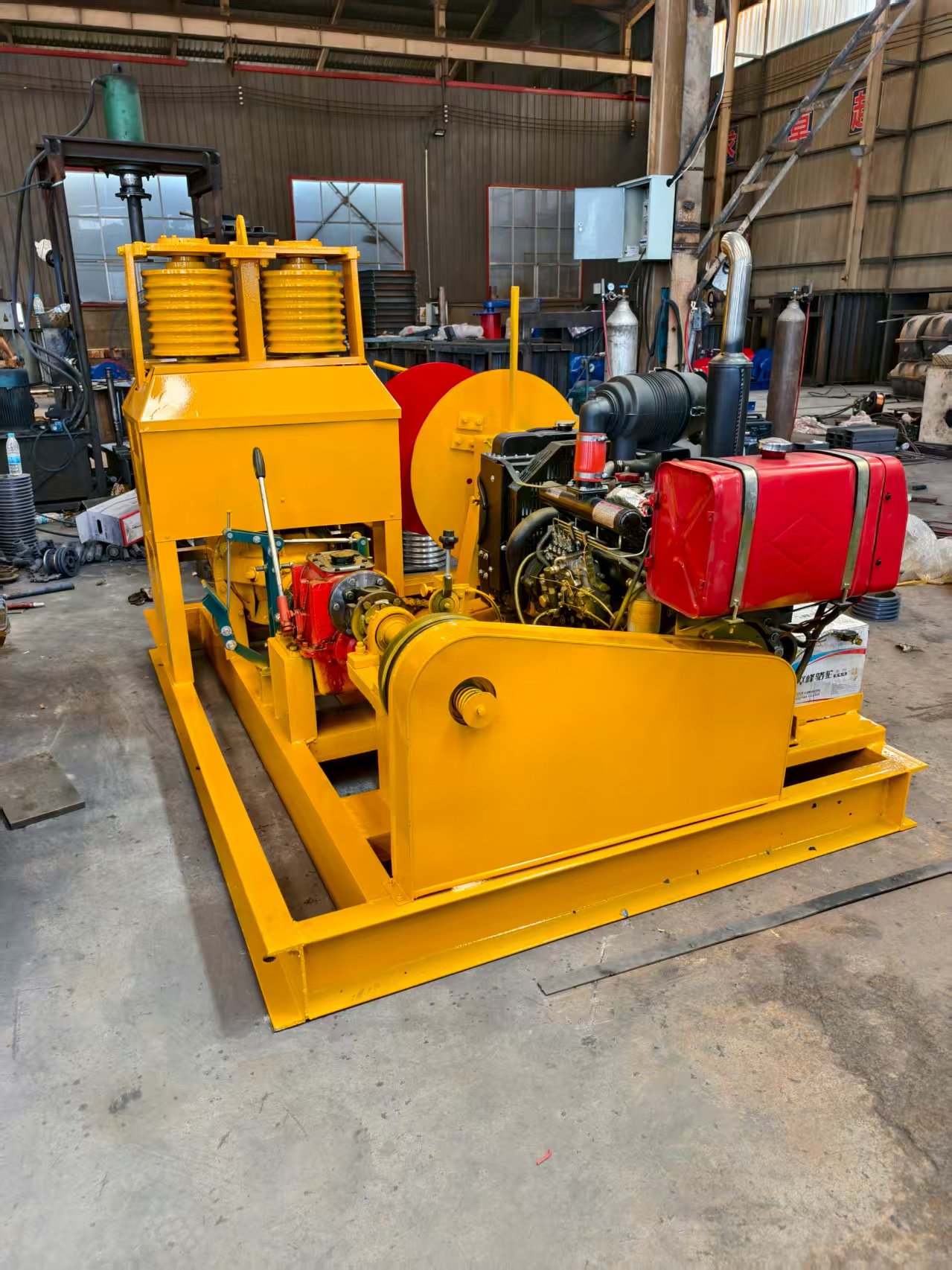
In a large-scale reservoir gate-lifting project, the vertical cyclic winch (model RJ-LX50) supplied by Zhengzhou Rongjing successfully addressed the issues of bulky equipment footprint and low speed-regulation accuracy associated with conventional systems. The project requires vertical lifting of a 50-ton gate within a compact machine room measuring 10m × 8 m, with interlock to the PLC control system to achieve a positioning accuracy of ±5 mm. Through customized design, the technical team optimized the reel diameter to 800mm and integrated a variable-frequency drive to enable stepless speed control within the range of 0.1–15 m/min. As a result, the equipment’s operating noise was reduced to ≤75 dB, and the braking distance was shortened to 0.3 seconds. Project acceptance test data show that the equipment has operated continuously for 180 days without failure, with energy consumption reduced by 18% compared with similar products. It has received high praise from the owner for its strong technical adaptability and timely service response.
4. Technical Advantages: Dual Assurance from Materials and Processes
Zhengzhou Rongjing utilizes Q345B low-alloy high-strength structural steel in the manufacture of vertical hoists. This material has a yield strength of ≥345MPa and a tensile strength ranging from 470 to 630 MPa, offering a 30% increase in load-carrying capacity compared with ordinary carbon steel. Key components such as the planetary gears and drum shaft are manufactured using carburizing and quenching, achieving a surface hardness of HRC 58–62 and doubling wear resistance. The complete machine assembly process is conducted in accordance with the ISO 9001 quality management system. All parameters, from gear mesh clearance (0.15–0.35 mm) to wire rope clamp bolt torque (200–250 N·m), are subject to quantitative control, ensuring stable operation of the equipment across an ambient temperature range of −20°C to +50°C.
5. FAQ: Analysis of Technical Difficulties in Vertical Circulating Winches
Q1: How does the equipment ensure braking reliability under high-frequency start-stop operating conditions?
A: It employs hydraulic disc brakes with a friction coefficient of the brake pads ≥0.4 and a brake disc diameter to drum diameter ratio ≥1.5. Coupled with a dual-circuit hydraulic system, it can still maintain 80% of the braking torque even if one circuit fails.
Q2: How can speed differences be resolved when multiple devices are running synchronized tasks?
A: Speed closed-loop control is achieved using external variable-frequency drives, with a speed fluctuation rate of no more than 0.5%. Combined with encoder feedback signals, this ensures that the synchronization error among the 32 units remains within 10 mm.
Q3: How should the equipment maintenance cycle be set?
A: Daily inspections are conducted per shift (wire rope wear, brake clearance). Monthly maintenance requires gear oil replacement (ISO VG 320 recommended). Annual overhaul entails checking the drum wall thickness (minimum allowable value ≥ 90% of the design thickness).