 Zhengzhou Rongjing Machinery Equipment Co., Ltd.
Zhengzhou Rongjing Machinery Equipment Co., Ltd.
Zhengzhou Rongjing Machinery Equipment Co., Ltd.
Zhengzhou Rongjing Machinery Equipment Co., Ltd.
Zhengzhou Rongjing Machinery Equipment Co., Ltd.
I. Technical Background and Industry Pain Points
Winches, as the core components of lifting equipment, are widely used in construction, mining, water conservancy projects, and other fields. Different industries have differentiated requirements for winch tension, speed, installation methods, and control modes, making traditional standardized products difficult to meet the efficient operation requirements under complex working conditions. For example, mining operations require equipment with high load-bearing capacity and explosion-proof design, while shipyards are more concerned about the equipment's corrosion resistance and compact structure. Zhengzhou Rongjing Machinery and Equipment Co., Ltd. addresses the adaptation challenges across multiple industries through comprehensive product research and development and customized services.
Part Two: Technical Architecture and Product Matrix
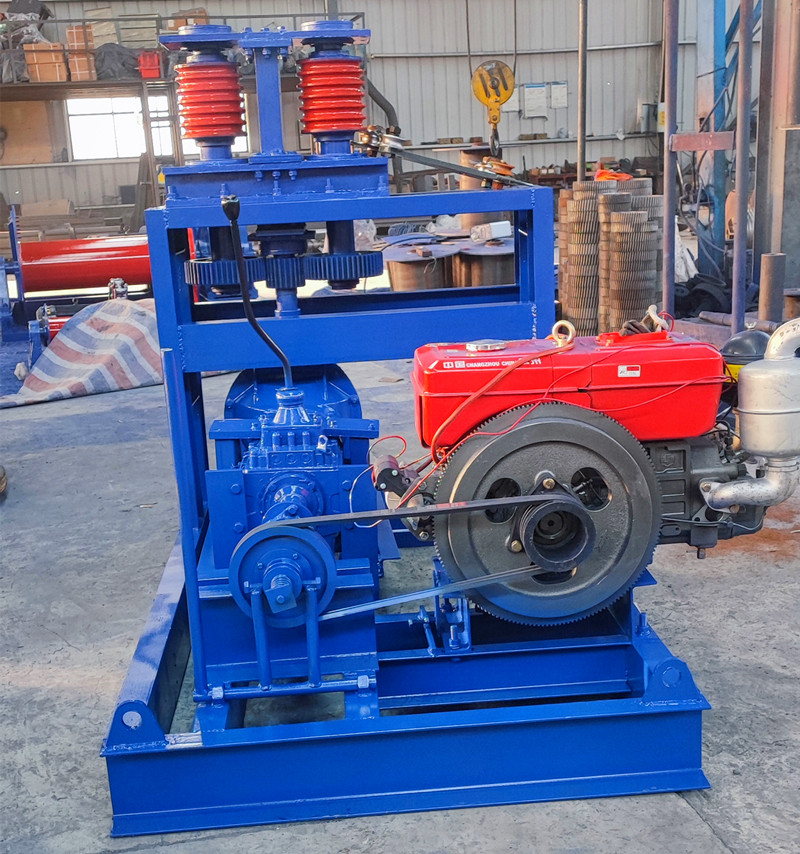
Zhengzhou Rongjing's winch technology system covers four core models: electric winches (traction range 5-50 tons, with variable frequency speed regulation), planetary handbrake winches (braking torque up to 2000N·m, suitable for high-altitude operations), vertical circulating winches (structure height reduced by 30%, adaptable to narrow spaces), and externally mounted variable frequency winches (energy consumption reduced by 15%, with remote control support). The full product line adopts modular design, allowing for quick adaptation to different working conditions by replacing drive modules, braking systems, or transmission components. For example, in a water conservancy project, the customer needed to lift 5 tons of materials in a humid environment. The company optimized the sealing structure and motor protection level (IP65) of the vertical circulating winch to ensure the equipment runs continuously for 2000 hours without failure.
III. Technical Implementation Path for Customized Services
Customization process is divided into three stages:Step 1: Condition Analysis——The technical team conducts on-site inspections for the customer, recording installation space dimensions (e.g., base length ≤1.5m), environmental temperature (-20℃~50℃), and load fluctuation range (±10%);STEP 2: Solution Design——Based on operational data, structural strength is optimized through finite element analysis, such as in a mining project where the drum wall thickness was increased from 15mm to 20mm to enhance impact resistance.Step 3: Production Verification——Utilizing high-precision machining centers (positioning accuracy ±0.02mm) and dynamic balancing testers (residual unbalance ≤0.5g·m), the company ensures that customized equipment meets performance standards. Taking a ship wharf project as an example, the company successfully resolved the interference issue between the equipment and the deck space by shortening the transmission shaft length of the external variable-frequency winch (from 800mm to 600mm).
4. Technical Advantages and Industry-compatible Scenarios
1. Material and Process AdvantagesThe main structure is made of Q345B low-alloy high-strength steel (yield strength ≥ 345MPa) and is heat-treated to achieve a hardness of HRC28-32, which enhances the load-bearing capacity by 40% compared to ordinary carbon steel.
2. Safety DesignThe braking system employs a dual-circuit hydraulic design (braking pressure ≥ 16MPa), combined with an overspeed protection device (action threshold 1.2 times the rated speed), achieving a safety factor of 1.5 times the industry standard.
3. Energy Efficiency OptimizationThe variable frequency hoist with external mounting achieves a 20% energy saving rate under frequent start-stop conditions through energy feedback technology (feedback efficiency ≥ 85%).
Adaptable scenarios include: construction (crane accessories), mining (underground hoisting), water conservancy projects (gate opening and closing), shipyards (cargo handling), etc., covering a wide range of requirements from 5 to 200 tons of tension and 0.1 to 50 m/min speed.
V. Case Study and Technical Effect Review
In a mining project overseas, the client needs to achieve a 20-ton ore hoisting in the extreme environment of an altitude of 3,000 meters and a temperature of -15°C. Traditional equipment frequently stops due to brake failure and motor overheating. Zhengzhou Rongjing has made the following technical improvements:
1. Braking system upgraded to pneumatic disc brake (braking torque 3000N·m), suitable for high altitude low-pressure environments.
2. The motor uses F-grade insulation material (resistant to 155℃) and an independent cooling air channel, maintaining a continuous operating temperature below 60℃.
3. Transmission components use hard tooth surface gears (accuracy grade 6), with the transmission efficiency increased to 96%.
The project acceptance data shows: The Mean Time Between Failures (MTBF) of the equipment has been extended from the industry average of 800 hours to 1500 hours, with energy consumption reduced by 18%, and 32 additional orders placed by the customer.
Six, Technical FAQ and Industry Compatibility Suggestions
Q1: How long does it take for a winch customization?
A: Standard model production cycle is 15-20 days, customized equipment requires 30-45 days, depending on the complexity of the working conditions and the range of parameter adjustments.
Q2: How to choose the suitable winch model?
A: Consider the tensile requirements (recommend reserving 20% extra), speed requirements (variable-speed models are preferred in frequent start-stop scenarios), and installation space (vertical models can save 30% in height).
Q3: Do customized services support small batch orders?
A: Support for single unit customization, the company reduces the cost of small batch production through modular design, with a minimum order quantity of 1 unit.