 Zhengzhou Rongjing Machinery Equipment Co., Ltd.
Zhengzhou Rongjing Machinery Equipment Co., Ltd.
Zhengzhou Rongjing Machinery Equipment Co., Ltd.
Zhengzhou Rongjing Machinery Equipment Co., Ltd.
Zhengzhou Rongjing Machinery Equipment Co., Ltd.
Technical Background and Industry Pain Points
In construction, mining, water conservancy projects, and other scenarios, winches act as core lifting equipment, requiring high tensile strength, high stability, and adaptability to various working conditions. Traditional winches often face limitations in applications in confined spaces, special loads, or complex environments due to their single structure and fixed control methods. Zhengzhou Rongjing Machinery and Equipment Co., Ltd., with years of technical accumulation, has launched a full series of electric winches. Through modular design, intelligent control, and customized services, these winches effectively address the above pain points.

Technical Analysis: Core Structure and Parameters of Electric Hoist
Zhengzhou Rongjing Electric Winch adopts an integrated design of 'motor-reducer-brake-reel,' with the core component parameters as follows:
Technical advantages are reflected in three aspects: the first isModular designBy replacing the drum, motor, or control cabinet, it can quickly adapt to different tension and speed requirements; secondlyIntelligent ControlIntegrated overload protection, rope loose detection, and remote monitoring functions to reduce the risk of manual operation; the third isEnergy-saving optimizationVariable frequency technology reduces energy consumption by 20%-30%, significantly lowering long-term operating costs.
Practical Case: Customized Applications in Mining Operations
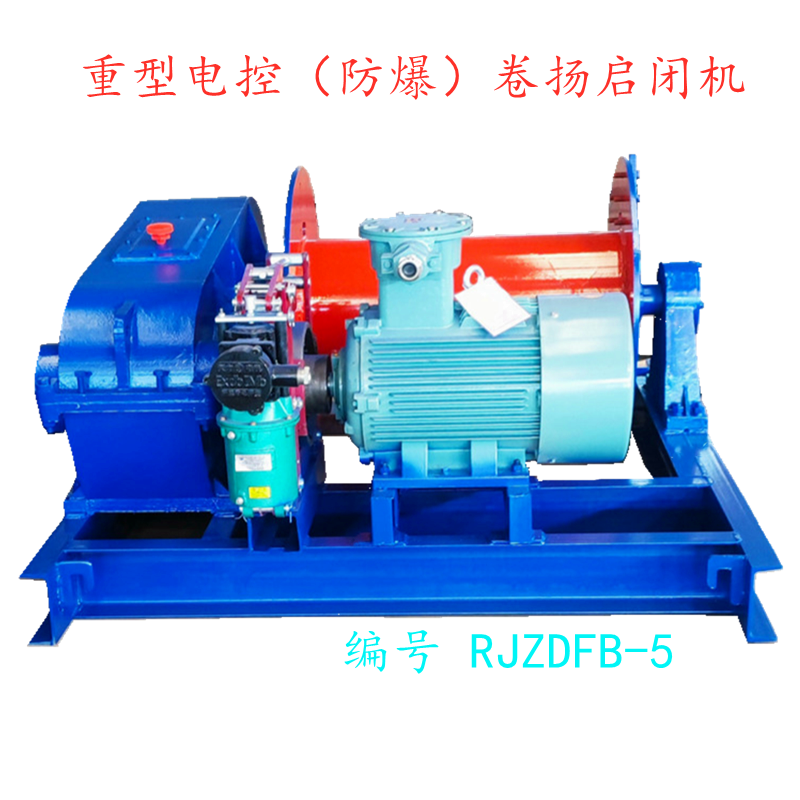
A large mining enterprise needs to hoist ore in narrow tunnels at a depth of 300 meters underground, where traditional winches are unsuitable due to their large size and slow braking response. The Zhengzhou Rongjing technical team offers the following solution:
After the project is implemented, the equipment runs continuously for 12 months without any failure, improving the lifting efficiency by 35%, and the customer has subsequently placed an additional order for 10 units of the same model equipment.
FAQ: Common Technical Questions about Electric Winch
Q1: What are the main differences between an electric winch and a mechanical winch?
A: Electric winches achieve speed adjustment and precise braking through motor-driven and intelligent control, while mechanical winches rely on gear transmission and manual braking. The former excels in automation, safety, and energy consumption control.
Q2: How to choose the suitable winch specifications?
A: Consider the comprehensive tensile requirements (tons), lifting height (meters), usage frequency (daily working hours), and environmental conditions (temperature, humidity, corrosiveness). For instance, in scenarios with frequent start-stop operations, it is recommended to choose a variable frequency motor to reduce the risk of motor overheating.
Q3: What is the process for customized services?
Zhengzhou Rongjing offers a four-step process: 'Requirement Communication - Solution Design - Prototype Testing - Mass Production'. Customers need to provide working condition parameters (such as space dimensions, load type), control requirements (such as whether remote operation is needed), and budget range. The technical team will feedback the preliminary solution within 72 hours.
Technical Summary and Industry Outlook
The technological breakthrough of Zhengzhou Rongjing Electric Winch lies in the dual-track strategy of 'standardization + customization': covering 80% of general needs through modular design, and then solving the remaining 20% of special working conditions through personalized customization. In the future, with the development of Internet of Things technology, winches will further integrate sensor and data analysis functions, achieving predictive maintenance and intelligent scheduling, providing more efficient and safe solutions for the crane equipment industry.