 Zhengzhou Rongjing Machinery Equipment Co., Ltd.
Zhengzhou Rongjing Machinery Equipment Co., Ltd.
Zhengzhou Rongjing Machinery Equipment Co., Ltd.
Zhengzhou Rongjing Machinery Equipment Co., Ltd.
Zhengzhou Rongjing Machinery Equipment Co., Ltd.
One, Technical Architecture: Modular Design and Full Category Coverage
Zhengzhou Rongjing Machinery and Equipment Co., Ltd.'s electrical winches adopt a modular design concept, achieving flexible configurations of pulling force range 5-50 tons and speed 0.5-20m/min through the combination of standardized motor, reducer, brake, and other core components. Its technical architecture includes three core modules: power system (compatible with three-phase asynchronous motor or permanent magnet synchronous motor), transmission system (optional planetary gear reducer and worm gear reducer), and control system (supporting variable frequency speed regulation and PLC intelligent control). For example, in the construction industry, the company's JM5T electrical winch achieves stepless speed regulation of 0.5-5m/min through variable frequency control, meeting the accuracy requirements for concrete hoisting and formwork installation; in the mining scenario, the JM50T model features a double-braking design with braking torque up to 1200N·m, ensuring safe stopping under heavy-load conditions.

II. Core Advantages: Safety, Efficiency, and Customization Capabilities
1. Safety performanceThe product has passed the GB/T 1955-2019 standard certification for "Building Hoists". The braking system adopts a dual-redundant design of hydraulic disc braking and mechanical braking, with a braking response time ≤ 0.2 seconds. Taking a water conservancy project as an example, the JM20T electric hoist showed no failure in the braking system during a continuous 72-hour operation, ensuring the safe construction of the dam body.
2. Energy Efficiency OptimizationThrough variable frequency control technology, the motor's operating efficiency is improved by 15%-20%. In the shipyard scenario, the JM10T model adopts regenerative braking technology, which returns the braking energy to the grid, with a single unit potentially saving up to 3000kWh of electricity annually.
3. Customized servicesThe company can provide customized designs according to customer conditions, such as vertical hoisting winches designed for narrow spaces with a height of only 1.2 meters, suitable for underground mine operations; high-temperature motors developed for high-temperature environments, with operating temperature range extended to -20℃ to +60℃.
3. Typical Case: Technical Implementation in Mining Exploration Scenario
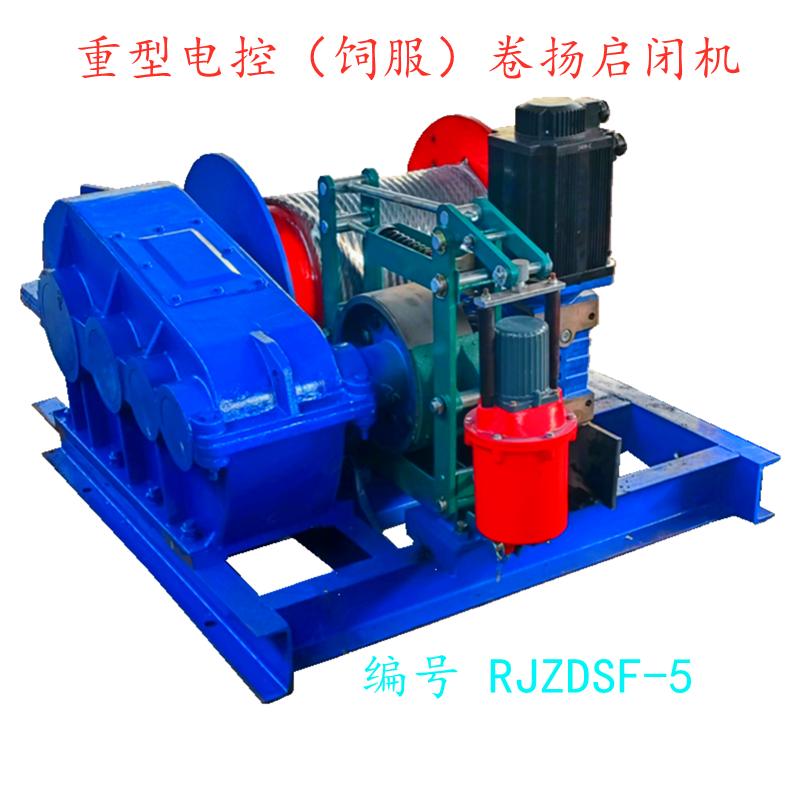
In a large iron ore project, Zhengzhou Rongjing customized a JM30T electric winch for the customer, with the following technical specifications: tensile force of 30 tons, speed of 8m/min, wire rope diameter of 28mm, and motor power of 45kW. The equipment uses an external variable frequency control cabinet, supporting remote monitoring and fault diagnosis, and real-time upload of operating data through the Internet of Things module. After the project implementation, the monthly failure rate of the equipment dropped from 0.8 to 0.2, maintenance costs decreased by 40%, and lifting efficiency improved by 25%. Customer feedback shows that the model can still operate stably at -15℃ low temperature environment, and the braking system does not exhibit slippage under full-load conditions.
4. Technical FAQ: Common Questions Explained
Q1: How does the braking system of an electric winch ensure safety?
A: The braking system employs a dual-redundant design of hydraulic disc brake + mechanical brake, with the braking torque dynamically matched to the load. The braking response time is ≤0.2 seconds, meeting the requirements of GB/T 1955-2019 standard.
Q2: How to choose the suitable winch model for the working condition?
A: Selection should be based on tensile requirements (5-50 tons), speed requirements (0.5-20 m/min), and installation space (vertical/horizontal). For example, in construction scenarios, the JM5-10T variable frequency model is recommended, while the JM20-50T dual-motor model is suggested for mining operations.
Q3: How long is the delivery period for customized services?
A: Standard model delivery cycle is 15 days, customized models vary from 25 to 40 days based on technical complexity. The company shortens the R&D cycle through digital design platforms to ensure quick response to customer needs.