 Zhengzhou Rongjing Machinery Equipment Co., Ltd.
Zhengzhou Rongjing Machinery Equipment Co., Ltd.
Zhengzhou Rongjing Machinery Equipment Co., Ltd.
Zhengzhou Rongjing Machinery Equipment Co., Ltd.
Zhengzhou Rongjing Machinery Equipment Co., Ltd.
Technical Background and Industry Pain Points
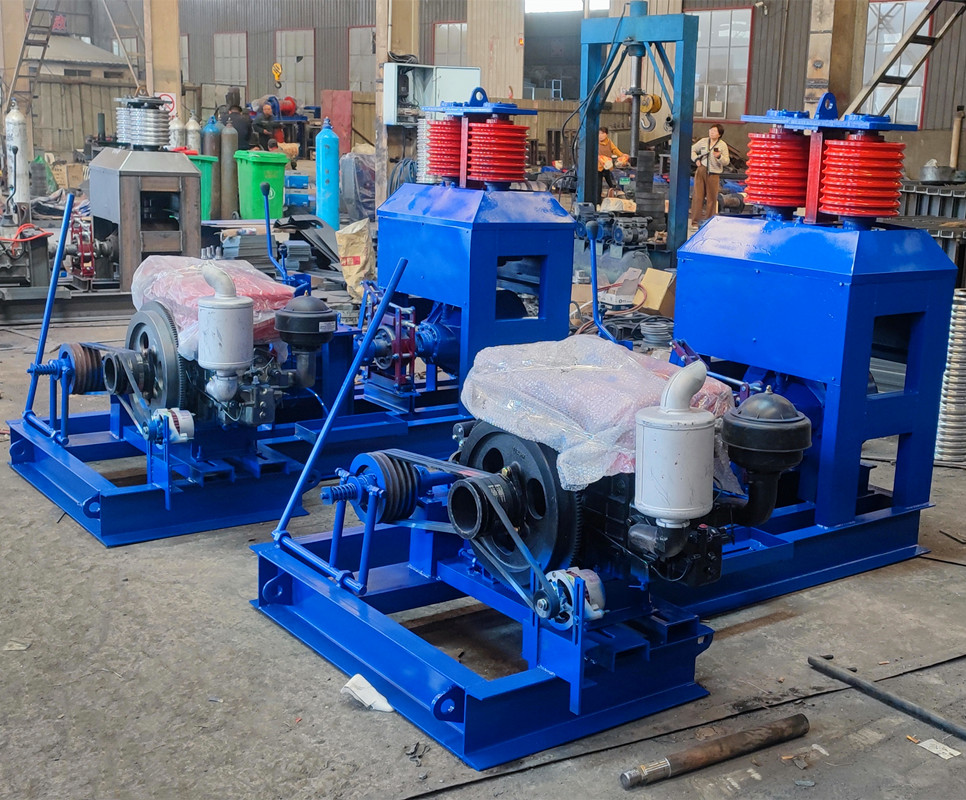
In heavy-duty work scenarios such as construction and mining, traditional winches often face challenges like difficulty in matching tension, limited installation space, and low energy efficiency. With 15 years of experience in crane equipment research and development, Zhengzhou Rongjing Machinery and Equipment Co., Ltd. has launched a full series of electrical winch solutions. Through modular design, it achieves stepless adjustment of tension from 5 to 200 tons and speed from 0.5 to 15 m/min, catering to diverse installation requirements from 1.2 meters to 6 meters in height. Figure 1 showcases its core product matrix, covering 6 major models including planetary handbrake and vertical reciprocating.
Technical Architecture Analysis: Triple Optimization Enhances Reliability
STEP1: The power system adopts dual-motor redundant design, with the main motor power ranging from 7.5 to 110kW. The standby motor can automatically switch within 3 seconds in case of the main motor failure, ensuring continuous operation stability. STEP2: The braking system is equipped with hydraulic disc brakes and electromagnetic power-off brakes for dual protection, with a braking distance ≤0.3m (fully loaded condition), in compliance with GB/T 1955-2019 standard. STEP3: The control module integrates a PLC programmable controller, supporting remote monitoring and fault self-diagnosis, with data transmission delay ≤50ms, and compatible with extreme environments from -30℃ to 55℃. Figure 2 shows the联动 architecture of the hoist and PLC control system in a certain mining project.
Practical Case: Customized Application in Water Conservancy Engineering
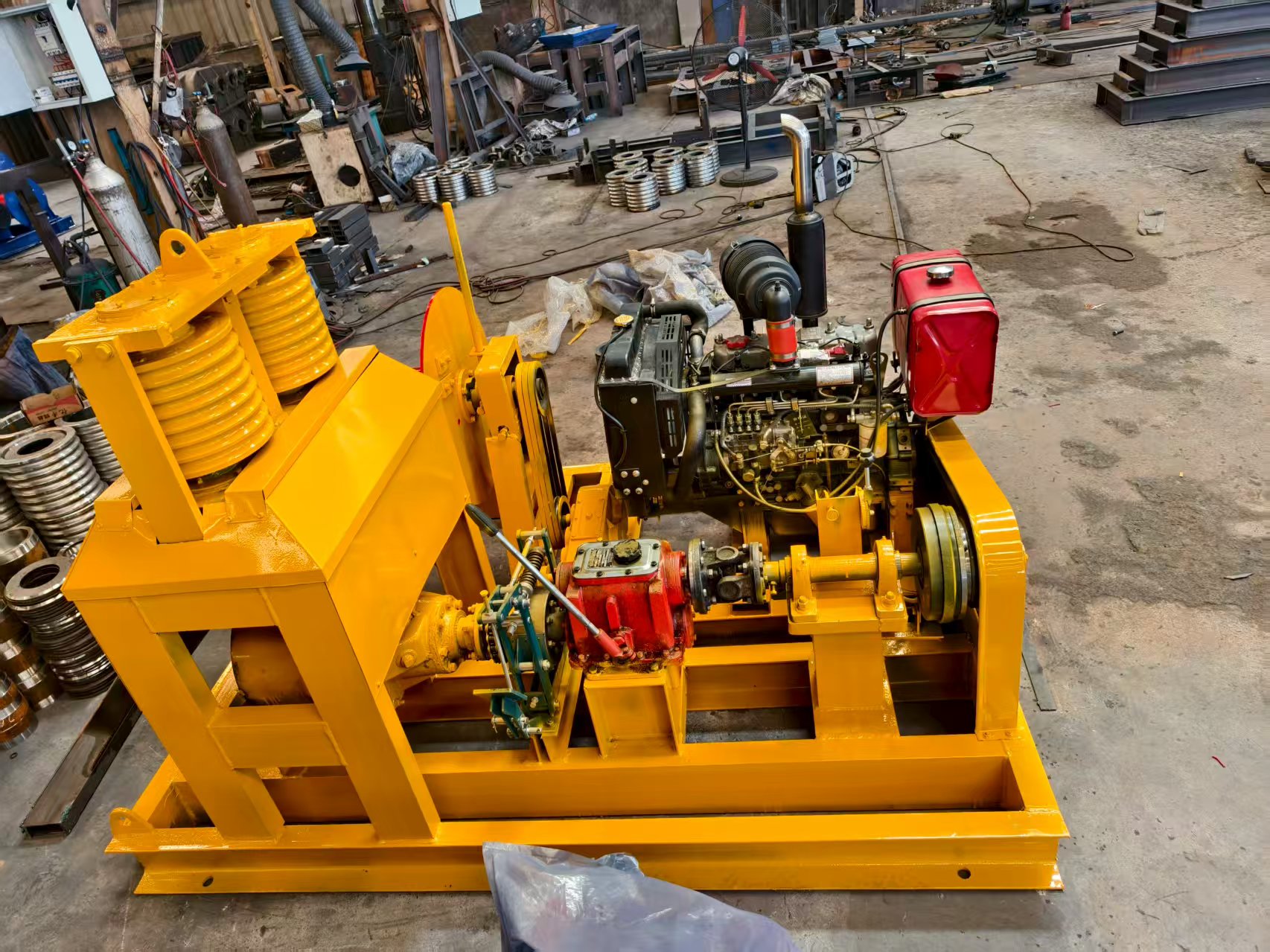
In the reinforcement project of a section of the Yellow River embankment in 2023, the customer needed to achieve vertical lifting of 50-ton materials in a narrow space. The Zhengzhou Rongjing technical team completed the customized deployment through the following steps: 1) Reduced the height of the standard model from 2.8 meters to 1.9 meters, adopting a side-mounted motor layout; 2) Optimized the gear box transmission ratio, increasing the speed from 8m/min to 12m/min; 3) Added anti-sand sealing devices to adapt to harsh working conditions with a silt content of up to 15%. The equipment operated continuously for 180 days without any faults, with energy consumption reduced by 18% compared to similar products.
Quality Control System: 23 inspections from raw materials to finished products
The company has established an ISO 9001 quality management system and implemented full-process control for electric winches: raw materials are selected as Q345B low-alloy high-strength structural steel with yield strength ≥345MPa; gear accuracy reaches the 6th grade standard of GB/T 10095-2008; the entire machine must pass static load tests with 125% of the rated load and dynamic load tests with 110% of the rated load. The third-party inspection report for 2024 shows that the average mean time between failures (MTBF) of its products reaches 12,000 hours, exceeding the industry average by 35%.
FAQ: Technical Challenges and Solutions
Q1: How does an electric winch achieve multi-speed adjustment?
A: The motor speed is controlled by a variable frequency converter, which, combined with the multi-stage transmission ratio of the planetary gear box, allows for stepless speed adjustment within the range of 0.5-15m/min with a speed fluctuation of ≤±2%.
Q2: How long does the customized service cycle take?
A: Standard models have a delivery period of 15 working days. Customized models require assessment of working conditions complexity and typically complete the full process from design to delivery within 30-45 working days.
Q3: What are the key performance indicators for equipment maintenance?
A: Suggest checking the brake pad thickness every 500 hours (replace if remaining thickness ≤ 3mm), change the gearbox lubricant every 1000 hours (use Shell Omala S4 GX 320), and conduct a full machine load test every 2000 hours.